



World Gym Taiwan acquires brand rights, eyes global growth
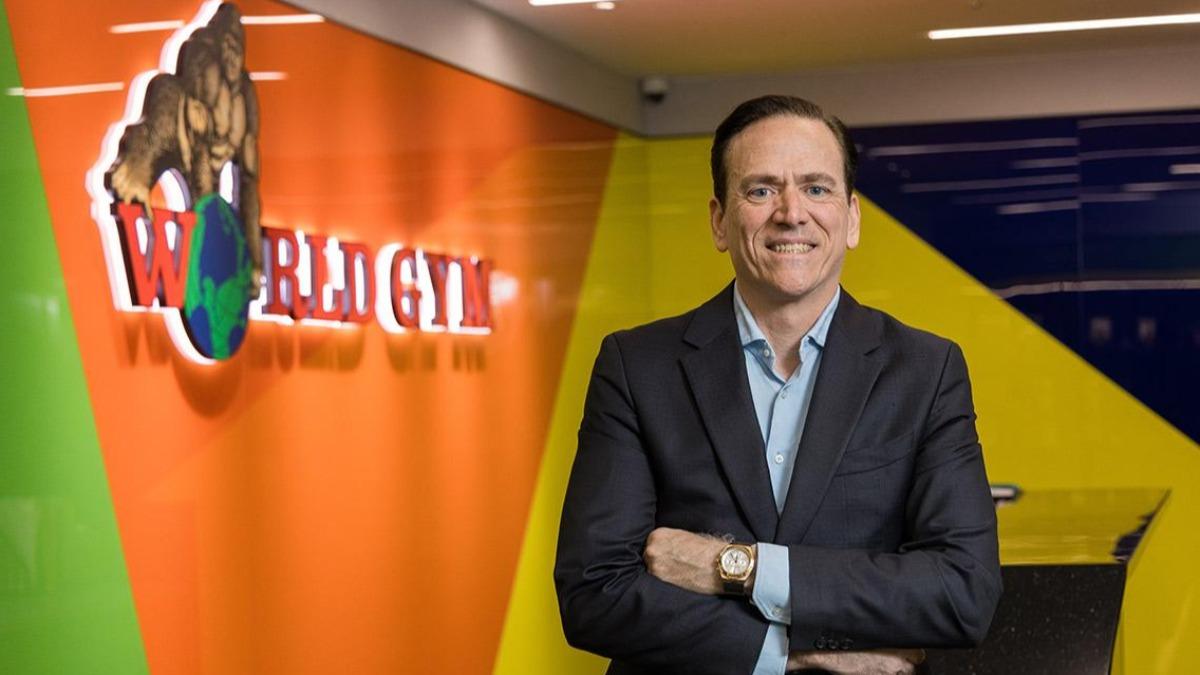
TAIPEI (Business Today/TVBS News) — "Starting today, the brand ownership, management rights, and franchise systems of World Gym International (WGI, 世界健身國際) are entirely owned by Taiwan!" John Caraccio (柯約翰), the chairman and general manager of World Gym Taiwan (世界健身), announced on Oct. 28 at a press conference, unveiling that they invested US$9 million (approximately NT$290 million) to purchase the American brand, officially transforming World Gym into a Taiwanese brand.
This move not only allows World Gym to step out of Taiwan, opening pathways to international markets but also brings an annual royalty income of US$3.5 million to US$4 million (approximately NT$110 million to NT$130 million) to the company. Following the announcement, World Gym's stock price surged to its daily limit, reaching NT$108.5. By Nov. 12, it had fallen back to NT$96.2, with the market still watching closely. Many are intrigued by how World Gym, in its position as a licensee, managed to acquire the brand owner and the strategic thinking behind this move.

Breaking Free From Constraints and Advancing Into Global Markets
The motivations behind World Gym's aggressive acquisition of the brand owner are twofold: the wish to "avoid subjugation" and the ambition to "expand into international markets." "Eight years ago, we proposed acquiring the brand," Caraccio said straightforwardly, expressing his dissatisfaction with just being a licensee. Over those eight years, the brand owner consistently declined, but the team remained tenacious until a turning point emerged earlier this year.
During a fitness expo in Los Angeles, they reiterated their acquisition interest to the brand owner, who, unexpectedly, did not immediately reject the idea but instead said for the first time, "I would like to hear your thoughts." Caraccio speculated that the brand owner struggled during the pandemic, with expansion in the U.S., Taiwan, Australia, and elsewhere slowing, prompting a desire to sell. Furthermore, Taiwan, being the largest global distributor and listed since January, naturally emerged as the prime candidate for acquisition.
The original brand owner controlled brand management rights, deriving most of its income from franchise royalties. Justine Hsieh (謝如菁), the CFO of World Gym, stressed that in the past six months, they conducted hundreds of meetings with the owner, scrutinizing contracts, franchise fees, financials, and potential legal issues of franchisees worldwide to confirm the absence of debts or lawsuits before finalizing the contract. "No one wants to inherit a mess," she remarked candidly.
"Once the owner expressed interest in selling, everything else was negotiable," Caraccio disclosed. The brand owner initially priced the brand between US$15 million and US$20 million, but through persistent negotiations, they agreed on US$9 million.
Holding the brand rights, World Gym now stands to earn royalties from 271 stores in 10 countries, including Taiwan, amounting to roughly US$3.5 million to US$4 million annually (including the US$1.17 million previously paid by World Gym). This income will be entirely converted into revenue. World Gym projects that after accounting for costs associated with managing global sites, including personnel and systems, their operating profit margin could hit 50%, equating to approximately US$1.75 million in profit.
Hsieh disclosed that World Gym's ability to achieve a 50% operating profit margin is due to their marketing and management strengths, which the brand owner lacked. "Otherwise, why would they sell it at such a low price?" she noted. Vic Li (黎志建), an analyst at Inclusion Security, Investment, Consultant Co., Ltd. (浦惠投顧), remarked that buying a brand with an annual profit of US$1.75 million for US$9 million is indeed a steal. Caraccio elaborated that the acquisition's critical consideration lies not in immediate revenue but in future international market potential.

Establishing Direct-Operated Stores and Strategically Positioning in Asia
Until now, World Gym was authorized to open stores only within the Greater China region, concentrating exclusively on Taiwan and hesitating to expand overseas. Expanding abroad required the brand owner's consent and additional fees based on factors like local population. For example, with Thailand's population being roughly three times that of Taiwan, the brand owner might require royalties three times higher based on store count.
"This path is essential to prevent being restricted by the brand owner," commented Kram Chan (詹克群), chairman of Sinstar Corporation (星達管理顧問), who has closely monitored the sports and leisure industry. He highlighted that Taiwan's market is still limited, and having brand control is vital for future endeavors like creating sub-brands or international expansion.
With brand ownership secured, World Gym can now adopt a two-pronged strategy: assessing the feasibility of opening company-operated stores in Southeast Asia and targeting franchise expansion in the U.S., Brazil, Canada, Australia, and Germany. They hope to achieve a scale of 500 company-operated stores and 2,000 franchise stores within a decade.
Opening company-operated stores is a business model World Gym is accustomed to in Taiwan, but it necessitates a thorough understanding of the market. Consequently, they plan to begin with the nearer Asian markets. As for the franchise aspect, World Gym will act as a facilitator, helping franchisees expand and earn locally, thereby securing stable franchise fees and product royalties.
Looking ahead, Li suggested that World Gym's move overseas is undoubtedly advantageous. While there is still space for expansion in Taiwan, market saturation is inevitable. Venturing abroad involves greater risks and demands robust financing and borrowing capabilities. It will be important to monitor whether they can effectively secure capital over the next few quarters.
"This is only the beginning!" Caraccio smiled as he envisioned an ambitious blueprint for future international growth. With its recent transformation into a Taiwanese brand, World Gym indeed has the chance to gradually build strength and compete internationally.
***
This article is excerpted from the November issue of Business Today Magazine; for more articles, please visit the Business Today website.
Here is the link to the Chinese story: 不再是美國的,World Gym成台灣品牌…熬8年反併總公司,背後有這2個考量:10年全球開2500店