



Taiwan renames priority seats to reduce transit conflicts
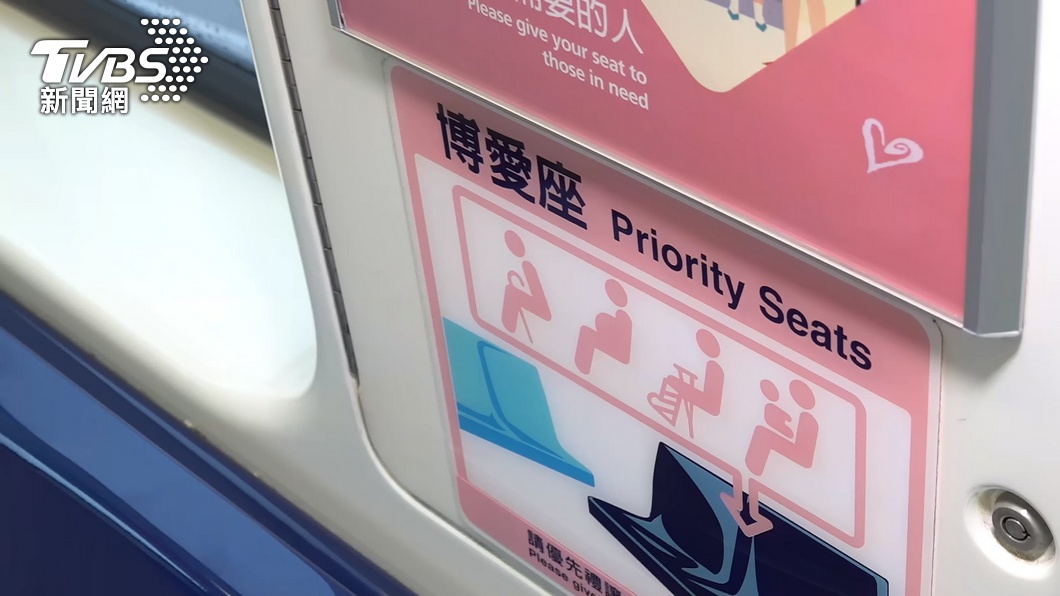
TAIPEI (TVBS News) — Taiwan's parliament approved a significant amendment to disability legislation on Tuesday (July 15), changing the designation of reserved seats on public transportation from "courtesy seats" to "priority seating." The Legislative Yuan (立法院), Taiwan's legislature, passed the revision to the People with Disabilities Rights Protection Act (身心障礙者權益保障法) with the aim of reducing social confusion and conflicts that have plagued public transit systems for years.
The newly approved legislation requires transit operators to install accessibility features and reserve at least 15% of seats as "priority seating" (優先席) in vehicles without open seating arrangements. These designated seats must be strategically positioned near entrances, feature level flooring without obstacles, and include visible signage or audio announcements reminding passengers to surrender their seats to those with greater need.
Legislators also approved a resolution directing the Ministry of Transportation and Communications (MOTC, 交通部), Taiwan's transport authority, to collaborate with the Ministry of Health and Welfare (MOHW, 衛生福利部) in developing a uniform symbol for transit operators and investigating various public awareness campaigns. Legislator Lin Yueh-chin (林月琴) stressed that the terminology shift represents more than a simple name change, reflecting evolving social attitudes and addressing persistent conflicts in Taiwan's public transportation environment.
Lin elaborated that the term "priority seating" more effectively communicates the intended purpose of reserving seats for passengers with special needs, potentially decreasing confusion and confrontations on buses and trains. The legislative action demonstrates Taiwan's ongoing efforts to create a more accessible and clearly regulated public transit system that better serves all citizens. ◼