



Taiwan team develops precise brain neuron imaging technology
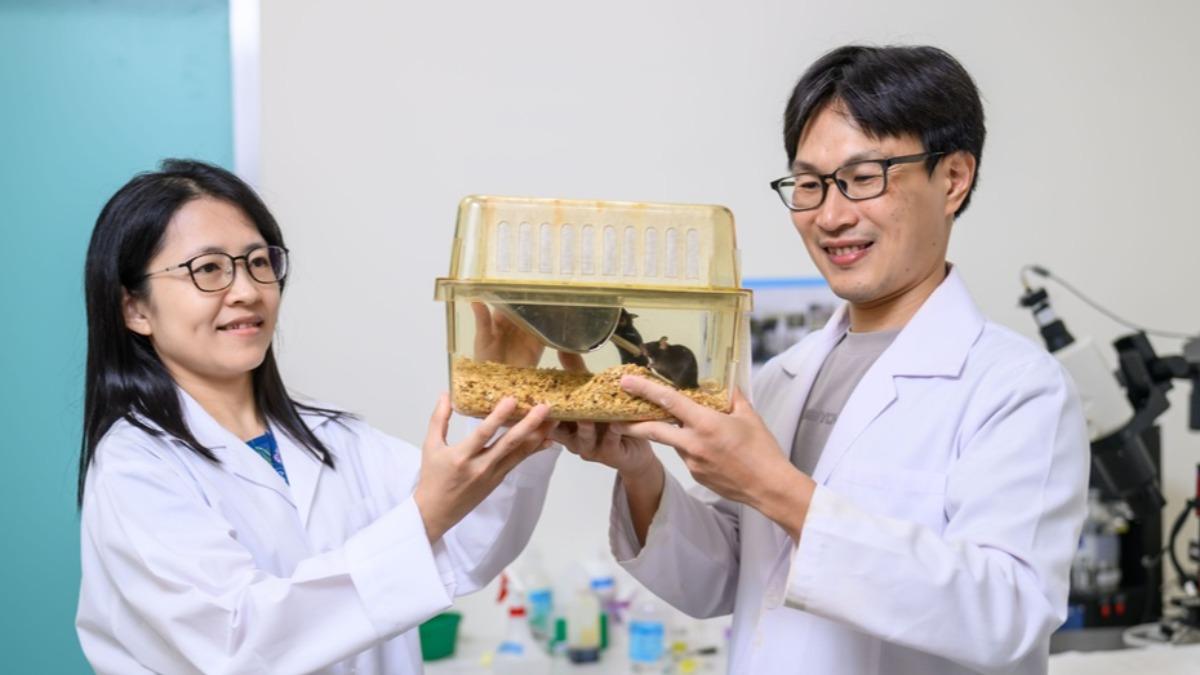
TAIPEI (TVBS News) — Taiwanese researchers announced a breakthrough in neuroscience Tuesday (Oct. 7), unveiling an imaging technique that precisely captures neuron firing activity in living brains. Associate professors Tsai-wen Chen (陳摘文) and Bei-jung Lin (林貝容) from National Yang Ming Chiao Tung University (陽明交通大學) overcame a significant bottleneck in brain observation using "activity localization imaging." The technique represents a major advancement in understanding neural activity patterns.
The university explained that electrical signals between neurons underpin human sensation, thought, and memory but occur deep within the brain and are fleeting, making observation challenging. Traditional optical imaging techniques struggle to capture these rapid neuronal communications effectively due to their brief duration and depth. The research team used voltage-sensitive fluorescent molecules to track minute changes in neuron membrane potentials, enabling precise detection of neural activity patterns.
Chen and Lin discovered that while neuronal signals overlap spatially, only a few neurons discharge at any given moment during brain activity. They applied the activity localization imaging technique to hippocampal neurons in live mice, accurately pinpointing coordinates of each neuronal discharge event. This process enabled construction of high-resolution neural activity maps with unprecedented precision, revealing previously undetectable patterns.
Lin noted the breakthrough enables researchers to distinguish smaller and more densely packed excitatory neurons for the first time in neuroscience research. While the current technology cannot yet detect "silent neurons," Lin emphasized it has opened entirely new directions for neural imaging research. The advancement represents a significant step forward in understanding complex brain function at the individual cellular level.
The neuroscience advancement could enable more detailed brain activity studies, potentially improving understanding and treatment of neurological disorders significantly. The research, led by a Taiwanese team with international collaboration, was published in the prestigious journal Nature Methods, a leading scientific publication. The breakthrough positions Taiwan at the forefront of global neuroscience imaging technology development and innovation. ◼