



Japan PM warns of Taiwan crisis as survival threat
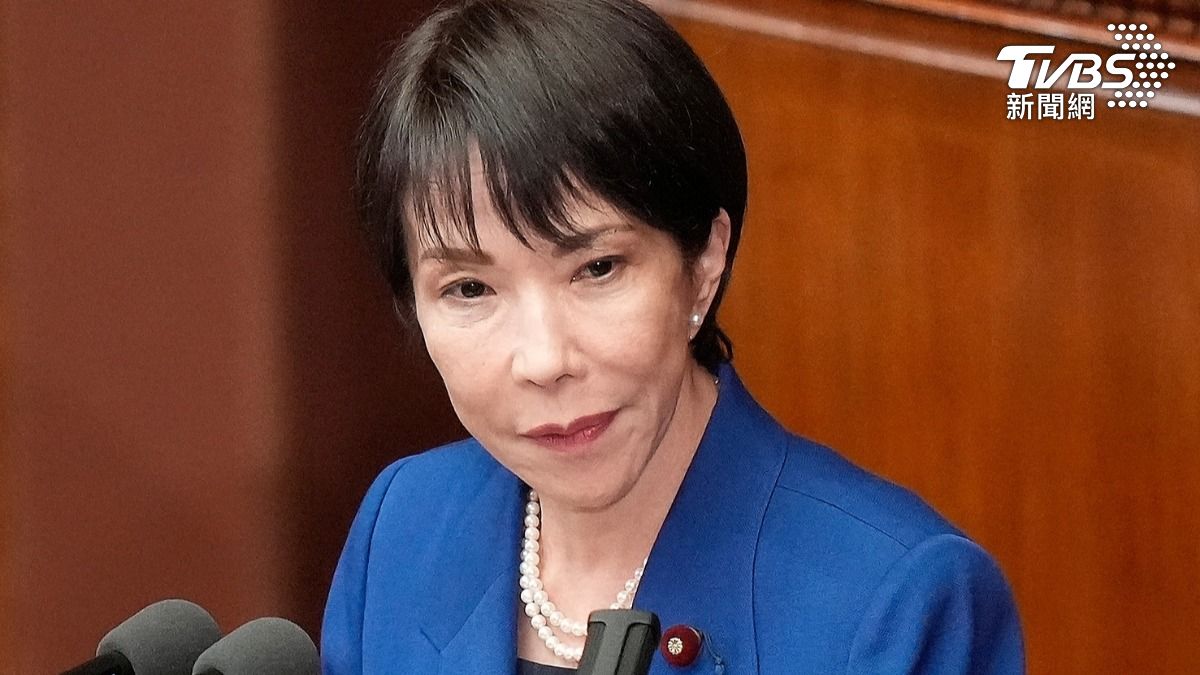
TAIPEI (TVBS News) — Japan's Prime Minister Sanae Takaichi (高市早苗) addressed the House of Representatives on Friday (Nov. 7), stating that a "Taiwan contingency" involving the use of force could trigger a "situation of crisis of survival" under Legislation for Peace and Security. This term, introduced in 2015, refers to scenarios where Japan faces existential threats due to military attacks on closely related countries like the U.S., even if Japan itself is not directly attacked.
The Asahi Shimbun (朝日新聞) reported that Katsuya Okada (岡田克也), former foreign minister from the Constitutional Democratic Party (CDP), questioned whether a Taiwan contingency would qualify as such a crisis during a Budget Committee session. Takaichi responded that using warships alongside force might constitute a crisis, but the government would need to assess actual situations comprehensively.
Takaichi noted that if China imposes a maritime blockade on Taiwan, Japan might consider it a crisis of survival, potentially prompting the Japan Self-Defense Forces to take military action. She emphasized the need to assume the worst-case scenario if a Taiwan contingency escalates into a severe situation, maintaining interpretive flexibility. Taro Aso (麻生太郎), vice president of the Liberal Democratic Party (LDP), has also repeatedly suggested that the Japanese government is highly likely to regard a Taiwan contingency as a crisis of survival.