


Full Text: President Lai’s national security plan for Taiwan
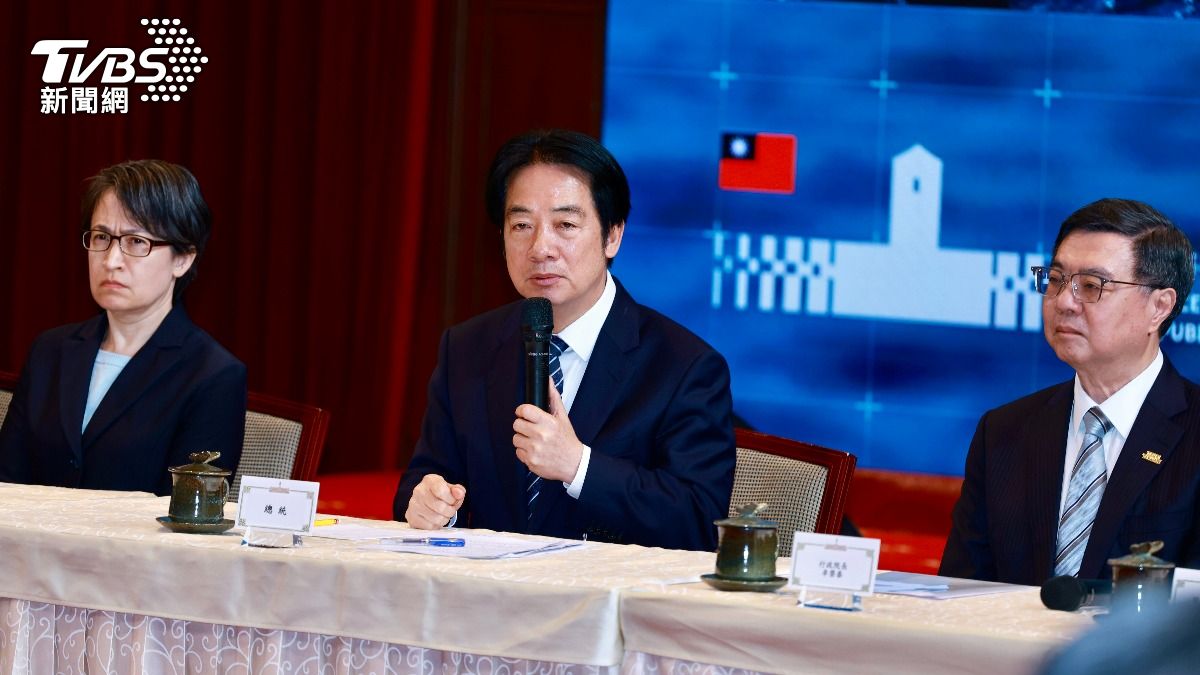
TAIPEI (TVBS News) — President Lai Ching-te (賴清德) convened a high-level national security meeting Wednesday (Nov. 26) morning, announcing two concrete action plans responding to intensifying Chinese threats. The plans focus on firmly safeguarding national sovereignty and comprehensively building democratic defense mechanisms, and strengthening defense capabilities and developing defense-related industries. President Lai outlined the initiatives at a press conference following the security meeting.
President Lai emphasized that in China's playbook for annexing Taiwan, the most significant threat is not military force but "surrender." Some people, influenced by China's united front tactics, view democracy and freedom as provocations against China, mistakenly believing that accepting transformation from "Democratic Taiwan" to "China Taiwan" could secure peace. History demonstrates that compromising with aggressors only results in endless conflict and subjugation, President Lai asserted, adding that democracy is not provocation.
President Lai convened the "Safeguarding Democratic Taiwan National Security Action Plan" high-level security meeting at 9:30 a.m. Wednesday (Nov. 26). The president held a press conference at 11:30 a.m. in the main hall of the Presidential Office Building, the president's official office, to announce the two action plans to the public. ◼
>>> Full Text of President Lai Ching-te's 'National Security Action Plan to Safeguard Democratic Taiwan'
Earlier today, I convened a high-level national security meeting to receive briefings from our national security team regarding the current security landscape. The Beijing authorities' (北京當局) recent comprehensive campaign to transform "Democratic Taiwan" (民主台灣) into "China Taiwan" (中國台灣) has posed serious threats to our national security and Taiwan's democratic freedoms. Following thorough discussions, we have formulated two "Safeguarding Democratic Taiwan National Security Action Plans" as concrete response strategies, which I will now present to the public:
As the international community has observed, China's threats toward Taiwan and the Indo-Pacific region are intensifying. Recently, in Japan, the Philippines and around the Taiwan Strait, we have witnessed persistent compound threats including military harassment, maritime gray zone activities and disinformation campaigns, causing significant anxiety and concern among regional stakeholders, including our nation.
Furthermore, the Beijing authorities have established 2027 as their target for completing "armed unification with Taiwan," accelerating military preparations for aggression against Taiwan while escalating exercises and gray zone provocations around Taiwan. Their intent is to "force unification through military means" and "compel surrender through military pressure" to annex Taiwan.
Beyond military means, China is intensifying legal warfare, psychological warfare and public opinion warfare in an attempt to eradicate Taiwan's sovereignty on the world stage. Through "Anti-Secession and Promotion of Unification" (反獨促統) and "Transnational Repression" (跨境鎮壓), China seeks to gradually erode the jurisdiction of the Republic of China government, creating an illusion of substantive "governance" over Taiwan.
Within Taiwan, China is amplifying its united front infiltration and divisive tactics, confusing our citizens' national identity and undermining our solidarity, with the aim of forcibly implementing their proposed "One Country, Two Systems Taiwan framework" (一國兩制台灣方案) and "Patriots Governing Taiwan" (愛國者治台) agenda.
The purpose of these actions is to confine the free, prosperous and globally influential "Democratic Taiwan" within an authoritarian "China Taiwan," thereby annexing Taiwan and fulfilling China's ambitions to dominate and control the Indo-Pacific region. In response to this unprecedented and severe situation, our national security team has developed two major action plans to comprehensively address these urgent national security threats and fully protect "Democratic Taiwan."
Plan One: Firmly Safeguard National Sovereignty, Comprehensively Build Democratic Defense Mechanisms
The first action plan focuses on firmly safeguarding national sovereignty and comprehensively building democratic defense mechanisms. I must reaffirm that "Democratic Taiwan" is a sovereign, independent nation, referred to by our citizens and international friends as the Republic of China (中華民國), Taiwan, or the Republic of China Taiwan. The Republic of China and the People's Republic of China (中華人民共和國) are not subordinate to each other. Taiwan's sovereignty cannot be violated or annexed, and the future of the Republic of China Taiwan must be determined by the 23 million people of Taiwan. This is the status quo we are committed to defending.
We therefore firmly oppose China's distortion of UN General Assembly Resolution 2758 (聯大2758號決議) and its manipulation of World War II historical documents to falsify history, wrongfully claiming that Taiwan belongs to the People's Republic of China. We remain highly vigilant that while China accelerates its military preparations for "armed unification with Taiwan," it simultaneously intensifies efforts internationally, across the Taiwan Strait and in various domains to advance "forced unification" under the guise of peace, attempting to transform Taiwan into a part of China's jurisdiction.
National security permits no compromise. The core values of national sovereignty, freedom and democracy constitute the foundation of our nation. This is not about ideological disputes or a "unification versus independence" debate, but rather our determination to defend "Democratic Taiwan" and refuse submission to "China Taiwan." This represents the collective position of the Taiwanese people.
To defend our sovereignty and build robust democratic defense mechanisms, we will implement the following concrete actions: First, our national security team will collaborate with relevant departments to establish a permanent task force centered on the "Democratic Taiwan vs. China Taiwan" framework. This group will develop action plans utilizing diverse approaches including international and domestic strategic communication, historical narratives, and counter-legal warfare measures. By mobilizing our entire society and partnering with allied nations, we will demonstrate to the world our unwavering commitment to protecting "Democratic Taiwan" and maintaining the status quo, while comprehensively countering Beijing's hegemonic efforts to eliminate the Republic of China's sovereignty, deprive the Taiwanese people of their freedoms, and disrupt the status quo.
Second, facts and truth form the foundation upon which democratic nations build social trust and strengthen national identity. The Executive Yuan (行政院) will assess China's interference and potential impacts during major policy implementations and election periods. Through factual disclosures and the free circulation of accurate information, we will enhance public awareness and vigilance regarding Beijing's interference in our internal affairs and its advancement of "forced unification." This will strengthen our national identity and foster internal unity in the face of external challenges.
Third, the 17 strategies implemented in March this year to counter China's united front infiltration and national security threats have already shown preliminary effectiveness. The government will continue implementing these strategies while accelerating the legislation of 10 national security laws and related administrative measures to strengthen the protection of our national security.
Fourth, in response to China's transnational repression of Taiwanese people, the Executive Yuan will collaborate with the National Security Council (國安會) to implement concrete and effective countermeasures. These include establishing reporting channels, communication networks and protection mechanisms for victims; strengthening strategic communication with allied nations and international organizations to enhance transnational cooperation in protecting potential victims; and improving our legal framework to ensure severe punishment for local collaborators who assist China in transnational repression activities that harm our nation and citizens.
Fifth, all polls have consistently demonstrated that our citizens overwhelmingly reject China's "One Country, Two Systems Taiwan framework" (一國兩制台灣方案). We must establish, through government policy declarations, Legislative Yuan (立法院) resolutions, and collective actions by political parties and civil society organizations, that the "One Country, Two Systems Taiwan framework" represents an uncrossable red line for Taiwanese society. On this foundation, we must develop institutional norms governing exchanges and political dialogue between domestic political parties, legal entities, civil organizations and China, employing principles of democratic governance and transparency to prevent China from exploiting Taiwan's internal divisions to advance its "forced unification" agenda.
Plan Two: Strengthen Defense Capabilities, Comprehensively Develop Defense-Related Industries
Next, I would like to present the second action plan to our citizens: the implementation of "Strengthening Defense Capabilities and Comprehensively Developing Defense-Related Industries." Peace must be underpinned by strength. "Investing in defense is investing in security and peace." In the face of China's escalating military threats and hegemonic ambitions toward the region and our nation, democratic countries throughout the Indo-Pacific—including Japan, South Korea, the Philippines, and even Australia—are gradually forming a consensus around "Island Chain Defense and Shared Responsibility" (島鏈防衛、責任分擔). These nations are increasing their defense investments and strengthening their responses to China's threats.
As the most important and critical link in defending the first island chain, Taiwan cannot become a vulnerability in regional security. We must demonstrate our resolve, shoulder greater self-defense responsibilities, and accelerate the strengthening of our defense capabilities to counter threats through "autonomous defense" and "joint deterrence." We will employ three major strategies—"Denial" (拒止), "Resilience" (韌性), and "Smartization" (智慧化)—to achieve the following three phased objectives:
The first objective is to achieve high combat readiness for our military's joint operations forces before 2027, effectively deterring China's threats. The second objective is to further develop highly resilient and comprehensive deterrent defense capabilities by 2033. The ultimate objective is to construct defense capabilities that can permanently safeguard "Democratic Taiwan."
Our concrete actions include: First, in response to global defense development trends, we will systematically increase defense spending. Following NATO (北約) standards, next year's defense budget will exceed 3% of GDP, and we aim to reach 5% of GDP by 2030, demonstrating our determination to protect our nation.
Second, to develop key capabilities for future warfare, the Ministry of National Defense (國防部) has completed planning for the "Special Act for Procurement to Strengthen Defense Resilience and Asymmetric Capabilities" and its associated budget. We plan to invest NT$1.25 trillion over the next eight years (2026-2033) to construct systems including: creating the "Taiwan Shield" (台灣之盾), building layered defense with highly perceptive and effective interception advanced air defense systems; introducing high technology and artificial intelligence to establish efficient decision-making and precise strike resilient defense operation systems; and enhancing defense autonomy while strengthening the defense industry to achieve economic and security benefits simultaneously. These efforts will form an advanced defense operation system with three major characteristics.
Third, the Executive Yuan will complete the review of this act and submit it to the Legislative Yuan, while directing the Ministry of Finance (財政部) and the Directorate-General of Budget, Accounting and Statistics (主計總處) to properly plan funding sources, implement sound financial management, and avoid crowding out other budgets. Fourth, considering the successful integration and rapid iteration characteristics of new technologies, the Ministry of National Defense will comprehensively optimize and strengthen equipment procurement mechanisms, accelerate equipment acquisition and force development timelines, implement fraud prevention measures, and avoid delays. Fifth, while introducing advanced equipment and continuing to build asymmetric capabilities and defense resilience, the Ministry of National Defense will fully commit to optimizing force structure, modernizing training methods, tactics, and logistical support systems, ensuring comprehensive and timely implementation.
Increasing defense spending not only enhances our military capabilities and national security but also strengthens defense industry development and increases national income. This special budget, beyond foreign procurement, includes substantial investment in domestic engineering, commercial purchases and commissioned manufacturing projects, which will generate considerable economic output and employment opportunities.
With Taiwan's formidable capabilities in high technology and manufacturing—including the integrated industrial ecosystem of semiconductors (半導體), ICT and AI, as well as precision machinery and related foundational industries—Taiwan can play a significant role in global advanced defense and military industries. This will drive domestic industrial and economic transformation and upgrading, while enabling more engineers and technology professionals to participate in strengthening national defense security, achieving the goal of a strong nation with prosperous citizens.
Sixth, the government will swiftly establish action plans for defense and military industry development, and on this foundation, formulate comprehensive plans to enhance Taiwan's industries and economy. Seventh, to facilitate cooperation with allied nations and build non-red supply chains (非紅供應鏈), we will strengthen high-technology protection measures, fully implementing the safeguarding and strategic utilization of high technology. Eighth, the National Security Council will collaborate with the Ministry of National Defense and relevant ministries, advancing the concept that "investing in defense means investing in peace and Taiwan's economic future," to strengthen social communication, build consensus, and secure public support and recognition.
Fellow citizens, in all of China's scenarios for annexing Taiwan, the most threatening element is not military force, but "surrender." Some individuals, influenced by China's united front offensive, have come to view the defense of democracy and the possession of freedom as provocations against China. They mistakenly believe that if Taiwanese people are willing to "relinquish some freedoms" and "sacrifice a portion of sovereignty," humiliatingly accepting the transformation of "Democratic Taiwan" into "China Taiwan" would secure "peace."
History demonstrates, however, that compromising with aggression ultimately leads only to endless warfare and subjugation. In 1938, Europe believed that if Czechoslovakia (捷克) ceded territory to fascism, it would secure "peace for a generation." The result instead was the full outbreak of World War II, bringing countless suffering and tragedy. In 1951, the Tibetan (西藏) people believed that signing the "Seventeen Point Agreement" (十七條協議) with Beijing would preserve Tibet's culture and way of life. The result instead was the transformation of the Tibetan people's snow country into a red plateau under Communist control.
Democracy is not provocation, and Taiwan's existence is not an excuse for aggressors to disrupt the status quo. As a democratic nation, the ruling and opposition parties may hold different positions, but we deeply hope that under the premise of protecting the democratic freedoms of the Republic of China Taiwan, ensuring national sovereignty, and opposing the disruption of regional peace and stability: safeguarding "Democratic Taiwan" and preventing Taiwan from being annexed by force or other coercive means to become "China Taiwan" must be the shared responsibility of the government, all political parties and all Taiwanese people. We can only unite, and must unite, to protect our country and preserve the freedom of the Taiwanese people.
Now, our national security team and administrative departments will launch initiatives to build defense capabilities, economic strength and democratic defense mechanisms sufficient to protect Taiwan, establishing an unshakable foundation for Taiwan's security and national sovereignty. For Taiwan, for the Republic of China, let us move forward together! Thank you all! God bless Taiwan! Go Taiwan!