


Taiwan upgrades defense plans as China threat escalates
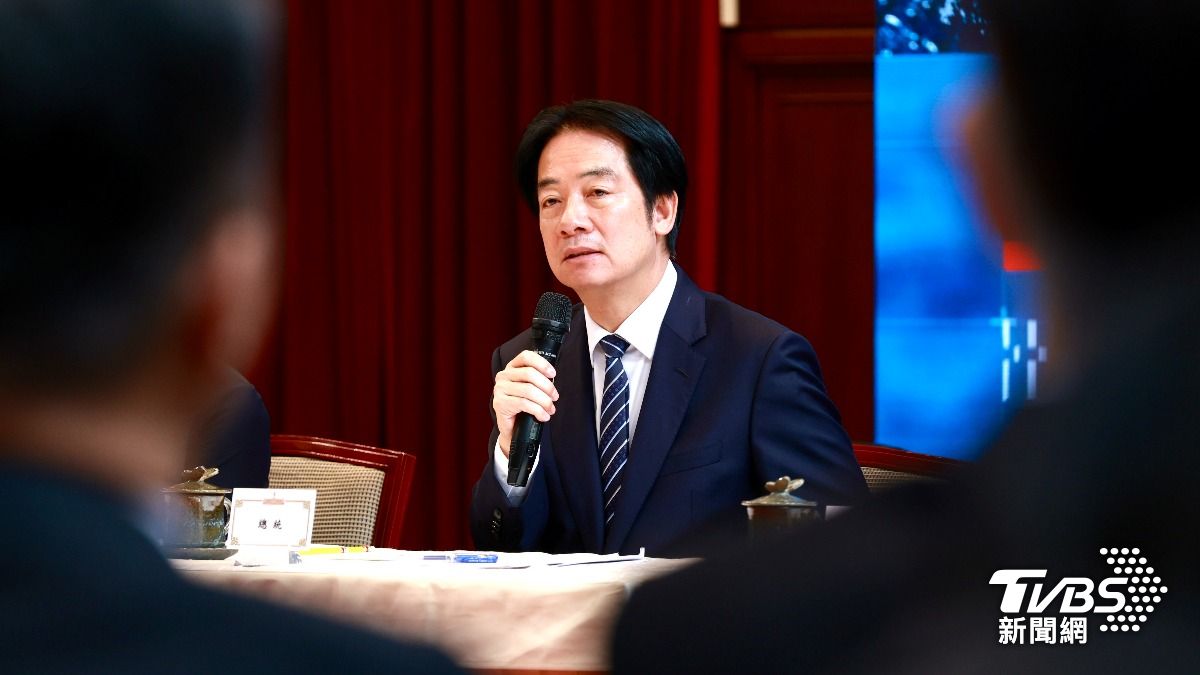
TAIPEI (TVBS News) — President Lai Ching-te (賴清德) warned Wednesday (Nov. 26) that China accelerates military preparations to invade Taiwan by 2027, unveiling national security plans that raise defense spending to counter Beijing's most dangerous weapon: persuading Taiwan to surrender. Taiwan will increase defense spending to 3% of GDP next year from current levels, targeting 5% by 2030. The plans commit over NT$1.25 trillion (around US$40 billion) in additional defense spending through 2033.
Lai outlined two comprehensive strategies responding to what his administration characterizes as Beijing's unprecedented campaign to transform "Democratic Taiwan" (民主台灣) into "China Taiwan" (中國台灣). The announcement followed a high-level national security meeting Wednesday morning at the Presidential Office Building. The defense spending increases match NATO's recommended 3% GDP threshold and represent Taiwan's most comprehensive response to escalating Chinese military pressure, according to the plans.
Dual Military and Psychological Warfare
"Beijing authorities are speeding up military plans to invade Taiwan by 2027," Lai said at a press conference following the security meeting. "They are increasing exercises and gray zone provocations around Taiwan to force unification or surrender and annex the island." China's People's Liberation Army has increased military activities around Taiwan since Lai took office in May, conducting near-daily exercises near the self-governed island.
Lai emphasized that military pressure represents only part of Beijing's strategy. The president warned China wages an intensifying psychological and political warfare campaign designed to divide Taiwanese society and erode national identity. "China is intensifying its united front efforts to infiltrate and divide, confusing our national identity and weakening our unity to impose its 'One Country Two Systems' Taiwan Plan," Lai said.
The president delivered his starkest warning about what he identifies as Beijing's most effective tactic. "In all of China's scenarios for annexing Taiwan, the most threatening element is not military force but 'surrender,'" Lai said. "Some people mistakenly believe that if Taiwanese are willing to give up some freedoms and sacrifice some sovereignty, and accept the humiliating transformation from Democratic Taiwan to 'China Taiwan,' they can trade this for peace."
Appeasement Fails Against Authoritarian Expansion
Lai invoked historical precedents to reject any compromise with Beijing's demands. He referenced the 1938 Munich Agreement, where European powers ceded Czechoslovak territory to Nazi Germany believing it would secure peace, only to see World War II erupt the following year. He also cited Tibet's 1951 agreement with Beijing, which failed to preserve Tibetan autonomy despite promises.
The Ministry of National Defense completed planning for a "Special Act for Procurement to Strengthen Defense Resilience and Asymmetric Capabilities" (強化防衛韌性及不對稱戰力計畫採購特別條例) to fund the initiative. The plans commit Taiwan to investing more than NT$1.25 trillion (around US$40 billion) in additional defense spending over eight years from 2026 to 2033. The spending focuses on three strategic priorities: advanced air defense, AI-powered strike capabilities, and domestic defense industry development, according to the plans.
Building 'Taiwan Dome' and AI capabilities by 2033
Taiwan will develop what Lai calls the "Taiwan Dome" (T-Dome, 台灣之盾) — an advanced air defense system creating layered protection. The island will also integrate artificial intelligence to establish precise strike capabilities and resilient defense operations. The initiative enhances defense autonomy while strengthening Taiwan's domestic defense industry.
Taiwan further aims to achieve high combat readiness for joint operations forces before 2027, according to the president. The island will develop comprehensive deterrent defense capabilities by 2033 as part of the phased approach. The ultimate objective constructs defense capabilities that can permanently safeguard "Democratic Taiwan" against Chinese military threats and psychological warfare campaigns, according to the plans.
Counter China's Political Warfare and Transnational Repression
According to the president, Taiwan needs to establish permanent mechanisms to counter Beijing's efforts to eliminate Taiwan's sovereignty. The National Security Council (國安會), Taiwan's top security body, has created a task force centered on the "Democratic Taiwan vs. China Taiwan" framework. The task force develops strategies including international strategic communication, historical narratives , and counter-legal warfare measures to mobilize Taiwanese society and partner with allied nations.
The Executive Yuan (行政院), Taiwan's cabinet, will also assess China's interference during major policy implementations and election periods. The cabinet will use factual disclosures and circulation of accurate information to enhance public awareness of Beijing's activities and strengthen national identity. The government accelerates legislation of 10 national security laws and implements 17 strategies launched in March to counter united front infiltration , China's political influence operations, and protect national security.
The plans establish concrete countermeasures against what Taiwan calls China's "transnational repression" of Taiwanese citizens. The measures include reporting channels, communication networks and protection mechanisms for victims of transnational repression. The Executive Yuan will collaborate with the National Security Council to implement the countermeasures, strengthen strategic communication with allied nations and international organizations, and improve legal frameworks to prosecute local collaborators, according to the plans.
Calling for Unity Across Parties as Regional Allies Strengthen Island Chain Defense
Lai emphasized that protecting Taiwan's democratic system transcends partisan politics. "Democracy is not provocation, and Taiwan's existence is not an excuse for aggressors to disrupt the status quo," he said. "Safeguarding 'democratic Taiwan' and preventing it from being annexed by force , must be the responsibility of the government, ruling and opposition parties and all Taiwanese people," Lai said, adding that Taiwan must unite to protect the country.
The president positions Taiwan as a critical link in regional security and the first island chain defense against Chinese expansion. Democratic countries throughout the Indo-Pacific — including Japan, South Korea, the Philippines , and Australia — form consensus around "Island Chain Defense and Shared Responsibility" (島鏈防衛、責任分擔), Lai noted. These nations increase their own defense investments in response to escalating Chinese military activities and hegemonic ambitions toward the region.
Defense Investments to Drive Economic Growth Through Non-Red Supply Chains
Lai argued the defense spending will drive economic benefits beyond military preparedness. The investment includes substantial domestic engineering, commercial purchases and commissioned manufacturing projects expected to generate economic output and employment opportunities. Taiwan's semiconductor (半導體), information and communications technology, artificial intelligence, precision machinery , and related industries position the island to play a significant role in global advanced defense manufacturing, according to the plans.
The government develops action plans for defense and military industry development, establishing what Lai calls "non-red supply chains" (非紅供應鏈) to facilitate cooperation with allied nations. The plans implement high-technology protection measures while building partnerships with democratic countries. The announcement represents Taiwan's most comprehensive response to escalating tensions with Beijing, which has intensified military activities around the island since Lai took office in May.
Lai concluded his address with an appeal for unity, emphasizing that protecting Taiwan requires collective action from all political parties and citizens. "We can only unite, and must unite, to protect our country and preserve the freedom of the Taiwanese people," he said. "God bless Taiwan, go Taiwan, go!" he added, concluding the press conference at the Presidential Office Building. ◼ (At time of reporting, US$1 equals approximately NT$31.3)