



Taiwan unveils Cyto Chamber for stem cell automation
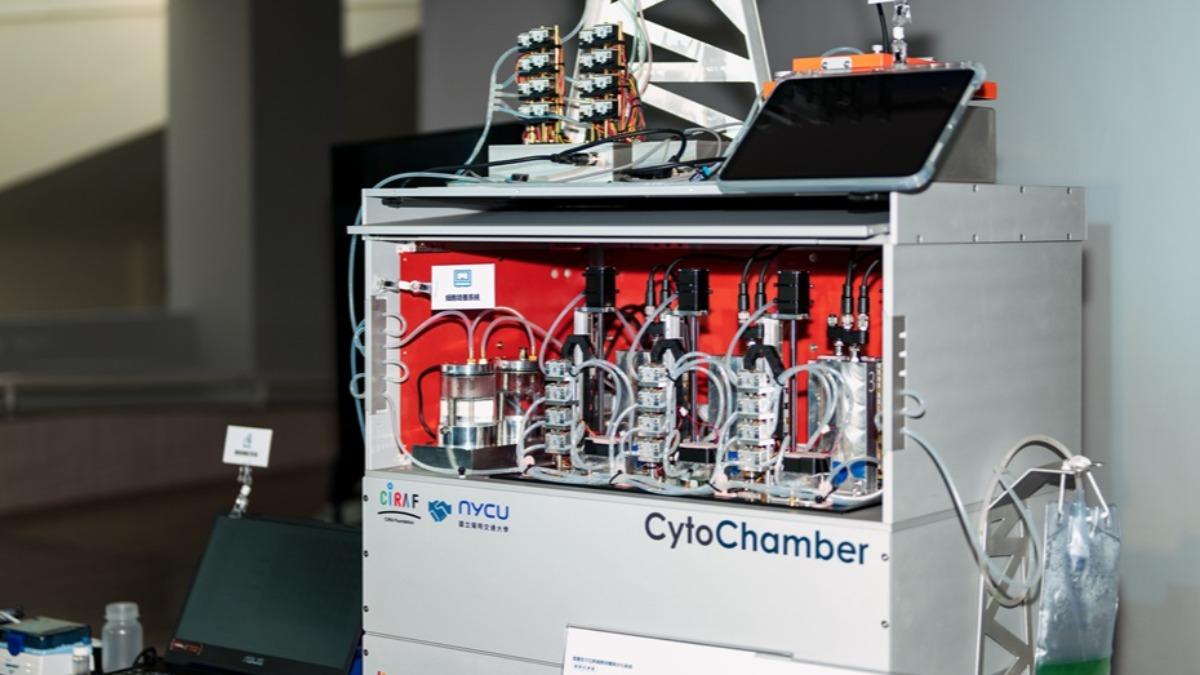
TAIPEI (TVBS News) — Researchers unveiled the Cyto Chamber (先鋒一號), a groundbreaking instrument designed to automate stem cell cultivation and differentiation, in a press release on Tuesday (Dec. 16). Developed by National Yang Ming Chiao Tung University (陽明交通大學) and the National Center for Instrumentation Research (NCIR, 國家儀器科技研究中心), this innovation aims to enhance efficiency in regenerative medicine by automating the labor-intensive processes surrounding stem cells, which have significant uses in the medical field.
The Taiwanese team, in collaboration with Japanese researchers, has focused on advancing regenerative medicine. Taiwan's contribution involves an instrument that automates the complex steps of stem cell cultivation, thus boosting the industrialization of regenerative medicine. National Yang Ming Chiao Tung University emphasized that while stem cells hold differentiation potential in regenerative medicine, their preparation is labor-intensive, costly, and heavily reliant on manual work, leading to inconsistent quality.
To overcome the bottlenecks in mass production and quality control of stem cells, National Yang Ming Chiao Tung University partnered with Kyoto University’s CiRA Foundation for five years. Their collaboration led to the successful development of the automated Cyto Chamber. The machine, a joint development by National Yang Ming Chiao Tung University and the NCIR, automates stem cell cultivation and plating, seamlessly integrating temperature control and microscopic imaging.
The university's semiconductor chip engineering team developed the QC Chip (品質控制晶片), which revolutionizes traditional testing methods. This chip enables real-time monitoring of stem cell quality, thereby enhancing stability. Japan's CiRA Foundation first showcased this achievement, capturing significant attention from the Japanese industrial and research sectors.
Lin Chi-hung (林奇宏), president of National Yang Ming Chiao Tung University, stated that their dual strengths in biomedical and semiconductor engineering were crucial in Japan's decision to collaborate with Taiwan. He noted that this collaboration showcases Taiwan's scientific research capabilities. The maturity and mass production of the Cyto Chamber and QC Chip promise to propel regenerative medicine from the laboratory to industrial and clinical applications.