



Taiwan is about to get really cold and here’s what to know
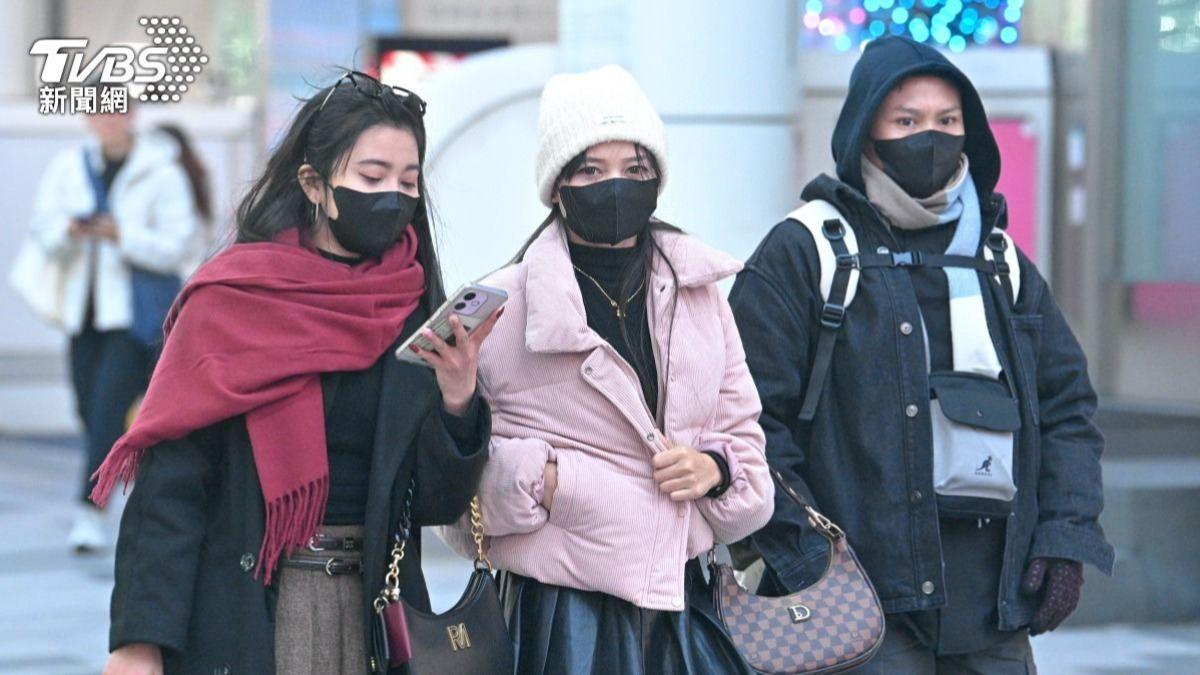
TAIPEI (TVBS News) — A series of cold fronts will sweep across Taiwan from Wednesday to Wednesday (Jan. 7-14), bringing dry and chilly weather, according to meteorologist Wu Sheng-yu (吳聖宇). Wu noted that Taiwan will be positioned on the backside of the central East Asian trough, resulting in minimal changes in weather patterns throughout the period. Brief and localized showers may occur in windward areas, such as Greater Taipei and northeastern Taiwan, the meteorologist stated.
Wu emphasized that northern Taiwan will experience cloudy and windy conditions, with Taipei's lowest temperature expected to reach 13.9 degrees Celsius (57.0°F) during the cold spell. New Taipei's Fugui Cape (富貴角), a coastal headland in northern Taiwan, recorded 10.3 degrees Celsius (50.5°F) in recent measurements. Wu remarked that this phenomenon of "central and southern regions being colder than the north" is not uncommon under radiative cooling conditions in Taiwan.
In the coming week, urban areas in northern and northeastern Taiwan are expected to experience low temperatures between 9 and 11 degrees Celsius (48.2°F to 51.8°F), according to Wu. Open areas in these regions may drop to 6 to 8 degrees Celsius (42.8°F to 46.4°F) during the coldest periods of the night and early morning. Southern regions and urban areas in Hualien and Taitung, located on Taiwan's east coast, are expected to experience lows of 12 to 15 degrees Celsius (53.6°F to 59.0°F). Open areas may potentially drop to 10 degrees Celsius (50.0°F) or lower during the cold spell.
Wu warned that low temperatures in mountainous regions may cause icy roads, posing significant safety risks for drivers and travelers during the cold spell. The meteorologist urged the public to brace for significant day-night temperature differences, especially in the south, where daytime highs will reach 22 to 25 degrees Celsius (71.6°F to 77.0°F). Residents, particularly those with elderly family members, children, or cardiovascular conditions, should monitor their health and take necessary precautions to stay warm during nights and early mornings. ◼