

Taiwan college exam tests students on global, local issues
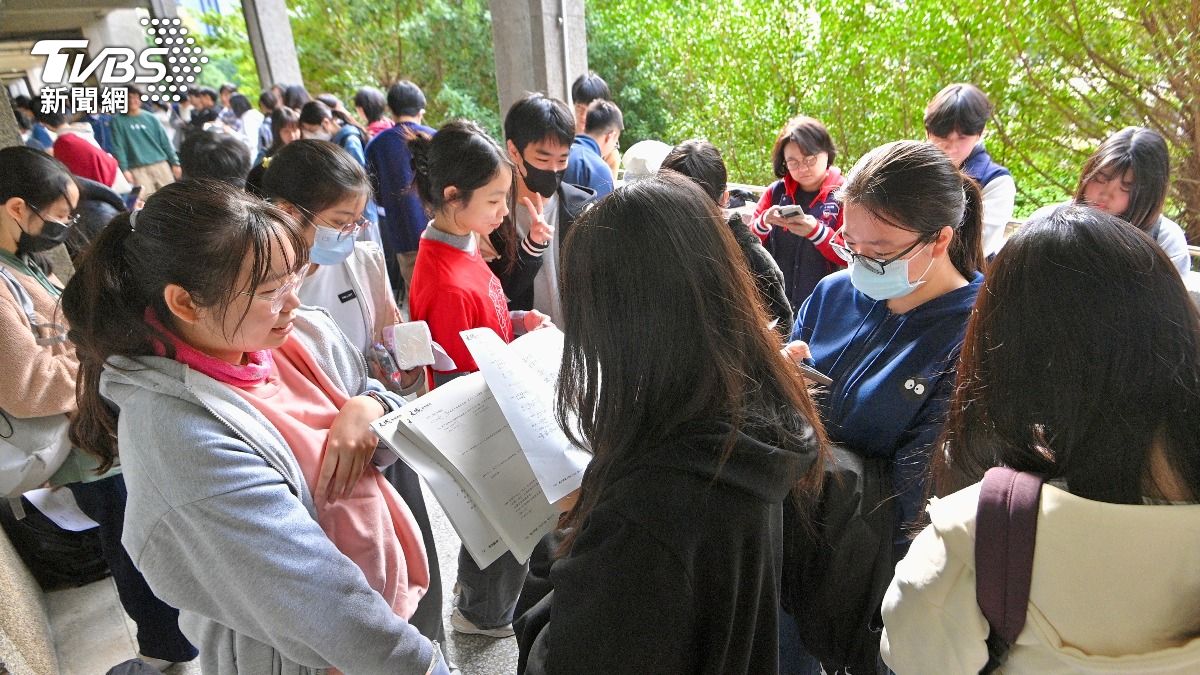
TAIPEI (TVBS News) — Taiwan's grade 12 students faced a challenging social sciences exam on Monday (Jan. 19), the third day of the General Scholastic Ability Test (GSAT, 學測), one of the island's major college entrance exams. The test intertwined local Taiwanese issues with global events, including the U.S.-China trade war and the Israel-Iran conflict's impact on global oil supply. The College Entrance Examination Center (CEEC, 大學入學考試中心) collaborated with high school teachers to craft questions emphasizing data analysis, cross-theme integration, and interdisciplinary skills.
The history section incorporated statistical tables, photographs, maps, and charts, going beyond traditional textual data to provide a micro-historical perspective on people's lives. The approach encouraged reflection on Western and modernization theories, according to the CEEC and collaborating teachers. Geography questions connected local topics like the development of the Hualien and Taitung sugar industries, in eastern Taiwan, with international affairs such as the U.S.-China trade war and the South Asia landslide lake.
The civics section introduced questions on economic inequality amid technological advancement, prompting students to reflect on artificial intelligence and issues associated with Japan Advanced Semiconductor Manufacturing (JASM). The section also addressed health care systems, the echo chamber phenomenon on social media, and fundamental and collective rights. The exam extended everyday life scenarios to an international perspective, exploring issues from illegal parking in red zones to the impact of the Israel-Iran conflict on global oil supply. ◼