



National Museum of Fine Arts hosts Liao Chi-Chun exhibit
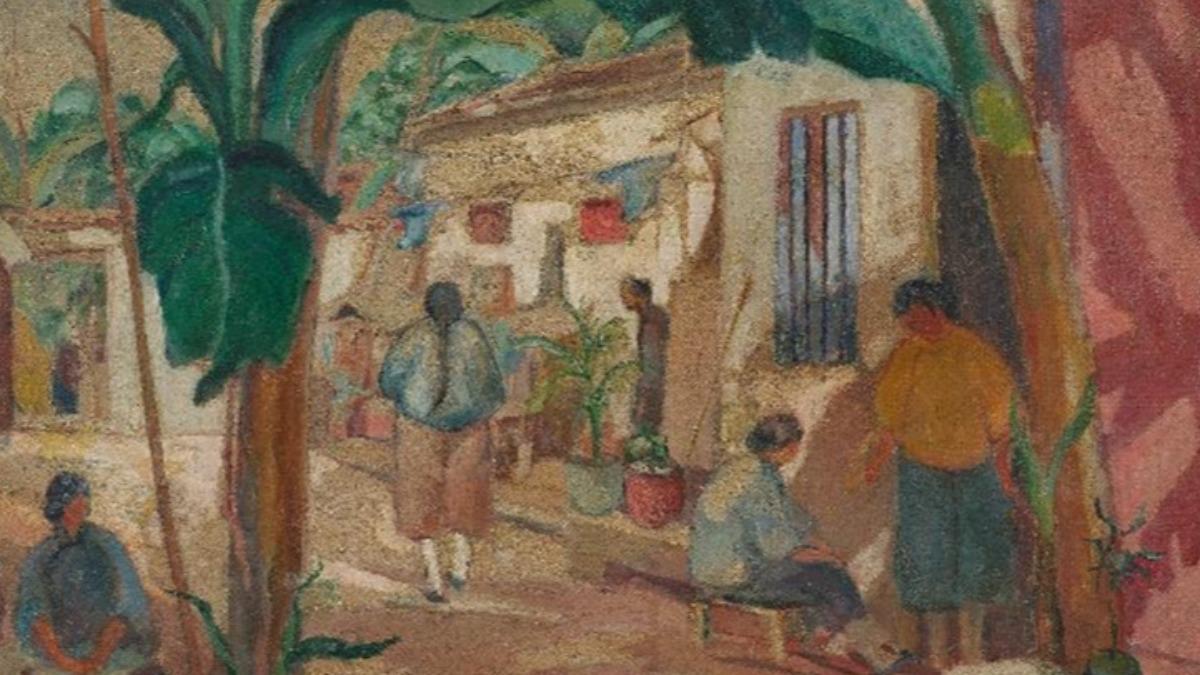
TAIPEI (TVBS News) — As the Lunar New Year holiday winds down, visiting art galleries offers the chance to take a break from a busy schedule of festivities to contemplate wonderful works of art. For those in Taichung during the break, the National Museum of Fine Arts is presenting an exhibition on the works of Taiwanese painter Liao Chi-Chun (廖繼春; 1902-1976), whose work is known for its vibrant palette and influence on later generations of Taiwanese artists. His works will be showcased until May 10.
Liao was a painter his entire life. From 1927 until 1943, he participated in the Taiwan Art Exhibition, also known as Taiten, during the Japanese colonial times. He also served as a juror for Taiten in the 1930s, as well as being selected for Japanese exhibitions. As an educator, he nurtured artistic talent within Taiwan by teaching art at various schools. He also contributed to Taiwan's artistic scene by helping to found several art groups, including the "Red Sun Society" (赤陽畫會) in 1927, the "Red Island Society" (赤島社) in 1929, and the "Tai-Yang Art Association" (臺陽美術協會) in 1934. He continued to serve as a mentor for the artistic community after World War II.
Liao's art can be divided into several phases of development. He learned outdoor painting during his studies in Japan, with the boldness of Fauvism also clear in his expressive brushwork. During the 1940s, he began to apply more monochromatic color schemes to unify the composition of his works. Liao started to experiment with Western modern painting styles beginning in the 1950s, including cubism and abstract painting techniques, and a trip to Europe and the U.S. in 1962 allowed him to further develop his abstract style, which would continue into his later works.
The paintings on display are derived from the collections of the National Museum of Fine Arts, along with collections from the Taipei Fine Arts Museum, Shung Ye Museum of Formosan Fine Arts, the National Museum of History, and private collections. In total, 128 pieces are showcased, including 96 oil paintings, 32 watercolors, drawings, documents, photographs, and other artifacts that reveal the life of a major figure in Taiwan's artistic development.