



Taipei’s temple culture: a blend of history and faith
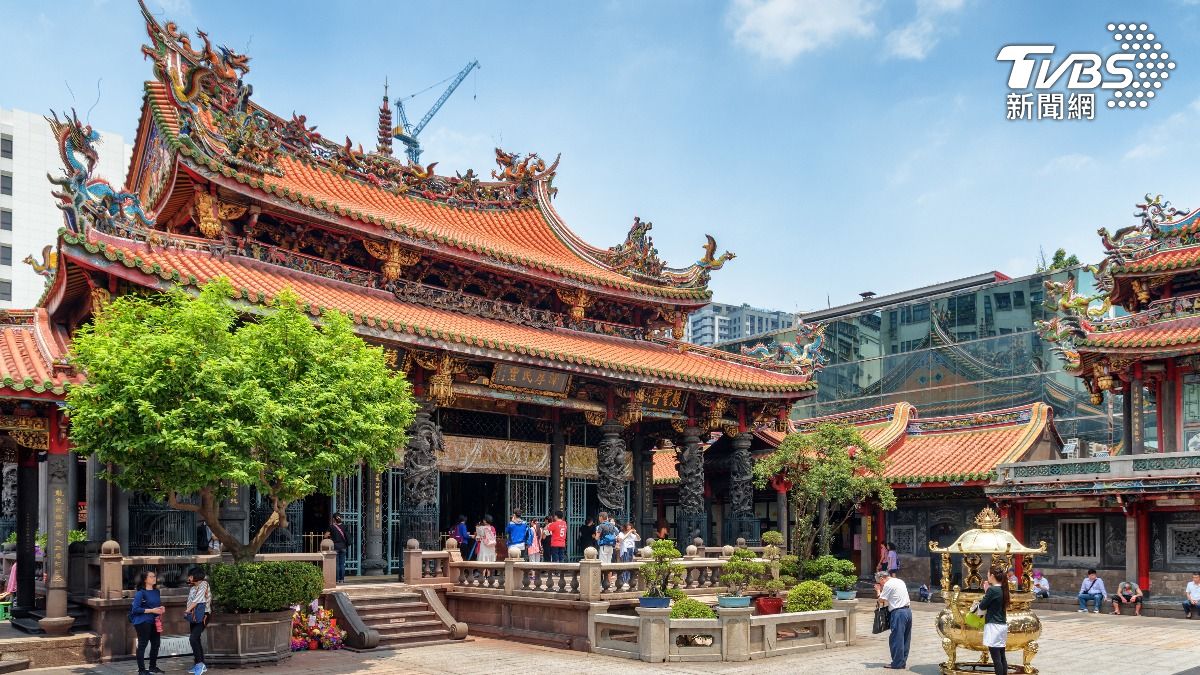
TAIPEI (TVBS News) — Taipei stands as a vibrant hub of political, economic, and cultural life in Taiwan, enriched by a diverse temple culture. The city's streets and alleys host various temples, serving as both religious sites and cultural treasures. Despite its later development compared to southern regions, Taipei, as the capital, boasts several renowned temples.
In Wanhua (萬華) District, also known as Monga (艋舺) in early times and Taipei's earliest developed area, Longshan Temple (龍山寺) serves as a focal point for local faith and community activities. Built from 1738 to 1740, the temple features Taiwan's only bronze dragon pillar from 1918 and vibrant wood carvings and paintings under the eaves.
Entering the temple, visitors ascend stone steps to reach Longshan Temple's main hall, where intricate stone carvings adorn the corridors. The main deity, Guanyin (觀世音普薩), miraculously survived WWII bombings during the Japanese colonization period, reinforcing worshippers' devotion. The temple's famous Yue Lao (月老), the God of Love, is reputed for matchmaking, with rituals involving offerings of sweets and prayers for love.
On the other side of the city, Xingtian Temple (行天宮), located at the intersection of Minquan East Road and Songjiang Road in Zhongshan District, attracts thousands daily, making it a major spiritual center in northern Taiwan. Dedicated to Lord Guan (關公), the temple is known for its unique practices, such as not accepting donations, not burning paper money with incense, and conducting commercial activities. Nearby, the Fortunetelling Street (命理街), alongside Longshan Temple's underground street, forms one of Taipei's two major fortune-telling districts.
Furthermore, the Taipei Confucius Temple (台北孔廟) also ranks among must-visit sites, honoring Confucius and historical scholars with a simple, unadorned architecture reflecting Confucian values. In the temple, there were neither fancy ornaments nor stone lions standing in front of the door. Annually, on Sept. 28, when is the birthday of Confucius, the temple holds a ceremony to commemorate Confucius' legacies in Chinese cultural ideologies and values. During major exams, the temple hosts blessing rituals for students and test takers, wishing them success.