


Taiwan’s past pop culture influence fades amid K-pop rise
TAIPEI (TVBS News) — Thousands of fans filled Kaohsiung National Stadium (高雄國家體育場) for a sold-out concert by Twice on Nov. 22-23 last year. Tickets sold out in five minutes, drawing more than 68,000 fans over the two-day event and prompting organizers to add three more dates for a Taipei concert in March 2026. The message was unmistakable: demand for K-pop in Taiwan remains strong.
K-pop has long dominated Taiwan's music charts. In 2025, none of the top five songs in Taiwan were by Taiwanese artists, according to Spotify. That same year, the top five albums on the platform in Taiwan were all released by K-pop acts. Korean pop culture has become a sustained presence in Taiwan, not a passing trend.
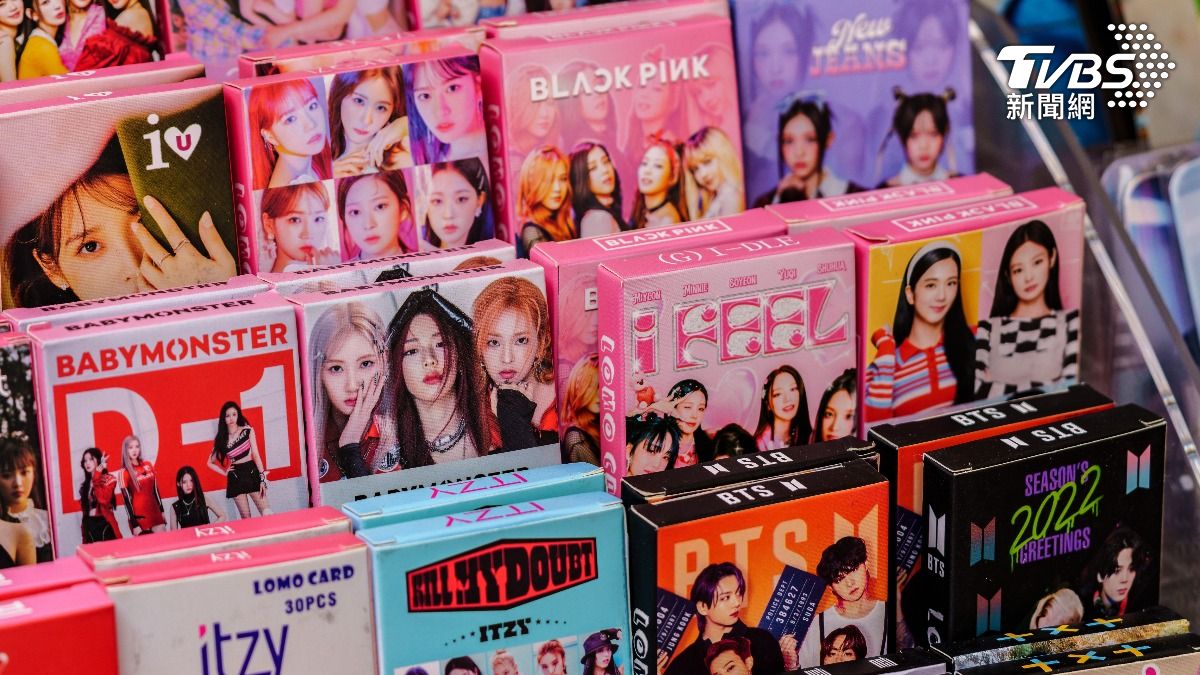
At times, Taiwan appears to be primarily a consumer of K-pop. Many younger listeners gravitate toward South Korean music, television dramas, and even food culture. A walk through Taipei's Ximending shopping district reveals storefronts lined with posters of K-pop idols, their images woven into everyday commercial spaces.
But this was not always the case. In the early 2000s, Mandopop and Taiwanese television dramas circulated widely across East and Southeast Asia. In April 2001, the drama Meteor Garden (流星花園) sparked a regional phenomenon, airing in markets including Taiwan, China, South Korea and parts of Southeast Asia. Its cast quickly became household names, and four of its male leads went on to form F4, a band that found popularity across the region.
Taiwan's cultural reach at the time was not accidental. Television dramas functioned as star-making incubators, with leading actors often performing original soundtracks that helped them transition into singing careers. Artists such as Rainie Yang (楊丞琳) and Angela Chang (張韶涵) emerged from this system. At its peak, a drama starring F4 member Vanness Wu (吳建豪), Autumn's Concerto (下一站,幸福), recorded an average viewership rating of 8.23 percent in Taiwan alone.
That ecosystem, however, did not endure. As China's entertainment market expanded, Taiwanese production companies increasingly oriented their content toward Chinese platforms and audiences, reshaping creative priorities and financing structures. At the same time, the rise of streaming fragmented viewership and weakened the domestic television system that had once played a central role in launching new stars. What was never rebuilt was a coordinated pipeline designed to export Taiwanese pop culture beyond the island.
Meanwhile, K-pop developed into a highly industrialized export model. Backed by long-term government support and large entertainment agencies, South Korea invested heavily in training systems, global marketing, and overseas distribution. In 2025, K-pop album exports reached an estimated US$300 million, reflecting a close partnership between the state and the private sector in promoting cultural industries abroad.
This is not a story about Mandopop losing to K-pop. It is about cultural visibility and the difference between consumption and export. Taiwan's economy remains heavily driven by electronics, which account for roughly 33.1 percent of its exports, a source of significant hard power. Cultural influence, by contrast, operates as soft power, shaping emotional connections rather than market dominance. Rather than replacing Taiwan's economic strengths, soft power can function as a form of protection, reinforcing how the island is seen and remembered globally. ◼