


Unimicron: The Critical Substrate Link in AI Chips
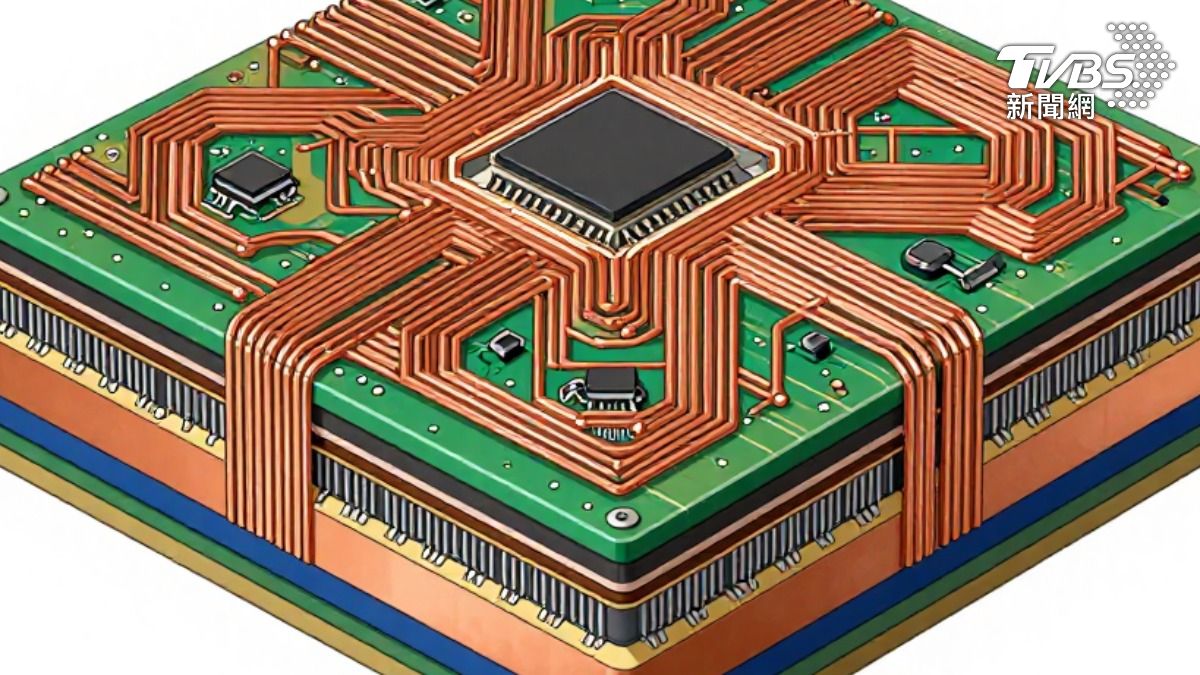
Every AI accelerator that powers today's largest models relies on an advanced substrate to connect the chip to the outside world. These ABF substrates, the high-performance interconnect layers that bridge GPU dies and circuit boards inside advanced packages, can only be manufactured at the required specifications by Japan's Ibiden and Taiwan's Unimicron Technology.
Unimicron was founded in 1990 as a printed circuit board manufacturer in Taoyuan, Taiwan. That origin in conventional PCBs belies the technical sophistication the company would develop over the following decades. The core competencies established in those early years, including multilayer lamination, precision drilling, and fine-line patterning, have proven extraordinarily valuable as semiconductor packaging has grown more complex.
The company expanded into IC substrates in the 2000s, adding the higher-density interconnect capabilities required to bridge chips and circuit boards. This diversification laid the foundation for Unimicron's current position as one of only two suppliers capable of manufacturing the most advanced ABF substrates that AI accelerators require.
ABF (Ajinomoto Build-up Film) is the critical enabling material for high-performance IC substrates. The resin-based build-up layers allow for the fine line widths and spacing that advanced packaging demands. As AI chips have grown larger and more complex, ABF substrate requirements have expanded dramatically. Unimicron chairman Tzyy-Jang Tseng has noted that substrate areas for CoWoS technology have grown more than ten times.
Unimicron's recent results reflect the growing strategic importance of advanced substrates. Full-year 2025 revenue reached approximately NT$131.2 billion (roughly US$4.2 billion), up from NT$115.4 billion(US$3.7 billion) in 2024. January 2026 revenue came in at NT$10.2 billion (US$324 million), up 34.5% year-over-year, with management noting that 2026 demand visibility remains strong.
The company is backing that outlook with record capital spending, maintaining capex at over NT$25 billion (approximately US$790 million) in 2026, more than 20% above 2025 levels. This investment targets high-end ABF substrate production for advanced packaging technologies such as CoWoS (Chip-on-Wafer-on-Substrate) and EMIB (Embedded Multi-die Interconnect Bridge).
The capacity constraints are real. Industry observers have noted that downstream customers are increasingly worried advanced substrate capacity could fall short of demand over the next two to three years. That imbalance favors the limited number of companies with proven process capabilities. Unimicron's competitive position benefits from an unusual market structure. In the advanced AI server ABF substrate and OAM (OCP Accelerator Module) board segment, only Ibiden and Unimicron have the necessary process capabilities. This creates what industry observers describe as a quiet duopoly in one of the most strategically critical segments of the semiconductor supply chain.
The barriers to entry are formidable. Advanced ABF substrates require process expertise refined over decades to achieve the layer counts, line widths, and via densities that AI packaging demands. ABF film supply is itself constrained, and established material supplier relationships provide advantages new entrants cannot quickly replicate. Qualifying new substrate suppliers takes years of testing and validation, meaning TSMC, Intel, and AMD cannot easily switch to unproven sources. The equipment and facilities alone represent billions of dollars in investment.
Unimicron Chairman Tseng has emerged as a prominent figure articulating the substrate industry's transformation. At the TPCA Show 2025 late last year, he pointed to an unprecedented wave of demand where AI servers require 50 to 60 times the PCB volume of traditional servers. He forecast that by 2029, PCBs serving AI applications will surpass smartphone PCBs in global market value, confirming the industry's shift from consumer electronics dependency to AI infrastructure leadership.
Unimicron's expansion strategy reflects dual pressures: capacity constraints and geopolitical diversification. The company directs PCB capacity expansion primarily to its Thailand plant while maintaining advanced substrate production in Taiwan. Expansion in Thailand addresses Western customers' requests for supply chain de-risking, while keeping advanced substrates in Taiwan preserves proximity to TSMC and the broader semiconductor ecosystem. The company also operates production bases in China, Germany, and Japan, and recently converted two factories in Taiwan and one in China to produce AI-specific OAM boards.
On the technology front, AI chip development has brought the PCB and semiconductor industries closer together than ever. Advanced boards are now engineered alongside chips in co-design ecosystems. CoWoS-L, EMIB, and emerging panel-level packaging all demand substrates of increasing sophistication, and Unimicron must keep pace to retain its position in a market with only two qualified suppliers.
Multiple catalysts point to sustained growth. Nvidia's platform evolution from Blackwell to Rubin will require progressively more sophisticated substrates with larger die sizes and tighter specifications. ASIC proliferation among hyperscalers creates additional demand, as AWS, Google, Meta, and Microsoft expand custom silicon programs requiring the same advanced packaging technologies. Material constraints will ease gradually, but the structural supply-demand imbalance in advanced substrates will persist.
Unimicron Technology's evolution from PCB manufacturer to advanced substrate leader exemplifies how technical depth in interconnect technologies can compound over decades into a position of enormous strategic value. The company that started making circuit boards 35 years ago now manufactures some of the most sophisticated interconnect layers in the semiconductor industry. As AI accelerators grow larger, more complex, and more power-hungry with each generation, the substrates carrying their signals must keep pace. With only one rival capable of matching its most advanced capabilities, Unimicron's leadership position in this critical technology segment is unlikely to loosen anytime soon.