



Powertech: Memory Packaging Giant Reshaping AI
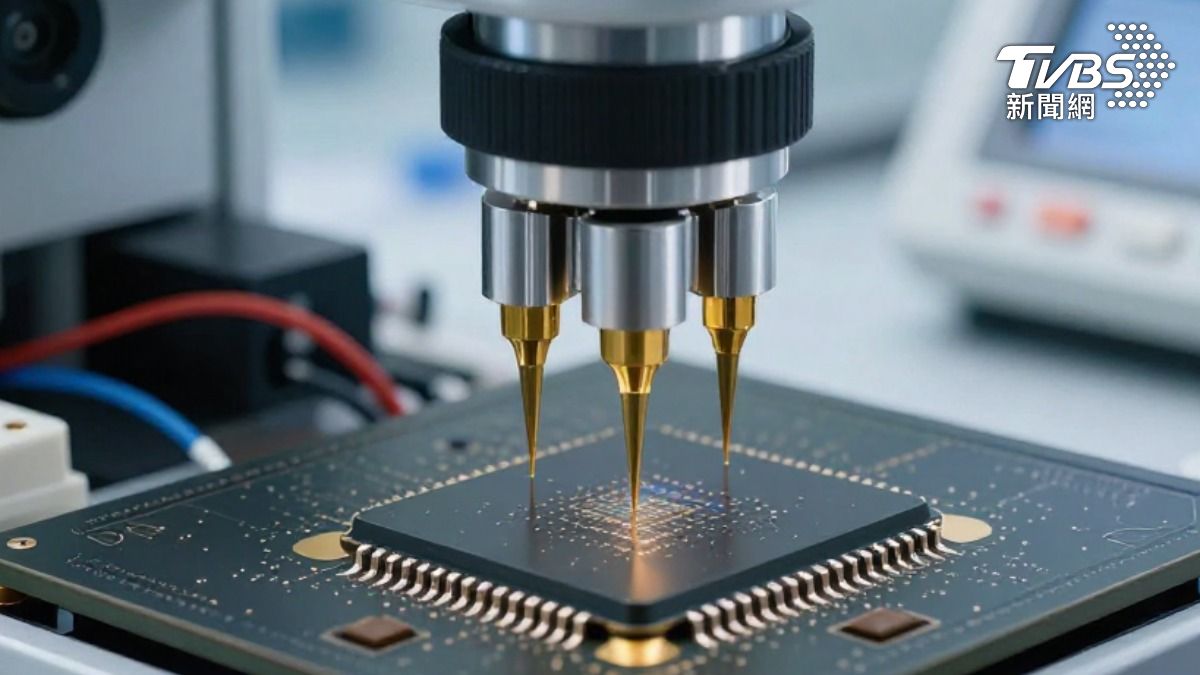
Before the high-bandwidth memory in today’s AI accelerators can function, each chip must be precisely packaged, bonded, and tested to meet exacting specifications. Powertech Technology (PTI), Taiwan’s second-largest outsourced semiconductor assembly and test (OSAT) provider, handles this critical work for many of the world’s leading memory and AI chip makers. As AI infrastructure spending accelerates beyond US$650 billion in annual hyperscaler capital expenditure, Powertech has emerged as both a linchpin of the memory supply chain and a serious contender in advanced AI chip packaging.
Packaging and testing provide the essential bridge between raw silicon and working systems. Modern AI processors require ever more sophisticated assembly: stacking memory dies, building redistribution layers, and managing thermal loads across tightly integrated components. Powertech’s combination of deep memory expertise and proprietary advanced packaging technology has positioned the company to capture surging demand that even TSMC cannot fully absorb.
Powertech was founded in 1997 in Taiwan’s Hsinchu Science Park. The company secured its first major customers early, winning DRAM testing orders from Powerchip and flash memory work from Macronix. When DK Tsai, formerly of the Kingston Technology Group, joined as chairman, the company accelerated its focus on memory packaging and testing. Over the following decade, Powertech achieved a compound annual growth rate exceeding 50%, climbing to the number five position among global IC backend firms by 2008 and establishing itself as the world’s largest memory packaging and testing provider.
That memory foundation proved remarkably strategic. Powertech built core capabilities in chip bumping, wafer probing, multi-chip packaging, and burn-in testing. It expanded into Japan in 2017 to serve the automotive electronics market and established operations across Taiwan, China, and Japan. Today the company employs over 18,000 workers and maintains close partnerships with major memory manufacturers including Micron Technology, which reportedly outsources a majority of its DRAM packaging and testing to Powertech while Micron focuses internal capacity on producing high-bandwidth memory for AI servers.
Recent financials reflect the AI-driven acceleration. Full-year 2025 revenue reached approximately US$2.4 billion. Fourth-quarter 2025 revenue hit NT$21.41 billion (roughly US$681 million), up 25.2% year-over-year, while net income rose 22.3% to NT$1.86 billion (US$59 million), marking the company’s strongest quarterly performance in three years. Gross margin, operating margin, and profit margin all improved despite headwinds from rising gold prices and higher electricity costs. Packaging utilization climbed above 90% and testing utilization reached 85% in the fourth quarter, up sharply from earlier in the year. Management expects high double-digit year-over-year growth to continue into the first half of 2026.
The most consequential development at Powertech is its proprietary fan-out panel-level packaging (FOPLP) technology, known as PiFO (Pillar Integration Fan-Out). The company has invested over a decade developing this approach, which directly rivals TSMC’s CoWoS-L advanced packaging platform. PiFO offers two distinct advantages: its glass substrate provides superior heat dissipation, and production costs run approximately 30% lower than CoWoS-L. With most of TSMC’s advanced packaging capacity reserved for Nvidia, multiple U.S. AI chip firms have turned to Powertech as a credible alternative. Order books for PiFO extend through 2027.
Powertech is backing this technology with record investment. The company plans to spend NT$44.3 billion (approximately US$1.4 billion) over three years, primarily to expand FOPLP capacity. The P11 plant in Hsinchu, its main FOPLP production base, is undergoing cleanroom expansion scheduled for completion in mid-2026, with a target monthly capacity of 6,000 panels. A second facility, the P12 plant converted from a former AUO display factory acquired for NT$6.9 billion (US$221 million), will add AI chip packaging using ABF substrates and provide additional FOPLP and R&D space. After solving key manufacturing challenges including panel warpage, Powertech is targeting yield rates of 95 to 98%, with full customer qualification expected in 2026 and volume production beginning in the first half of 2027.
The company’s ambitions extend beyond current packaging formats. Powertech is developing optical engine packaging and co-packaged optics (CPO) for AI chips, technologies that bring data transmission components closer to the processor to meet the bandwidth demands of next-generation AI workloads. CPO integration is expected to enter mass production by late 2027. The company has also finalized a 510mm by 515mm panel standard approved by multiple customers and is installing equipment capable of processing packages up to five times reticle size, a capability that only about two companies in the industry currently possess.
As AI architectures grow more complex, the gap between fabricating a chip and deploying it in a data center has widened into a technical challenge that rivals fabrication itself. Stacking memory, building redistribution layers, integrating optical interconnects, and validating performance under extreme conditions all require capabilities that take decades to develop and cannot be quickly replicated. Powertech's $1.4 billion bet on FOPLP signals a company that sees this moment not as a cyclical upswing but as a structural transformation of its industry. If AI infrastructure spending continues at its current trajectory, the firms that physically assemble and validate the world's most advanced chips will command influence, and margins, that match their growing strategic importance.