


EU chip sovereignty delay creates opening for Taiwan: Report
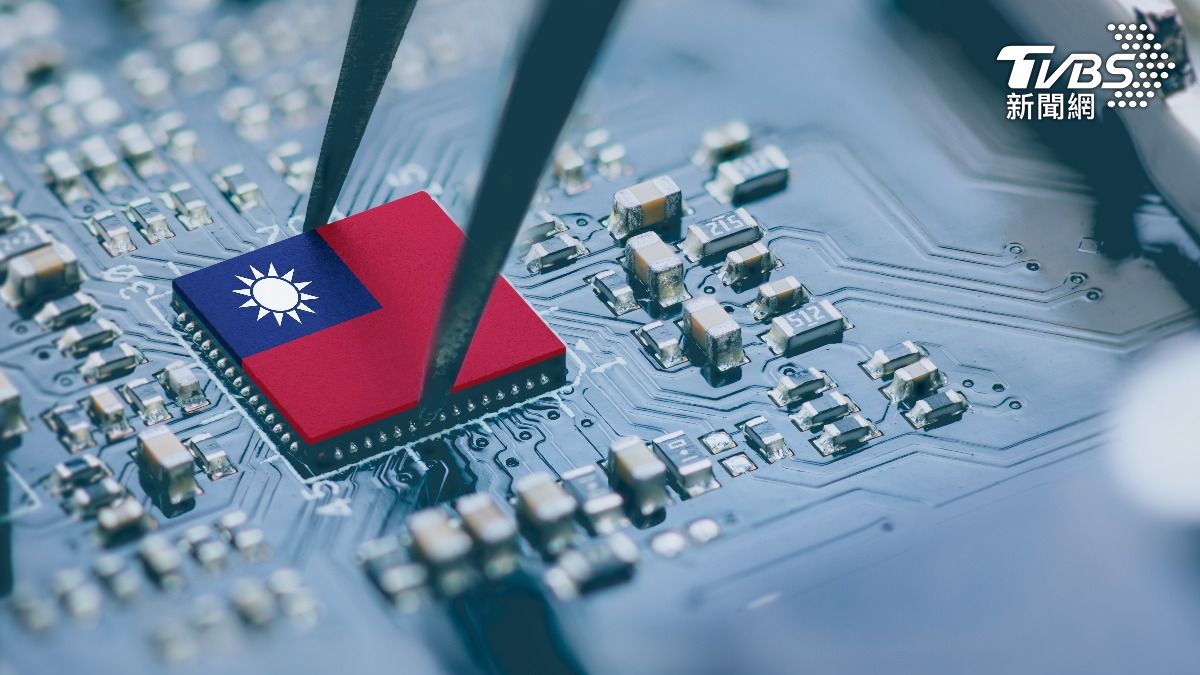
TAIPEI (TVBS News) — Europe was supposed to define "technology dependence" on Wednesday (March 25). Instead, Brussels delayed its semiconductor sovereignty package twice — first to April 15, now to May 27 — and Taiwan is using every extra day to make itself indispensable to a continent that just discovered it cannot build cars without Asian semiconductors in the short term, according to a new industry analysis from Taipei.
The package encompasses the Chips Act 2.0, Cloud and AI Development Act, and an open-source software strategy. These measures will shape Europe's approach to chip manufacturing and digital independence. Taiwan produces over 90% of the world's most advanced semiconductors, making the postponement strategically significant, according to the Market Intelligence & Consulting Institute (MIC, 資策會產業情報研究所). The commission has not commented on the delay.
The delay follows Europe's most dramatic semiconductor confrontation with China, which erupted last year. The Dutch government seized control of the Chinese-owned chipmaker Nexperia (安世半導體) in September 2025, citing technology-transfer risks to European security. Beijing retaliated with export restrictions on Nexperia's Dongguan packaging facility (東莞封測廠), which handles approximately 70% of the company's products, triggering supply chain chaos across the continent.
The crisis forced European automakers, including Volkswagen, BMW, and Mercedes-Benz, to face critical component shortages that threatened production schedules. Major parts supplier Bosch suspended production lines in Germany and Portugal as inventory ran dry. The disruption exposed the vulnerability of Europe's "design here, manufacture in Asia" business model, accelerating urgent calls for supply chain diversification and alternative partnerships.
Taiwan has moved to fill the gap, according to the MIC analysis. The island established an early warning mechanism with the EU for supply chain disruptions. Taipei agreed to share real-time capacity data and inventory alerts during crises. The agreement includes priority consultation rights for allocating critical automotive and industrial chips during extreme shortages, giving Taiwan a seat at the table when Europe faces its next chip crisis.
The National Applied Research Laboratories (國研院) has begun operating an advanced chip design research center in Prague under the Taiwan-Czech Resilience Initiative (臺捷韌性計畫), according to the MIC report. Topco Scientific (崇越科技) is promoting a semiconductor park in Ústí (烏斯季), Czech Republic, modeled on Hsinchu Science Park (新竹科學園區), Taiwan's semiconductor manufacturing heartland. Other Taiwanese companies are also planning European facilities: Winway (穎崴) and Marktech International (帆宣) plan to establish operations in the Czech Republic, while TPC (和淞) is building infrastructure in Germany. Poland has established a Taiwan-Poland semiconductor working group to create direct channels for Taiwanese companies entering European markets.
The partnerships address a structural mismatch in semiconductor capabilities, the report argues. Europe excels at precision equipment and power semiconductors, while Taiwan dominates advanced logic chips and complex packaging. As Europe develops AI and 6G applications, it must secure supply chains for cutting-edge technologies it cannot yet produce domestically — the continent still lacks manufacturing capability below 7 nanometers, the threshold for the most advanced chips.
Taiwan's largest chipmaker is already embedded in Europe's semiconductor plans. Taiwan Semiconductor Manufacturing Co. (TSMC, 台積電) received approximately 5 billion euros (around US$5.4 billion) in EU and German government subsidies for its Dresden facility, known as ESMC, according to the MIC analysis. The massive investment represents a strategic bet that European chip production can reduce dependence on Asian supply chains over the long term.
The investment comes with significant strings attached under European law. Under the existing EU Chips Act, the Commission holds emergency powers to commandeer chip production for European customers during severe shortages. ESMC would be required to prioritize EU orders over other global customers during such crises, potentially affecting Taiwan's ability to serve its worldwide client base from the German facility.
The May 27 deadline will eventually arrive, bringing Europe's definition of acceptable technology partnerships. Taiwan is betting that by then, the question will no longer be whether to include Taiwanese suppliers in Europe's chip sovereignty framework. The real question may be how Europe can do so while accounting for the realities of today’s global semiconductor supply chains, the MIC analysis suggests. ◼ (At time of reporting, US$1 equals approximately NT$31.97 or 0.86 euros)