



U.S. senators urge Taiwan to boost defense spending now
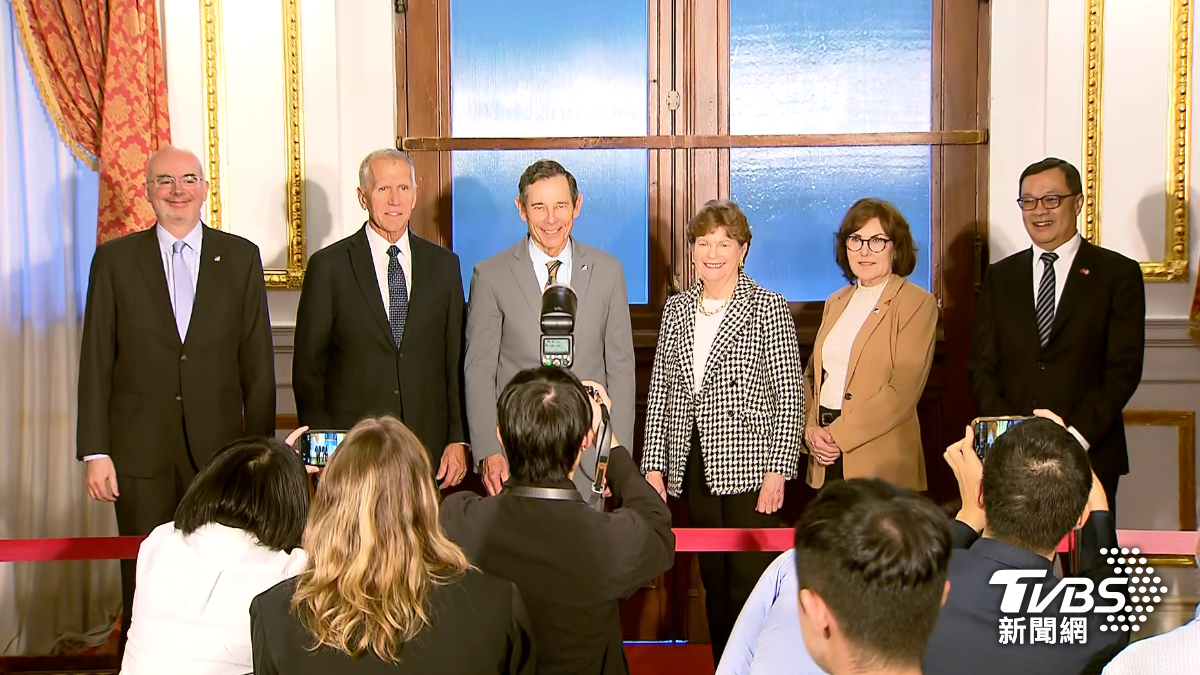
TAIPEI (TVBS News) — U.S. senators warned Taiwan on Tuesday (March 31) not to repeat NATO's defense mistake. The bipartisan delegation said underfunding would expose vulnerabilities just as China escalates pressure on the island. Taiwan's legislature is debating competing budget proposals. Opposition parties have proposed NT$380 billion to NT$400 billion (around US$11.8 billion to US$12.5 billion), while the government seeks NT$1.25 trillion (around US$39 billion).
Senator Thom Tillis (R-NC), co-chair of the U.S. Senate Taiwan Caucus and co-lead of the Senate NATO Observer Group, spoke at a press conference in Taipei. "We learned over the first 20 years of this century that underfunding NATO by some US$2 trillion has actually created an industrial base that needs modernization," Tillis said. He added that this represented "capacity that should have already been there."
Tillis praised Taiwan's commitment to spending more than 3% of gross domestic product on defense, calling it "a best practice that we can only hope that our NATO colleagues will follow." The four-member delegation, led by Senator Jeanne Shaheen (D-NH), ranking member of the Senate Foreign Relations Committee, arrived early Monday aboard a U.S . military aircraft. The two-day visit included meetings with President Lai Ching-te (賴清德) and leaders in the Legislative Yuan, Taiwan's parliament.
The senators visited the National Chung-Shan Institute of Science and Technology (NCSIST, 國家中山科學研究院), Taiwan's primary defense research agency, where they viewed the first public display of live-fire test results from the Mighty Hornet IV drone. The weapon, jointly produced with U.S.-based defense company Kratos, demonstrated its warhead penetrating a 50-millimeter (approximately 2-inch) high-strength steel plate. Senator Jacky Rosen (D-NV) said the delegation would pursue legislation and cooperative agreements to strengthen U.S.-Taiwan defense co-production.
Shaheen emphasized that Taiwan's special defense budget should fund both American equipment purchases and domestically produced asymmetric capabilities. "Strengthening deterrence across the strait requires capabilities that are fit for modern warfare, a mix of American systems and Taiwan's own," she said. "That deterrence is the most important thing we can build on to prevent a conflict that would be devastating for the region and for the world."
Tillis drew lessons from Ukraine's defense against Russia, noting that such asymmetric tactics have shifted the battlefield calculus. "What would on paper look like a country that's simply outmatched, how well they have been able to bring the fight to Russia and defend their territory," he said. Taiwan has developed similar capabilities that, with adequate funding, could "create a dimension on the battlefield and uncertainty that really even goes beyond some of the conventional weapons," Tillis added.
The visit coincided with China's announcement that President Xi Jinping (習近平) had invited Kuomintang Chairwoman Cheng Li-wun (鄭麗文) to visit Beijing in April. Shaheen said dialogue is positive but urged Beijing to engage with all Taiwan political parties. "If they're going to be talking to one party, that they would be talking to all parties," she said.
Senator John Curtis (R-UT) announced he is proposing legislation to codify the Six Assurances — informal U.S. commitments to Taiwan dating to 1982 — into law. He argued that a stronger U.S.-China relationship would increase Taiwan's security. "If we have a strong relationship, if our presidents have a talking relationship and a working relationship, that increases the likelihood that there would not be aggression from China," Curtis said.
The delegation departed Tuesday evening for Tokyo and Seoul, carrying the same message across the Indo-Pacific. But for Taiwan, the warning was most pointed: NATO's US$2 trillion shortfall took two decades to accumulate. Taiwan's budget debate, senators suggested, cannot afford such patience. ◼