



Taiwan war games to incorporate lessons from Iran, Venezuela
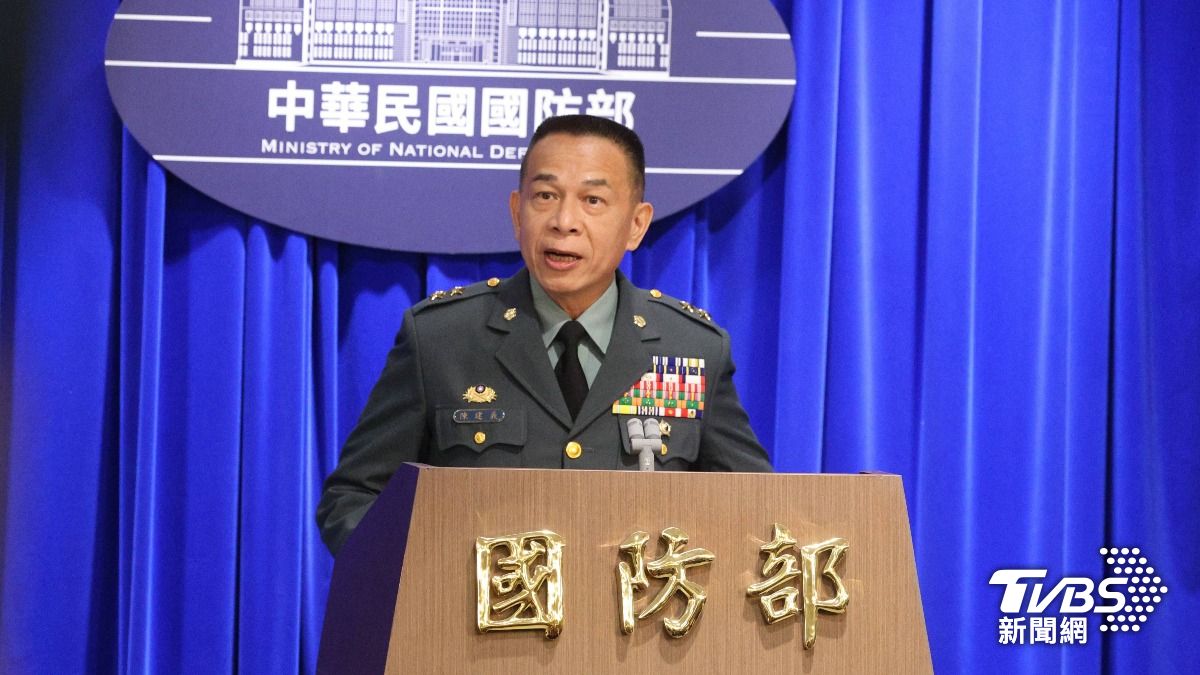
TAIPEI (TVBS News) — Taiwan's military has shifted from planning for a theoretical Chinese invasion to studying how wars are actually fought. Defense officials announced Thursday (April 2) that Han Kuang 42 (漢光42號演習), the island's largest annual war games spanning April through August, will incorporate lessons from U.S. combat operations against Iran and in Venezuela — starting with 14 days of computerized tabletop exercises on April 11.
Simulating Gray Zone Escalation
The "Computerized War Games" (電腦輔助指揮所演習) will use the U.S.-built Joint Theater Level Simulation platform (JTLS, 聯合戰區層級模擬系統) to test command posts across all three military branches around the clock, Maj. Gen. Tung Chi-hsing (董冀星), director of the Ministry of National Defense's Joint Operations Planning Division, said at a briefing in Taipei. The discussion-based simulation, running through April 24, will simulate scenarios ranging from Chinese gray zone harassment to a full-scale invasion.
Gray zone tactics refer to provocative or aggressive actions — such as military exercises, airspace incursions, and naval patrols — that fall just short of open conflict but apply constant pressure. The exercises will simulate a scenario in which the People's Liberation Army (PLA, 中國人民解放軍) unexpectedly turns such activities near Taiwan into a real attack, Tung said.
The tabletop exercises now emphasize early warning systems, real-time response capabilities, counter-electromagnetic interference, and counter-drone measures — priorities drawn from observing U.S.-Israel military operations against Iran. The drills will also test joint intelligence surveillance and reconnaissance, critical military facility resilience, layered joint air defense engagement, and convoy escort operations under combat conditions, officials said.
A key focus this year is decentralized command. Drawing on lessons from the Russia-Ukraine and U.S.-Iran conflicts, Taiwan's military is testing whether troops can independently execute missions when communications with higher command are severed. Tung said the exercises would verify that when communications systems are interfered with or fail, units can switch to backup, emergency, and contingency communications to maintain command continuity.
The ministry will verify eight key areas, including command mechanism operational continuity, authorization protocols, multiple command-and-control backup methods, and cross-regional force deployment. The drills will also assess joint fire coordination resilience, pre-designated kill zone interdiction, mobile logistics support, and whole-of-society defense resilience through coordination with civilian agencies.
As with last year, the tabletop segment will be unscripted to test troop emergency response capabilities under 24/7 operational conditions, Tung said. The scenario will also test how the armed forces defend the country if the PLA attempts to seize ports and airports before advancing inland. In addition to active-duty troops, the military will mobilize reserve forces and coordinate with the Central Joint Response Center (中央聯合應變中心) to practice integrated military-civilian cooperation.
New Joint Defense Exercise Breaks Decades-Old Model
The second phase of Han Kuang 42, a new Joint Defense Exercise (聯合防禦操演) debuting in July, will break from the sequential service-by-service combat model used for decades. Under the old system, the air force conducted long-range strikes first, followed by navy's coastal and anti-submarine operations, then army's ground combat. The new approach integrates all three services simultaneously once enemy forces are detected, preparing to attack.
Maj. Gen. Chen Chun-nan (陳俊男), director of the Military Training Division, said the core focus of the "Joint Defense Exercise" is refining command and control mechanisms and enforcing rules of engagement across all services operating together. The exercise will last approximately seven days, though specific details remain undetermined.
New equipment, including M1A2T tanks and drones recently acquired by Taiwan, will be incorporated into the exercise scenarios for action parameter verification, Tung said. The ministry did not specify which drone systems would be tested or how the American-made tanks would be integrated into defensive operations during the simulations.
The final phase, "Live-Force Exercises" (實兵演習) in August, will run 10 days and nine nights, Defense Minister Wellington Koo (顧立雄) said earlier this year. The ministry did not announce specific dates during Thursday's briefing. Whether U.S. military personnel or observers from allied nations will participate in any phase of Han Kuang 42 remains unclear.
Budget Crisis Threatens Defense Modernization
The budget crisis looms over these preparations. The ministry warned Thursday that NT$78 billion (around US$2.44 billion) in defense spending faces execution delays because Taiwan's legislature, the Legislative Yuan (立法院), has not approved the 2026 national budget. Twenty-one percent of the defense budget, excluding mandatory personnel costs, cannot be executed on schedule, affecting programs including HIMARS multiple rocket systems and Javelin missile procurement.
Gen. Huang Chih-wei (黃志偉), vice chief of the General Staff (Executive), who presided over Thursday's press conference, urged legislators and the public to back the defense budget. "We hope the public and the Legislative Yuan can support the smooth passage of the defense budget so that our defense capabilities do not decline," Huang said.
The annual Han Kuang exercises have served as Taiwan's primary war games since 1984. The tabletop portion lasted just five days in previous years before expanding to eight days in 2024 and two full weeks last year. The continued expansion reflects Taiwan's evolving threat assessment, though officials did not explain the increased duration.
The shift from theoretical planning to real-world lessons marks a new chapter for Taiwan's defense — but whether insights drawn from American operations will prove relevant to defending a 36,193 km² island (around 14,000 square miles) remains untested. The exercises can simulate communication failures, decentralized command, and multi-front assaults. What they cannot simulate is whether Taiwan's troops, equipment, and political will can withstand an actual Chinese attack. That question, officials acknowledged Thursday, will be answered only if the island's worst-case scenario becomes reality. ◼ (At time of reporting, US$1 equals approximately NT$32.01)