



KMT chair seeks guidance before high-stakes China trip
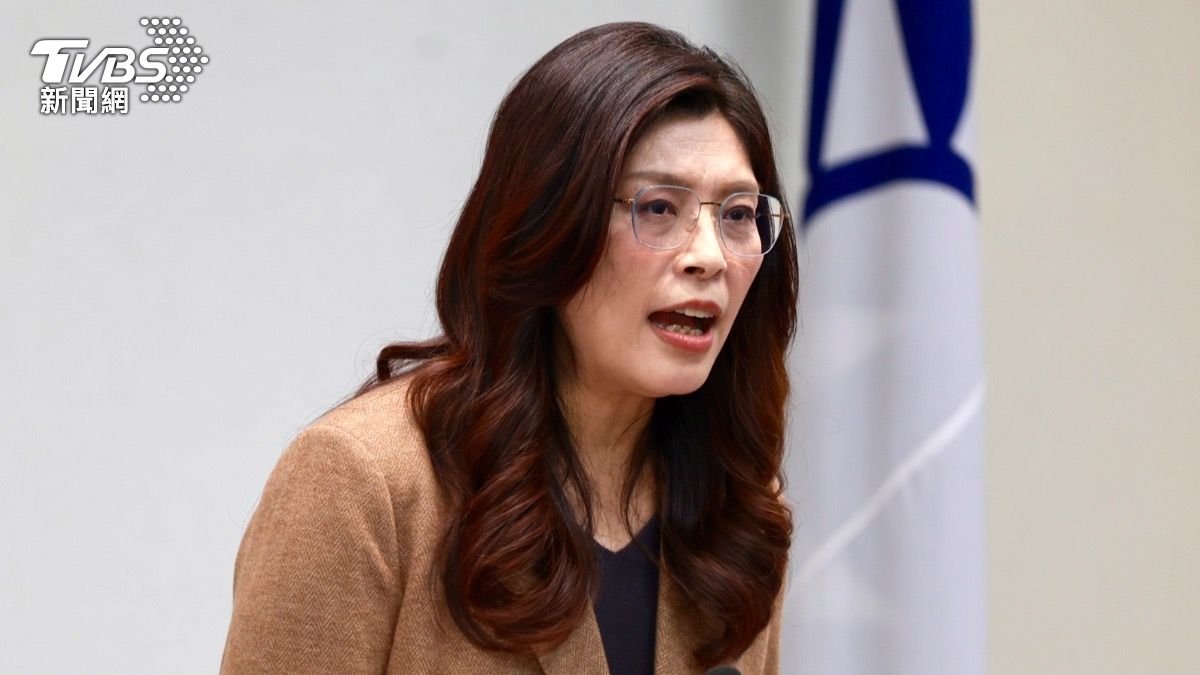
TAIPEI (TVBS News) — Kuomintang (國民黨) Chairperson Cheng Li-wun (鄭麗文) met Friday (April 3) with former KMT Chairman Wu Poh-hsiung (吳伯雄) ahead of her six-day trip to Nanjing, Shanghai and Beijing starting Monday. The visit marks the first time in 10 years that an acting KMT chairperson has traveled to China. The trip was prompted by an invitation from Chinese Communist Party General Secretary Xi Jinping (習近平) but shadowed by warnings from Taiwan's ruling party.
Wu, who visited China six times during his tenure as party chairman and honorary chairman, said the current situation is "more severe" than in 2005, when China passed the Anti-Secession Law. He noted that since then-U.S. House Speaker Nancy Pelosi's 2022 visit to Taiwan, "the tacit understanding on the Taiwan Strait median line has disappeared," and China's military exercises have been unceasing.
"No wonder the Taiwan Strait has become the most dangerous region in the world," Wu said. Despite this assessment, he told Cheng the visit "must succeed," adding: "There is no alternative." Wu met Xi in 2013 during his tenure as KMT honorary chairman and said Xi had expressed hope that "the hearts of people on both sides of the strait could connect."
The KMT issued a statement after the meeting, saying the party hopes to continue and expand upon its efforts for cross-strait peace. Cheng said she would carry out the mission Wu entrusted to her, adding: "Elder Wu has given his instructions — we must succeed, we have to succeed." Neither Cheng nor the party has publicly defined what constitutes a successful visit.
Cheng, speaking to reporters a day earlier at Cihu (慈湖), the mausoleum of former ROC President Chiang Kai-shek (蔣中正), thanked Xi for his "warm invitation." She said the invitation "formally releases goodwill and sincerity, which is what cross-strait relations need most right now." She expressed willingness to meet with President Lai Ching-te (賴清德) before or after her visit, saying "there are too many knots that need to be untied."
China's Taiwan Affairs Office (TAO, 國台辦) welcomed the visit on Tuesday, calling it "in line with the needs of cross-strait relations development." TAO Spokesperson Zhang Han (張晗) said cross-strait affairs are "family matters" that "should be discussed among family members," adding that "Chinese people on both sides have the wisdom and ability to resolve their own affairs."
Taiwan's Mainland Affairs Council (MAC, 陸委會) responded Thursday that Beijing's framing reveals its intent to pursue "anti-intervention" and "domestication of cross-strait issues." The MAC issued a five-point appeal warning Cheng not to become a "tool for united front operations" — a term for Beijing's efforts to cultivate support among non-Communist groups. The council demanded she call on Beijing to stop military threats and acknowledge the Republic of China's existence.
MAC Deputy Minister and spokesperson Liang Wen-chieh (梁文傑) said Beijing's purpose in inviting Cheng is to obstruct U.S. arms sales to Taiwan. "Beijing wants to domesticate cross-strait issues, treating them as Chinese family affairs to handle, with foreign countries not allowed to intervene," Liang said at a Thursday press conference.
Liang added that if Beijing can tell the world that the chairperson of Taiwan's largest opposition party agrees with its position, "it would form the greatest obstruction to arms procurement." He said the anticipated Cheng-Xi meeting and the national defense budget "are tightly linked together," alleging that the KMT has used various reasons to delay defense spending in Taiwan's parliament.
Cheng denied any connection between her visit and defense legislation. "The trip is entirely for cross-strait peace and stability," she told reporters Friday. "It has no connection whatsoever to the arms procurement case or any other issues." Her remarks came after the KMT caucus requested that negotiations on a special defense procurement bill be postponed from April 9 to mid-month.
DPP legislator Chen Kuan-ting (陳冠廷), co-convener of the Legislative Yuan's defense committee, accused the KMT of timing the delay to coincide with Cheng's April 7-12 trip. A KMT legislator told Chinese-language media that the postponement reflects differing views within the party on the bill and is unrelated to the China visit. Chen said the DPP caucus would push to hold the negotiations as originally scheduled.
The MAC also warned Cheng to reject the CCP's "one China framework" and refrain from echoing Beijing's narrative. The council reminded her that exchanges must comply with the Act Governing Relations between the People of the Taiwan Area and the Mainland Area (兩岸人民關係條例), Taiwan's law regulating cross-strait exchanges. Signing political agreements without government authorization is prohibited, the MAC stated.
MAC Minister Chiu Chui-cheng (邱垂正) said Monday that the CCP's ambition to annex Taiwan "will not change through meetings with any Taiwan political party or individual." He said peace should be built on "solid strength, firm determination and adequate preparation," not solely on goodwill toward CCP leaders.
The composition of Cheng's delegation has not been announced; both sides have agreed not to exchange gifts. Beijing has not indicated whether international media will cover the anticipated Cheng-Xi meeting. Cheng plans to visit Sun Yat-sen's mausoleum in Nanjing — the resting place of the man who founded the Republic of China, whose existence Beijing no longer acknowledges. ◼