



Delta Electronics Posts Record Q1 as AI Power Demand Surges
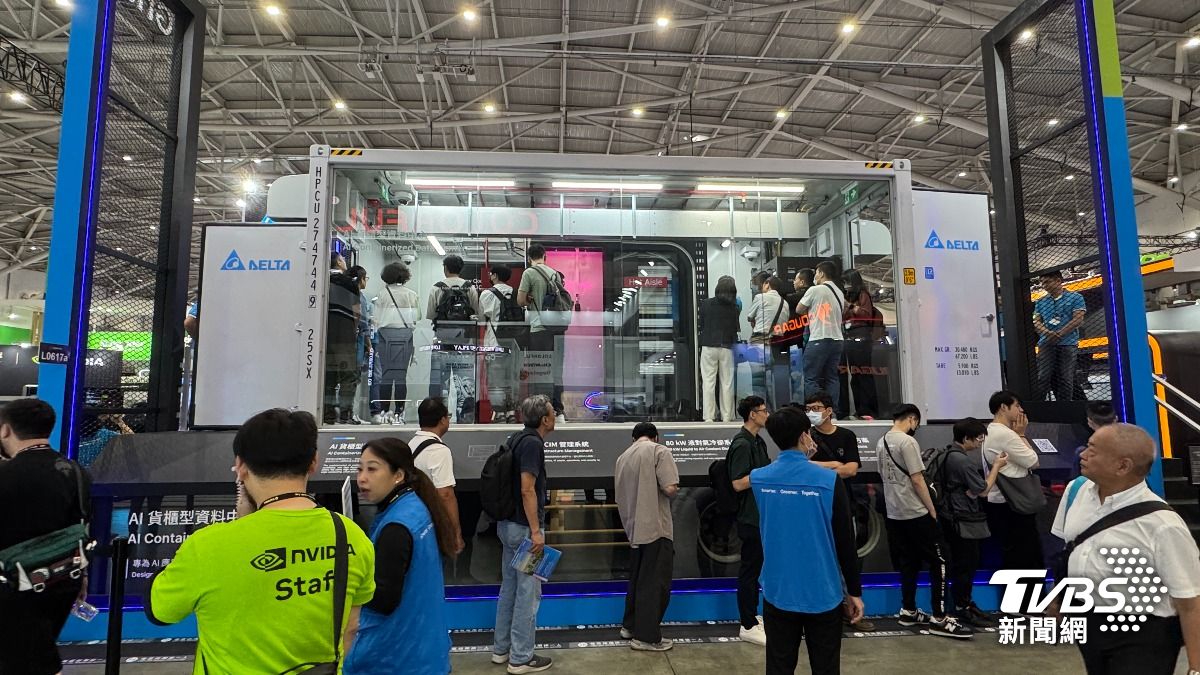
Delta Electronics started out decades ago making power supplies for televisions. Today it is a US$100 billion company and the single most important supplier of power and cooling systems for the world's AI data centers. As artificial intelligence drives the biggest infrastructure buildout in a generation, Delta sits at the center of it all.
Delta reported consolidated revenue of NT$159.35 billion (US$5.0 billion) for the first quarter of 2026, up 34% year on year and the strongest Q1 in company history. March alone set a new single-month record at NT$59.78 billion (US$1.87 billion), a 37.6% increase year on year and a 19.8% jump from February. January revenue came in at NT$49.7 billion (US$1.56 billion), up 32.9%, and February at NT$49.9 billion (US$1.57 billion), up 31%.
By segment, power and components accounted for 53% of March revenue, infrastructure 33%, automation 9%, and transportation 5%. Within the power segment, AI server power supplies now represent more than half of power revenue, spanning both GPU and ASIC server platforms. Current GB200 and GB300 platforms maintain 33-kilowatt power shelf configurations, and market estimates suggest combined shipments for these platforms will exceed 50,000 racks.
Chairman Ping Cheng noted that the typical Q1 seasonal slowdown was milder this year because AI data center power products now account for a growing share of sales. Delta also said that well-defined capital expenditure plans from major cloud service provider customers should reduce seasonal fluctuations and support steady full-year growth.
The results build on a record 2025, when full-year revenue reached NT$554.9 billion (US$17.9 billion), up 32%. AI-related power supply units accounted for more than 20% of total revenue, while AI cooling solutions contributed about 9%.
Delta's technology story centers on a fundamental shift in how power reaches AI chips. Traditional data centers distribute electricity at 48 volts. Delta's 800-volt high-voltage direct current (HVDC) rack power shelves cut current by roughly fifteen times, achieving greater than 98% conversion efficiency and supporting up to 1.1 megawatts per rack. These liquid-cooled, hot-swappable modules are co-developed with Nvidia and designed to handle the extreme power densities that next-generation AI systems demand.
As Nvidia's upcoming Vera Rubin platform pushes rack power toward 200 kilowatts, 800V HVDC will shift from a premium option to an industry standard. Delta is already shipping these systems for hyperscaler deployments, and industry analysts expect broad adoption by 2027.
In product development, Delta is advancing both 400VDC and 800VDC direct current power supply platforms and expects to maintain exclusivity on new products as liquid-cooling projects ramp in the second half of 2026. Market observers anticipate significant increases in AI GPU-related AC and DC power product shipments beginning in Q2, followed by generational product upgrades in Q3, setting up a clear upward growth trajectory through the year.
As AI workloads surge, the thermal density of modern GPUs is pushing air cooling to its limits, making liquid cooling a core specification for next-generation AI infrastructure. Delta invested early in this market and now offers solutions supporting high-intensity AI and high-performance computing environments globally.
Delta manufactures megawatt-class coolant distribution units certified for Nvidia's GB200 NVL72 platform, delivering up to 1,500 kilowatts of cooling capacity. Its liquid-to-air sidecar cooling architecture offers installation efficiency and system integration advantages that have gained traction with hyperscaler customers. Nvidia also named Delta one of four preferred cold plate suppliers for Vera Rubin at GTC 2026.
New liquid cooling production capacity at Delta's Thailand facilities began coming online in Q1 2026, easing prior capacity constraints. Analysts estimate Delta's liquid cooling revenue will grow approximately 140% year on year in 2026, driven by demand from both AI and general-purpose server deployments.
This breadth is what CEO Cheng calls the "grid to chip" vision: owning the full energy path from utility intake to processor die.
Delta has budgeted approximately NT$40 billion (US$1.3 billion) in capex for 2026, with expansion underway across four countries. In Thailand, three new factories are ramping up for power and liquid cooling production. In India, a new factory complex at the Krishnagiri plant begins construction in mid-2026. In the United States, new production lines are coming online for hyperscaler customers. China facilities are also expanding.
Delta holds an estimated 60% share of the AI server power supply market, making geographic diversification both a growth strategy and a competitive necessity as U.S.–China trade tensions reshape global supply chains. With its market cap crossing US$100 billion in early 2026, Delta has the financial scale to invest aggressively while competitors struggle to keep pace.
Management has guided for double-digit revenue growth in 2026, with demand expected to strengthen through the year as hyperscalers execute their capital spending plans. The trajectory is already visible: Q2 is expected to bring significant increases in AI power product shipments, Q3 will see generational product upgrades aligned with the Vera Rubin platform ramp, and the second half overall will be defined by mandatory liquid cooling and higher power envelopes driving a fresh wave of infrastructure builds.
Delta is the only major Taiwan supplier offering fully integrated power and thermal management systems purpose-built for AI data centers. In an industry increasingly defined by the convergence of power and cooling, that positioning makes Delta not just a component supplier but an indispensable partner to the companies building the AI future.