



Taiwan AI Servers: Q2 2026 Race to Scale
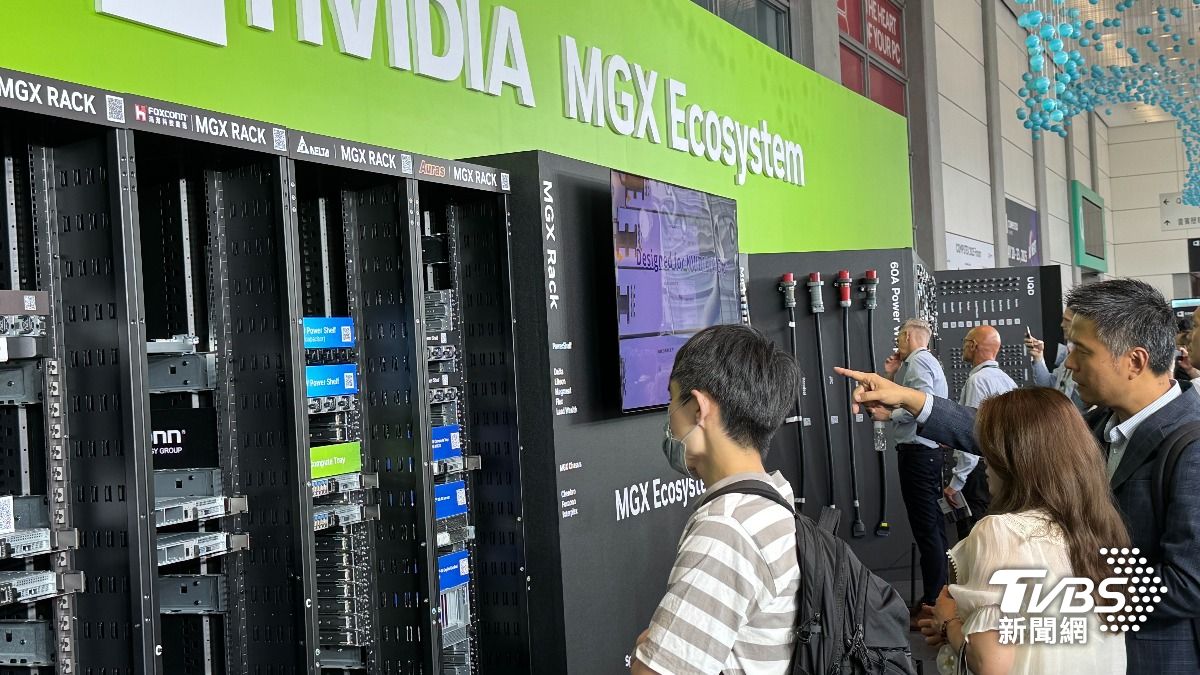
Taiwan's AI server makers just delivered a first quarter that would have seemed impossible two years ago. The five leading ODMs generated more than NT$2 trillion (roughly US$63 billion) in revenue, driven by Nvidia's GB300 rack platform and a surging wave of custom ASIC servers from the major US hyperscalers. The question heading into Q2 is no longer whether demand is real. It is whether Taiwan can ramp up production fast enough to meet it.
Foxconn (Hon Hai, 2317.TW) reported its highest-ever first quarter, with consolidated revenue reaching NT$2.13 trillion (US$66.6 billion), up 29.7% year on year. March alone set a new monthly record at NT$803.7 billion (US$25.1 billion), up 45.6% from the prior year. Chairman Young Liu said AI server rack shipments could double in 2026, lifting Foxconn's global AI server market share above the roughly 40% it commands today. The company is also investing US$136 million to expand AI server production capacity in Mexico, adding geographic diversification to its manufacturing base.
Wistron (3231.TW) led the field in growth rate, posting Q1 revenue of NT$846.3 billion (US$26.5 billion), an extraordinary 144.3% increase year on year. March revenue of NT$333.0 billion (US$10.4 billion) was up 117.7%. Wistron's performance reflects its deepening role as a primary assembler of Nvidia's next-generation rack systems, with GB300 shipments ramping faster than any prior platform.
Quanta Computer (2382.TW) recorded Q1 revenue of NT$809.2 billion (US$25.3 billion), a 66.6% jump, with March reaching NT$362.8 billion (US$11.4 billion), up 88.4%. Quanta remains one of the two largest AI server ODMs alongside Foxconn, with its cloud subsidiary QCT serving as a primary builder for hyperscale deployments.
Wiwynn (6669.TW), the cloud-native specialist majority-owned by Wistron, delivered Q1 revenue of NT$276.5 billion (US$8.7 billion), up 62.0%. Wiwynn's focus on purpose-built cloud hardware gives it an outsized role relative to its revenue scale, and it has been an early mover on both Nvidia GPU platforms and custom ASIC server designs.
Inventec (2356.TW) posted Q1 revenue of NT$200.3 billion (US$6.3 billion), up 27.6% year on year, with March setting a new all-time monthly high of NT$87.6 billion (US$2.8 billion), up 41.7%. Management expects double-digit quarter-on-quarter growth in AI server shipments through Q2, with even stronger momentum in the second half.
The AI server boom is drawing in companies that until recently were known primarily for PCs and components.
Asustek (2357.TW) posted a record first quarter with group revenue of NT$208.4 billion (US$6.5 billion), up 41.1% year on year. March revenue of NT$86.1 billion (US$2.7 billion) surged 33.9% from the prior year and 58.4% from February. Asustek has previously forecast its server segment could grow four to five times in 2026, with quarterly revenue gains of 50 to 100%. AI servers are now a declared growth pillar alongside its traditional PC business, and the company cites brand value, product mix, and supply chain management as competitive advantages that position it to win enterprise and hyperscaler accounts.
Compal Electronics (2324.TW) is making an even more deliberate pivot. Server shipments doubled in Q1 and are projected to double again in Q2. The company has set a target for non-PC business to reach 40% of total revenue in 2026, up from 30% in 2025, with AI servers accounting for roughly 80% of its server segment. Compal aims to increase server revenue share to 20% by 2027 as it transforms from a traditional notebook ODM into an AI system solutions provider.
Chenbro Micom (8210.TW), a server chassis specialist, reported Q1 revenue of NT$7.11 billion (US$223 million), up 71.1% year on year. March hit NT$2.51 billion (US$79 million), up 45% and the third-highest month in company history. Chenbro is expanding beyond standalone chassis into integrated rack systems spanning thermal solutions and rack-level assembly, with AI-related projects already exceeding 50% of revenue. The company is building capacity in the US and Malaysia, with a Dallas, Texas plant expected to complete exterior construction by Q3 2026.
Three forces are driving the AI server market into its next phase. The first is the Nvidia platform transition. GB300 is the dominant platform today, but Rubin is slated for mass production in Q3, pushing rack power toward 200 kilowatts and making liquid cooling mandatory across the board. ODMs are already tooling up for the transition, with chassis makers like Chenbro and Chenming developing integrated liquid-cooling rack solutions.
The second is the rise of custom ASIC servers. Amazon's custom chip business has surpassed a US$20 billion annual revenue run rate, and Google, Meta, and Microsoft are all scaling their own silicon programs. For Taiwan's ODMs, this creates a diversified growth engine beyond Nvidia GPUs. Wiwynn and Quanta have been early beneficiaries, but custom ASIC volumes are now large enough to support multiple assemblers.
The third is the shift from training to inference. As generative AI moves from laboratory training to mass-market deployment, inference workloads are becoming the primary source of server demand. Unlike training, which involves intensive but finite cluster builds, inference demand is persistent and grows with user adoption. For ODMs, inference orders provide sustained visibility rather than the lumpy procurement cycles typical of training infrastructure.
Foxconn has guided for both sequential and year-on-year revenue growth in Q2, unusual for a traditionally slow season. Inventec expects double-digit quarter-on-quarter AI server shipment growth. Compal projects server shipments will double again. Overhanging all of it is the question of supply constraints: from TSMC's 3nm allocation to CoWoS packaging, ABF substrates, and even passive components like MLCCs, every layer of the supply chain is at or near capacity. Lead times are extending, prices are rising, and the companies best positioned are those that locked in allocation early.
The AI server market is no longer a story about a handful of ODMs assembling Nvidia GPUs. It is a broadening ecosystem in which new entrants, custom silicon, and a structural shift toward inference are reshaping who builds what and for whom. Taiwan remains at the center of it all.