


Central Taiwan Science Park: Building the 1.4nm Future
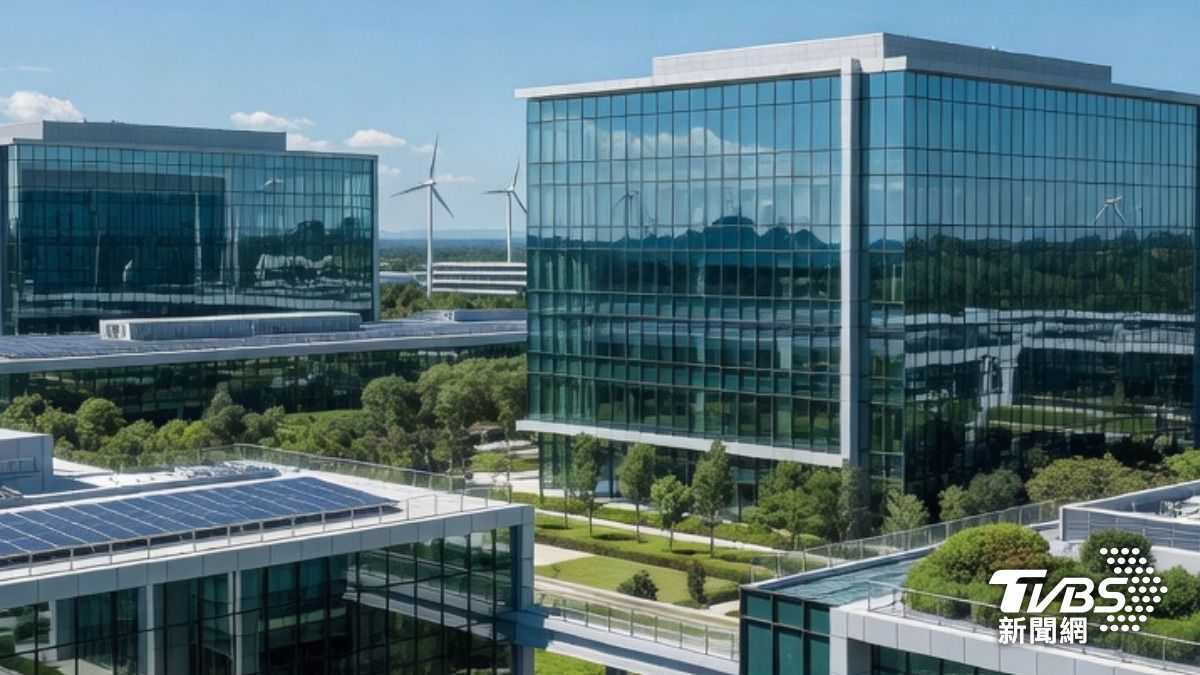
For two decades, Taiwan’s technology map was defined by two dominant poles: the Hsinchu Science Park in the north and the Southern Taiwan Science Park around Tainan. The central region, long known for its precision-machinery firms and textile manufacturers, appeared to be a noticeable gap. The Central Taiwan Science Park (CTSP) was created precisely to fill that gap. In 2025 and 2026, it has attracted some of the largest semiconductor investments in Taiwan’s history.
The Executive Yuan approved the preparation proposal for the CTSP on September 23, 2002. Its groundbreaking ceremony took place on July 28, 2003, the same day construction began on AU Optronics’ new Taichung display fab. This early pairing gave the park a strong foundational tenant even before its roads and utility systems were complete. Planners envisioned the CTSP as the missing link in a western-corridor technology spine that would run from Hsinchu through Taichung, Yunlin, and Tainan. They selected the Dadu Plateau outside Taichung as the flagship site.
Over time, the CTSP has grown into a multi-site network rather than a single campus. Today the CTSP Bureau oversees five distinct locations: the completed Taichung Park (466 hectares), Huwei Park in Yunlin (97 hectares), and Houli Park (255 hectares), along with the still-developing Erlin Park in Changhua (631 hectares) and Chung Hsing Park in Nantou (37 hectares). This spread was designed to connect industries that had traditionally operated outside the northern clusters. It links optoelectronics in Taichung, memory production in Houli, precision agriculture and biotechnology at Huwei, and new semiconductor and green-energy capacity at Erlin.
The park has built a notably broad tenant base organized around six major sectors: semiconductors, optoelectronics, precision machinery, biotechnology, computers and peripherals, and green energy. This diversity is clearly visible in its major occupants. AU Optronics remains the foundational display tenant in Taichung. Micron Technology has established a major memory-manufacturing presence in Houli and expanded its Taichung operations, with cumulative investment in Taiwan exceeding US$30 billion. This represents Micron’s largest concentration of DRAM capacity outside the United States.
Leading machine-tool and precision-component companies such as Hiwin, Chin Fong, and Tongtai have clustered around Taichung Park, feeding the region’s renowned machine-tool industry directly into semiconductor equipment supply chains. TSMC operates Fab 15 in Taichung and is expanding advanced-packaging capacity through the AP5B facility, scheduled for completion in 2026. Biotechnology firms focused on medical devices and agritech have filled out the remaining space in Houli and Huwei.
This sectoral variety has helped insulate the CTSP from the sharp cyclical swings that affect individual industries. Because memory, display, and foundry cycles rarely peak or decline in unison, the park has enjoyed a more stable revenue pattern than more specialized clusters.
In 2025, the CTSP recorded full-year revenue of NT$1.13 trillion (approximately US$35.9 billion), a 9.29 percent increase from 2024. While this placed it third among Taiwan’s three major science parks, behind Southern Taiwan at NT$2.97 trillion (approximately US$94.3 billion) and Hsinchu at NT$1.7 trillion (approximately US$54.0 billion), the year stood out more for its landmark announcements than for current earnings.
The most significant development was TSMC’s decision to locate its new flagship 1.4nm fab, known internally as Fab 25 and based on the A14 process node, in the second-phase expansion of the Taichung site. TSMC broke ground on November 5, 2025. The project involves an investment of approximately NT$1.5 trillion (around US$49 billion) and will include four fab buildings plus supporting office facilities. Once fully ramped, industry estimates project annual revenue of up to NT$500 billion (approximately US$15.9 billion). Risk production is scheduled for late 2027, with volume production targeted for the second half of 2028. The complex is expected to employ between 8,000 and 10,000 people.The Fab 25 project took an unusual path. It was originally planned for 2nm production, but TSMC shifted it to 1.4nm after achieving stronger-than-expected yields at its 2nm Fab 22 site in Kaohsiung. This pivot allows the Taichung campus to advance directly to the next technology node. If the timeline holds, the CTSP will become the world’s first high-volume manufacturing site for 1.4nm logic chips and will mark a significant shift in global semiconductor geography.
Several key factors explain how the CTSP has attracted such major investment so rapidly.
Its central geographic position gives it a clear advantage. Taichung lies roughly halfway between Hsinchu and Tainan, with high-speed rail connections to both in under an hour. Engineers, equipment vendors, and suppliers can therefore support all three major parks from a single base. The Taoyuan and Kaohsiung international airports are also within easy reach.
The park also benefits from central Taiwan’s exceptionally deep precision-machinery ecosystem. One of the densest machine-tool clusters in the world, this industrial base produces the process equipment, wafer-handling robotics, chambers, and custom fixtures that advanced semiconductor fabs require in growing volumes. Local supply shortens lead times and strengthens integration with nearby fabs.
Talent development provides another strong foundation. National Chung Hsing University, National Tsing Hua University’s southern campus programs, National Yunlin University of Science and Technology, and a network of technical institutes supply a steady stream of engineers. Lower housing costs compared with Hsinchu have helped attract both recent graduates and mid-career professionals relocating from other regions.
Finally, land availability has been decisive. Unlike the land-constrained Hsinchu area, the CTSP was developed on a relatively open plateau with room for expansion. The second-phase Taichung site allocated for Fab 25 is a direct result of this forward-looking planning.
The Fab 25 announcement has already begun to transform the CTSP’s tenant mix. TSMC’s AP5B advanced-packaging plant, still on track for 2026 completion, will expand CoWoS capacity and align with TSMC’s broader packaging initiatives in Chiayi and Longtan. Micron continues to grow its Houli operations to meet rising AI-driven memory demand. AU Optronics is upgrading its Taichung lines for next-generation OLED and Micro-LED technologies, while domestic materials suppliers are moving into Erlin as Phase II construction advances there.
Precision-machinery companies have been among the biggest beneficiaries. Their revenues grew 24.73 percent across Taiwan’s science park network in 2025, and the CTSP is well positioned to capture a large share of the specialized tools, subsystems, and spares required for new 1.4nm lines.
On its current path, the CTSP will likely remain the smallest of Taiwan’s three major parks by revenue through at least 2027, largely because Fab 25 is still under construction. From 2028 onward, however, the picture will shift dramatically. Once fully operational, Fab 25 alone could generate NT$500 billion (approximately US$15.9 billion) or more in annual revenue, bringing the CTSP substantially closer to Hsinchu’s current total.
The National Science and Technology Council projects continued growth across all three parks in 2026, driven by AI applications and advanced semiconductor technologies. For the CTSP, the next several years will focus on construction rather than immediate revenue.
What rises on the Dadu Plateau by 2028 will shape the park’s direction and a meaningful portion of the global semiconductor industry well into the 2030s.
If Hsinchu established Taiwan as a semiconductor powerhouse and Southern Taiwan made the island indispensable to the AI era, the Central Taiwan Science Park may ultimately determine who leads the industry in the decades ahead.