



What to know about Taiwan’s reporter turned alleged spy
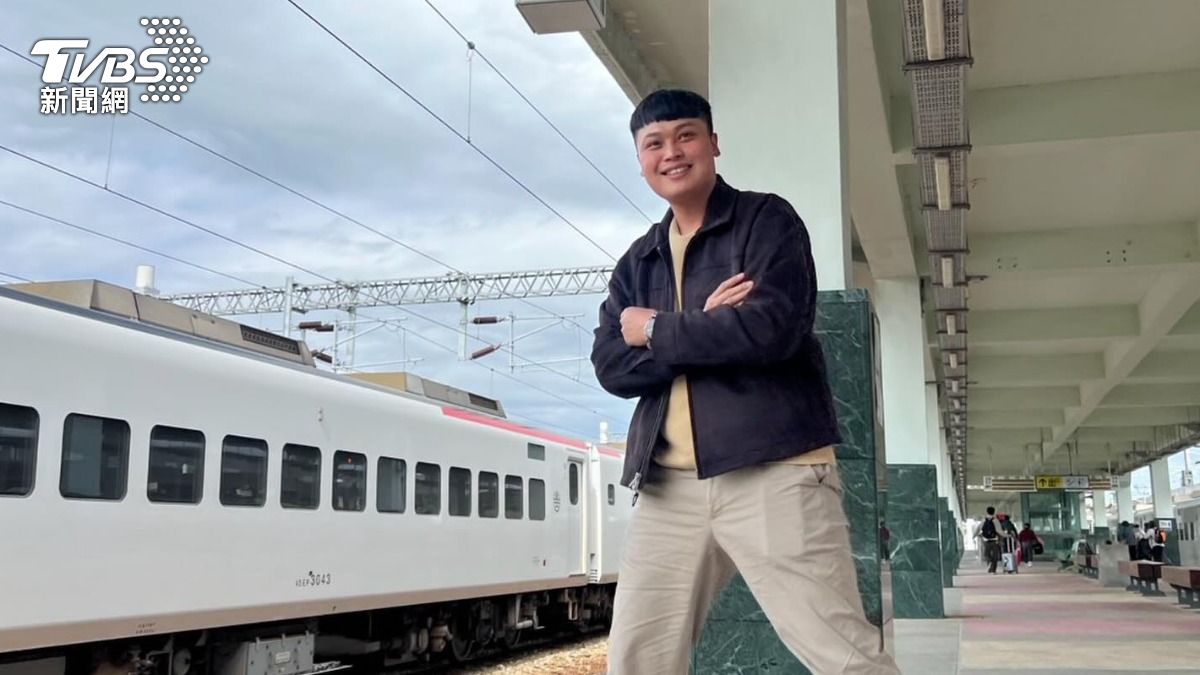
TAIPEI (TVBS News) — A Taiwanese court on Thursday (May 7) ordered the continued detention of former television journalist Lin Chen-you (林宸佑), in a case that raises questions about how espionage laws apply to media workers. Lin faces charges under Taiwan's Anti-Infiltration Act (反滲透法) for allegedly accepting Chinese funding to produce political content and bribing soldiers for classified information. Here is what to know about the case and its implications.
Lin, a former anchor at CTi News (中天新聞) who hosted a YouTube program called "What's Up with Madeh?" (馬德有事嗎?), has been held since Jan. 17. Prosecutors have requested a 12-year sentence. Five military co-defendants were also ordered detained Thursday. Neither Lin nor any legal representative has publicly commented on the charges.
Lin's prosecution is part of a broader investigation that has yielded 21 defendants across four waves of indictments since last year, according to Democratic Progressive Party Legislator Lin Chu-yin (林楚茵). At least 11 military personnel nationwide had financial connections with Lin, with cases being prosecuted by various district prosecutors offices across Taiwan, according to court documents.
Taiwan's approach to espionage prosecutions has intensified. National Security Bureau (國安局) Director Tsai Ming-yen (蔡明彥) told legislators Thursday that average sentences for spy cases increased from one year in 2020 to six years and two months in 2025. The conviction rate for national security cases sent to prosecutors reached 96 percent, with an 85 percent conviction rate at the court level, Tsai said.
What the Anti-Infiltration Act Says
The Anti-Infiltration Act, enacted on Jan. 15, 2020, was designed to "prevent the infiltration and intervention of foreign hostile forces" and "safeguard the sovereignty and liberal democratic constitutional order" of Taiwan. The law applies to "any person" who accepts instruction, commission or funding from what it defines as "infiltration sources" — entities affiliated with foreign hostile forces.
The law prohibits five specific acts when performed under foreign hostile direction: donating political contributions, engaging in campaign activities, lobbying, disrupting assemblies, and committing election-related crimes. Penalties range from fines to imprisonment of up to five years, with sentences increased by up to one-half for certain offenses. The law does not explicitly mention journalists or media production.
When the law passed, the Mainland Affairs Council (MAC, 陸委會) stated its requirements were "specific and clear" with "strict constituent elements." The agency assured there would "absolutely not" be a problem of "easy criminalization." The MAC emphasized that normal business, work, study and family interactions with mainland China would not be affected.
In Lin's case, prosecutors applied the law to media production. According to the indictment, Lin allegedly operated two types of content under Chinese direction: "designated" programs featuring scripts from Chinese contacts that required pre-broadcast approval, and "freestyle" programs that paid based on viewership metrics. Prosecutors said Lin submitted scripts to a Chinese national using the alias "Huang Elan" (黃厄蘭) for review before broadcast.
"As a well-known news media worker, [Lin] should have fulfilled the function of supervising the government and protecting the public's right to know, and should have maintained independence," the Qiaotou District Prosecutors Office (橋頭地檢署) said in a statement. "Yet for payment, he long cooperated with hostile foreign forces." Prosecutors characterized Lin's conduct as having "gravely endangered national security."
Who Counts as a Journalist?
The prosecution's argument raises broader questions about how the law applies to media workers — without first defining who qualifies as one. If the Anti-Infiltration Act covers "any person," how should journalists navigate the prospect of legal consequences arising from their work? Reporters in Taiwan do not carry standardized press credentials — only name cards or badges issued by their employers.
Taiwan's legal framework also does not distinguish between professional reporters, editorialists, commentators, YouTubers or citizen journalists. The government often relies on YouTubers to relay its views and arranges interviews with senior officials, including a 2020 interview between French YouTuber Ku (酷) and then-President Tsai Ing-wen (蔡英文) about Taiwan's exclusion from the World Health Organization. The criteria for selecting such content creators — and their eventual compensation — remain unclear.
The case touches on the challenge of defining political content in Taiwan's polarized environment. The "1992 Consensus" illustrates this difficulty — a term coined in 2000 by former Kuomintang (KMT, 國民黨) minister Su Chi (蘇起) to describe a tacit agreement that both sides of the Taiwan Strait belong to "one China" with differing interpretations. The KMT considers the concept central to cross-strait dialogue; the ruling Democratic Progressive Party (DPP, 民進黨) argues no formal consensus was reached.
Similar topics — Taiwan's participation in international organizations, recall campaigns targeting legislators, or allegations of foreign influence in political parties — can be sensitive for any journalists or YouTubers who must navigate between facts and political narratives. The Anti-Infiltration Act defines what constitutes political advocacy, but it does not differentiate between the work of a reporter and a commentator — leaving media professionals to face these issues on their own.
The Mainland Affairs Council regulates mainland Chinese reporters through a case-by-case approval process, but no equivalent framework exists for Taiwanese journalists, who require no special qualifications to enter the profession or the Office of the President. While the National Communications Commission (NCC, 國家通訊傳播委員會) oversees broadcast licensing and various industry associations provide credentialing for local media outlets, no statute offers specific legal protections or obligations for journalists.
The question of who qualifies as a media worker — and what legal protections or obligations that status might confer in an evolving narrative about national identity — remains unaddressed in Taiwan's media industry. As the Lin case proceeds, it may prompt broader discussion about whether Taiwan needs clearer standards for distinguishing journalism from other forms of political content production. ◼