



Machine-Tool Leader Hiwin Makes Computex Debut With Robotics
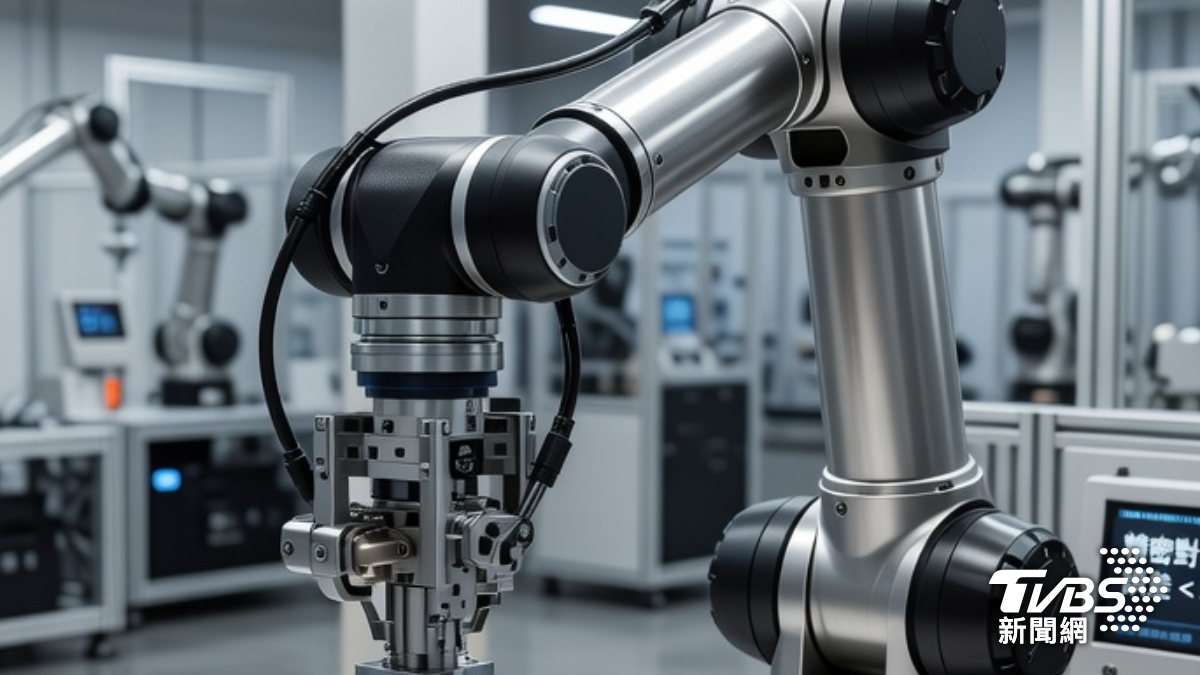
For the first time in its 36-year history, Hiwin Technologies (上銀) will exhibit at Computex this June. The Taichung-based company has long served as a vital but low-profile supplier to the global machine-tool industry, delivering high-precision ball screws and linear guides for decades. Listed on the Taiwan Stock Exchange since 2010, Hiwin has not needed to attend a major global technology event like Computex until now. That changes in June, when the company will have its first ever booth to showcase a new planetary roller screw engineered specifically for the heavy-load joints of humanoid robots and high-payload industrial arms. Its presence serves as the public milestone of a strategic transformation that has been building quietly within Hiwin for at least three years.
Founded in October 1989 by Eric Y. T. Chuo, a former banker who acquired a failing machine-parts business, Hiwin dedicated its first three decades to perfecting the invisible essentials of motion control. Today it stands as the world’s second-largest ball-screw manufacturer, one of the top three global producers of linear motion components, and the leading maker of harmonic drives outside Japan. In late 2025, Morgan Stanley placed Hiwin on its global top-100 humanoid robot supplier list. It was one of only four Taiwan companies featured, alongside TSMC, Foxconn, and Hota Industrial Manufacturing.
Hiwin’s robotics strategy covers three integrated layers. At the components layer, the company supplies key parts such as ball screws for dexterous robotic hands, servo motors and harmonic reducers for torsos, and crossed roller bearings for joints. Building on this, its Hiwin Mikrosystem division integrates servo motors, drivers, and harmonic reducers into complete pre-assembled joint modules. These ready-to-use subsystems allow OEMs to incorporate engineered axes directly into their chassis designs, significantly shortening development cycles. At the top of this pyramid sits the new planetary roller screw being shown at Computex, which is designed for extreme load profiles that traditional ball screws cannot sustain.
The most concrete validation of this direction emerged in August 2025 through Hiwin’s partnership with U.S. robotics startup Dexterity. The collaboration produced an eight-degree-of-freedom robotic arm for Dexterity’s “Mech” platform, a mobile two-armed warehouse robot built for real-world Physical AI deployments. Dexterity provides the vision software and autonomous navigation, while Hiwin delivers lightweight yet high-strength arms capable of lifting loads beyond the OSHA single-person limit. Small-batch deliveries of are scheduled for early 2026, with larger commercial orders expected to follow successful field trials. Warehouse logistics, currently the highest-volume segment for Physical AI, represents a clear and immediate growth opportunity for Hiwin.
This focus reflects Chuo’s pragmatic outlook. Rather than pursuing high-visibility but low-volume general-purpose humanoids, Hiwin is concentrating on narrower, market-ready applications such as logistics, welding, and agricultural harvesting where customer requirements are clearly defined and the technology can deliver immediate value. The company’s roadmap is deliberately aligned with robots that are shipping today, not speculative prototypes of the future.
Hiwin’s move is not an isolated bet but part of a broader transformation across Taichung’s precision-machinery cluster. Peers such as Mengying and Taichung Precision Machinery are also shifting from traditional machine-tool components into robotic actuators.
Hiwin's booth at Computex will be modest compared to the displays of Taiwan's AI-server and PC giants in Nangang, but the signal it sends is sharp. A 36-year-old motion-component leader, and the Taichung cluster behind it, are stepping up to supply the bodies of Physical AI as it moves from prototype to volume.