



TVBS Poll: Stock market surge masks governance shortcomings
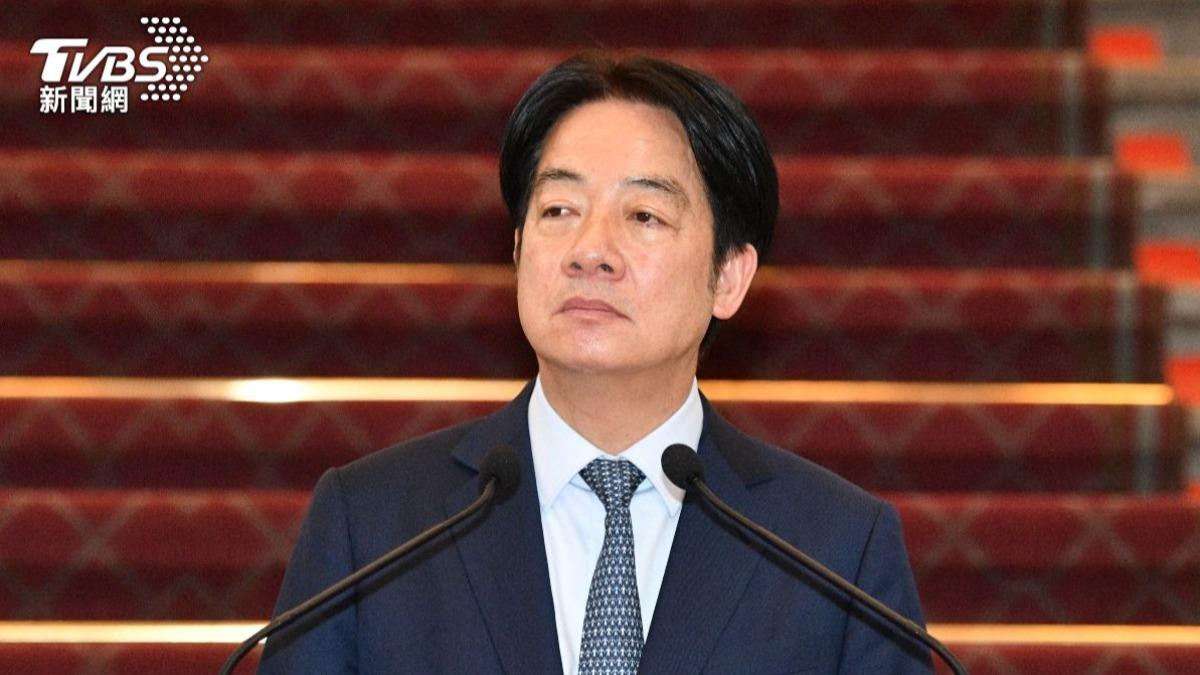
TAIPEI (TVBS News) — A booming stock market: President Lai Ching-te's (賴清德) approval rating climbed from 32 percent to 38 percent over the past year, driven almost entirely by economic satisfaction, according to TVBS polling data released on May 14. Economic approval surged from 34 to 46 percent, while satisfaction with governance priorities his administration directly controls remained stuck near 31 percent. Here is what the polling breakdown reveals about economic approval versus governance trust.
As Lai marks his second year in office Wednesday (May 20) and heads into the second half of his term, the polling snapshot reveals a presidency sustained almost entirely by economic conditions beyond government control — a precarious foundation as he eyes a potential 2028 re-election bid. Lai's approval traced a volatile path over his first two years, starting at 40 percent in August 2024, plunging to 32 percent by May 2025, then recovering to 38 percent.
The year one collapse appeared driven by what the May 2025 poll characterized as "legislative gridlock, economic uncertainty, and cross-strait tensions." Lai's Democratic Progressive Party (民進黨) holds only 51 of 113 seats in Taiwan's legislature, the Legislative Yuan (立法院), requiring coalition support to pass legislation — a dynamic that will define his remaining two years.
The rebound correlates most strongly with the 12-point economic satisfaction surge, the largest single-policy gain across 11 measured areas. Government data confirms the boom: Taiwan's economy grew 13.69 percent year-on-year in the first quarter of 2026, according to the Directorate-General of Budget, Accounting and Statistics (主計總處). The TAIEX, Taiwan's benchmark stock index, nearly doubled — rising from 20,235 points to 38,927 points, a 92.3 percent gain, according to Taiwan Stock Exchange data.
Yet the approval recovery masks persistent governance weaknesses. Judicial reform approval remains lowest at 31 percent with 55 percent dissatisfied, virtually unchanged from year one. Anti-fraud efforts scored 34 percent satisfaction despite being a stated priority, while air pollution control satisfaction declined 2 percentage points to 33 percent.
The confidence gap reveals voter ambivalence about Lai's second-term prospects. While 44 percent now trust Lai, up 6 points from year one, fully 51 percent lack confidence in his future governance. This suggests voters credit Lai for current conditions while doubting his ability to address structural problems like fraud, judicial dysfunction, and housing affordability — challenges that may loom larger as 2028 approaches.
The poll's 11-policy breakdown also reveals a clear hierarchy. Security-related policies — health (50 percent approval), defense (47 percent), economic development (46 percent) — dominate the top rankings. Governance and quality-of-life issues cluster at the bottom: judicial reform (31 percent), air pollution (33 percent), anti-fraud and energy policy (both 34 percent).
Cross-strait relations satisfaction rose only 3 percentage points to 39 percent despite Kuomintang (國民黨) Chairwoman Cheng Li-wun's (鄭麗文) April 2026 visit to mainland China — the first such trip by a KMT chair since 2016. The opposition party favors warmer cross-strait ties than Lai's government.
These latest polling data provide a clear answer to what drives a Taiwan president's approval: economic conditions the government may not control matter far more than governance reforms it directly manages. Whether Lai can sustain this economic-driven approval through his second half and into a 2028 campaign — or whether accumulated governance failures will eventually matter — may determine both his political survival and Taiwan's capacity to address the structural challenges that 55 to 56 percent of voters say remain unresolved. ◼
>>> The TVBS Poll Center conducted the survey by telephone May 4-10, interviewing 1,138 adults across Taiwan. The margin of error is plus or minus 2.9 percentage points.