



ACIE: Jensen Huang Sets the Computex 2026 Table
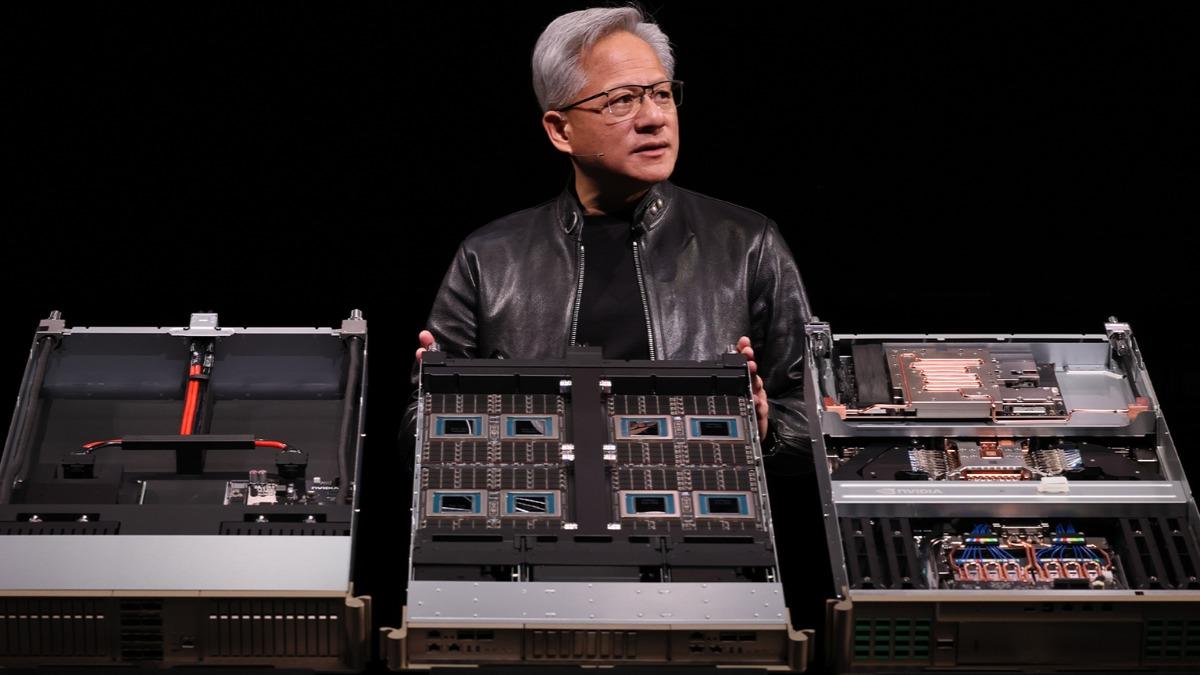
Nvidia CEO and Founder Jensen Huang has laid the table for Computex 2026 next week with all the main courses already plated, following Nvidia's blockbuster quarterly numbers and his definition of the next wave of growth, ACIE.
Nvidia's Q1 FY2027 results, announced on 21 May, were eye-watering even by the standards of the last three years. Data center revenue reached US$75.2 billion, up 92 per cent year on year, on total quarterly revenue of US$81.6 billion. Combined Blackwell and Rubin revenue visibility through calendar 2027 now stands at roughly US$1 trillion. But the most consequential disclosure was structural. Nvidia is splitting its data center reporting into two sub-segments: Hyperscale, and a new category called ACIE, which stands for AI Clouds, Industrial and Enterprise.
The split is Huang's answer to a question that has hung over Nvidia for two years. How concentrated is the AI capex story really, and what happens when the five or six hyperscalers building their own ASICs decide they need fewer GPUs?
Hyperscale, as Nvidia now defines it, captures the major public clouds and the largest consumer internet companies. In Q1, that was US$38 billion, roughly half of data center revenue. ACIE captures everything else: AI-native neoclouds like CoreWeave, Nebius and Lambda; sovereign AI build-outs in dozens of countries; enterprise on-premise deployments in banking, pharma, manufacturing and defense; and industrial AI factories powering robotics and physical AI. ACIE delivered US$37 billion in the quarter, up 31 per cent sequentially, with the AI cloud component alone more than tripling year on year. Sovereign revenue rose more than 80 per cent, with Nvidia infrastructure now deployed across nearly 40 countries representing US$50 trillion of GDP.
On the earnings call, Huang was unusually direct about why the segmentation matters. Hyperscale is concentrated in five or six players. ACIE spans roughly 250,000 companies globally. "That segment is growing incredibly fast because everybody needs AI, and we're going to see AI being adopted by every industry, every country, every company." His expectation, stated plainly, is that ACIE will eventually be larger than hyperscale. The structural reason is that AI-native clouds, enterprises and sovereign AI organizations cannot design their own chips and cannot assemble the components into a working AI factory on their own. They need an integrated platform, and Nvidia is the only vendor offering one at scale.
This is the framing Huang will bring to Computex and GTC Taipei next week, and it reshapes how to read the show.
For three years, the Taiwan supply chain story has been about hyperscale: Foxconn, Quanta, Wistron and Wiwynn assembling Grace Blackwell and now Vera Rubin rack-scale systems for AWS, Azure, Google, Meta and Oracle; TSMC’s CoWoS packaging gating industry capacity; Asia Vital Components and Auras leading in thermals; Delta Electronics dominating power; and a handful of buyers ordering at extraordinary volume from a narrow set of Tier 1 Taiwan ODMs.
ACIE is a different animal. It comprises hundreds of thousands of buyers, in dozens of countries, ordering in much smaller increments, often with localized requirements, including regulatory constraints, integration with existing operational technology, and edge deployment alongside core capacity. Form factors range from full AI factories down to single-rack inference appliances and AI-RAN base stations in telecom shelters. This is precisely the demand pattern Taiwan’s electronics ecosystem is structurally best at serving and it creates new opportunities for Tier 2 server builders historically squeezed out of hyperscale contracts, including Asus, Inventec, Mitac, Gigabyte, Chenbro, and ASRock Rack, which will gain access to a far broader customer set.
The headline from this earnings cycle was the trillion-dollar revenue visibility. The more important story that Huang is in Taipei to tell is how Nvidia will work with the island's tech ecosystem to address the most consequential expansion of the market since the AI cycle began.