



Foxconn Heads to Computex in Its Strongest Position Yet
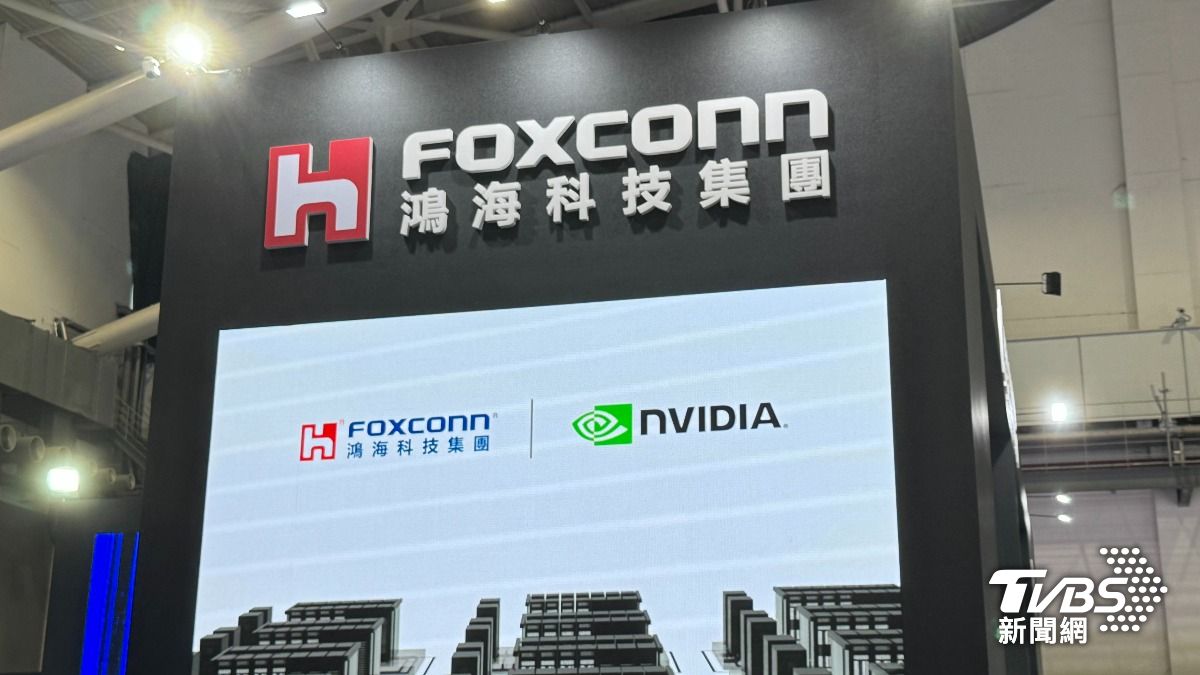
Foxconn will arrive at Computex 2026 in its best operating position ever. Fresh off record first-quarter results and an even more impressive April, the world’s largest contract electronics manufacturer is riding robust AI server demand, a rapid Nvidia Vera Rubin ramp, and accelerating progress in EVs and robotics. Chairman Young Liu has designated 2026 a “strong growth” year, the company’s highest internal rating, and the financials reflect this.
The company reported Q1 2026 revenue of NT$2.11 trillion (US$66.95 billion), up 29.7% year-over-year and the best first quarter in its history. Gross profit rose 30% and operating profit jumped 63%, reflecting improved margins. China-listed subsidiary Foxconn Industrial Internet (FII) performed even better, with revenue up 56.5% and net profit more than doubling. AI GPU server rack shipments surged 3.8x and AI ASIC racks 3.2x, showing Foxconn’s ability to win regardless of silicon architecture.
April revenue hit another record at NT$832 billion (US$26 billion), pushing the first four months of 2026 close to US$95 billion. Cloud and networking products, dominated by AI servers, accounted for nearly half of Q1 revenue. Management expects high double-digit sequential growth in AI rack shipments through Q2 and continued expansion for the rest of the year.
The company currently holds roughly 40% market share in AI servers and aims to expand it through 2028 by supporting both GPU and ASIC platforms across multiple hyperscaler projects. Full-year AI server shipments are forecast to more than double in 2026, with Nvidia's Vera Rubin as the biggest catalyst for the second half. Trial production will reportedly begin in June, with volume deliveries starting in July. As a close partner of Nvidia, Foxconn is expected to play a key role in what Jensen Huang has described as potentially “the largest product rollout Taiwan’s electronics industry has ever seen.”
Foxconn is increasingly designing complete servers and racks rather than simply assembling them. To reduce reliance on other vendors and protect margins, it is stepping up the in-house development and production production of high-speed transmission cables, connectors, and cooling, power-management, and optical modules.
As part of its long-term diversification strategy, Foxconn recently signed an MOU to explore taking a 50% stake in Mitsubishi Electric's EV mobility business and partnered with ElectroMobility Poland to study local EV manufacturing. An electric bus factory in Ciaotou, Taiwan, is on track for completion in the first half of 2026. On the robotics front, humanoid and collaborative robots are now being deployed in Foxconn’s U.S. plants, and the medical-nursing cobot Nurabot, co-developed with Taichung Veterans General Hospital, has gone live after multi-stage clinical testing.
Computex 2026 will showcase a Foxconn that has moved decisively beyond its origins as a contract assembler. Record financials, dominant AI server share, deepening vertical integration, and meaningful early traction in EVs and robotics all point to a company executing on multiple fronts simultaneously. The Vera Rubin ramp will define the second half of the year and likely set the tone for Liu's "strong growth" designation, but the more significant story is structural: Foxconn is steadily capturing more of the value chain in every business it touches. For anyone tracking how Taiwan’s electronics giants are adapting to the AI era, the company’s booth at Computex will offer the clearest view yet of what that transformation looks like at scale.