


The Trillion-Dollar Dinner and the Nvidia–Taiwan Symbiosis
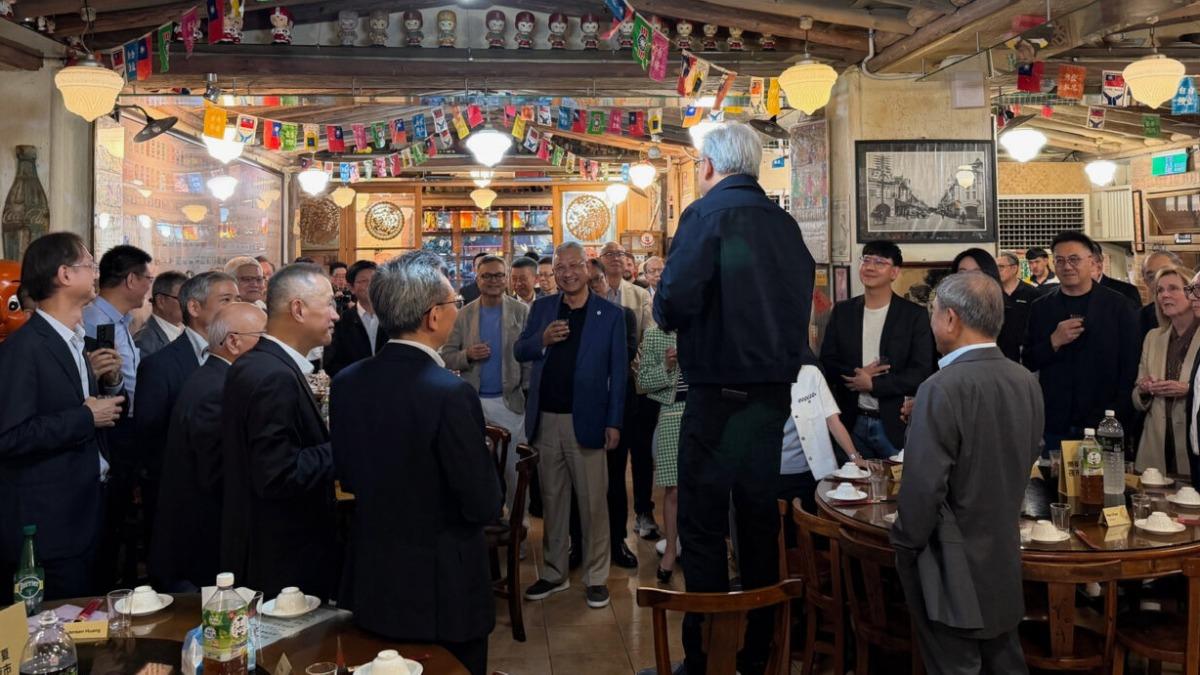
The restaurant was the Brick Kiln, a good but unflashy Taipei spot far from any conference hall. The host stood on a stool to be seen. The guest list ran to more than thirty CEOs, between them representing close to a trillion US dollars in market capitalization and almost every link in the global AI hardware supply chain. Jensen Huang toasted, thanked, moved from table to table, told an affectionate joke about a portrait he said looked more like TSMC's C.C. Wei than himself, and at the end of the evening walked out into the street to hand sweets to the families and children who had gathered hoping for a glimpse. "Chemistry" was the word the Nvidia blog post used to describe the event. The casualness was the point.
Look at the guest list and you see how AI hardware gets built. TSMC sits at the top of the stack, fabricating the most advanced GPUs on the planet and running the CoWoS advanced packaging that the entire AI cycle depends on. ASE Group and Powertech handle the broader back-end assembly and test. Unimicron supplies the ABF substrates, and Zhen Ding the high-layer PCBs every accelerator sits on. Delta Electronics and Lite-On supply the power architecture; Auras, AVC and the other thermal specialists supply the liquid cooling that lets 1.1 MW racks exist at all. Foxconn, Quanta, Wistron, Inventec, Wiwynn, Pegatron and Compal procuce the servers and rack-scale systems for the hyperscalers. ASRock Rack, Gigabyte, MSI and Asus fill out the AI server assembly layer.
The gathering itself was the message. Jensen Huang is the only CEO of a Western tech company who can call thirty of Taiwan's top tech executives to a casual dinner and have them show up thanks to the close ties he has forged with them over decades of making graphics cards and servers together. The relationship is closer to symbiosis than to any normal customer-supplier arrangement.
The dinner took place at a pivotal moment for Nvidia and its Taiwan partners, all of whom are running flat out to keep up with AI demand at every level of the supply chain, from substrates and PCBs to advanced packaging, power, liquid cooling and system assembly, while contending with rising grid and talent constraints on the island itself. The boom is real; so is the strain. Both sides feel it, and both sides are working to absorb it together.
That mutual dependence is what made last night different from a normal industry gathering. Nvidia cannot deliver AI infrastructure at the speed the world is demanding without TSMC's wafer and CoWoS lines, Foxconn, Wiwynn, and Quanta's server and rack assembly, Delta's power shelves, Auras and AVC's liquid cooling, Unimicron's substrates, Zhen Ding's high-layer PCBs, and ASE's back-end test system integration. All those companies, in turn, have reorganised their business around Nvidia's roadmap, its component specs, its delivery schedules and its customer commitments. Everyone relies on everyone else.
The AI cycle is deepening this symbiosis. Vera Rubin, with nearly two million components and 100 to 150 Taiwan partners needed per system, only works as a project because the relationships are already in place. Last night was more than a celebration of what Nvidia and Taiwan have already built together. It was a shared signal that the most ambitious chapter still lies ahead.