



Nvidia Redefines Windows PCs with RTX Spark
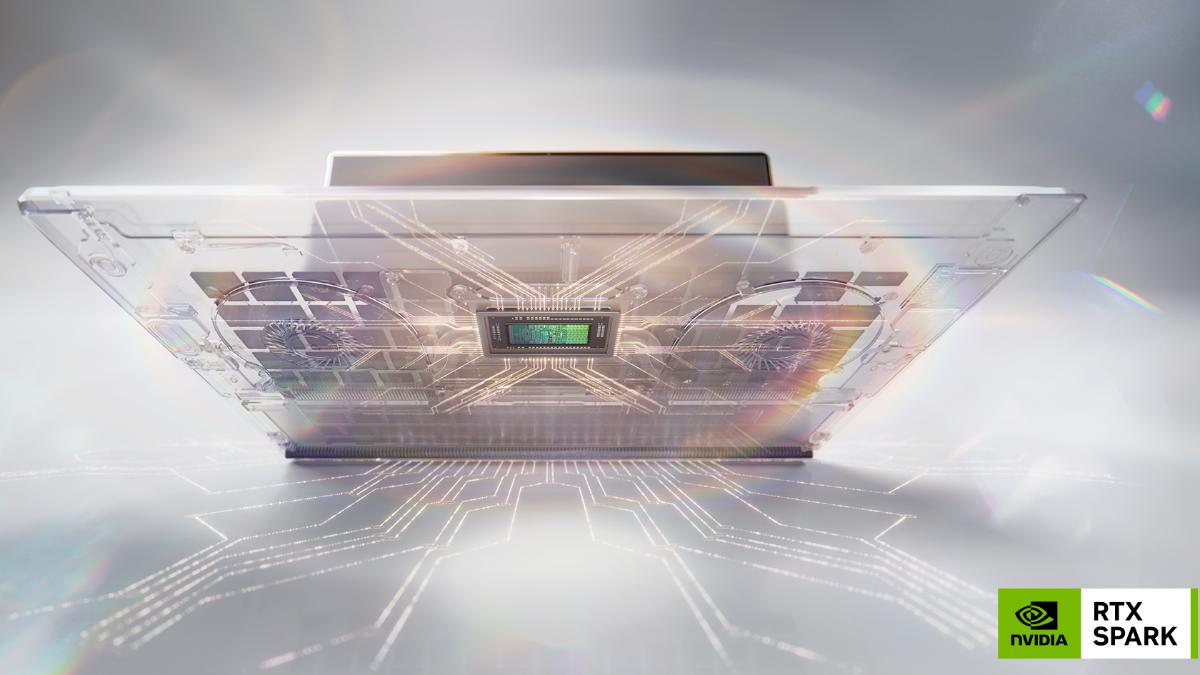
Nvidia CEO Jensen Huang kicked off GTC Taipei by unveiling the RTX Spark, a new chip that aims to transform ordinary Windows laptops and desktops into personal AI workstations. Major PC brands, including Asus, Dell, HP, Lenovo, MSI, and Microsoft Surface, have committed to shipping RTX Spark-powered devices this fall, with Acer and Gigabyte following shortly after.
Unlike traditional cloud-dependent systems, the RTX Spark is built to run sophisticated personal AI agents directly on the device. It can host a 120-billion-parameter large language model entirely locally, maintain up to a million tokens of context for long documents or extended conversations, and simultaneously handle demanding tasks such as video editing, 3D rendering, and gaming—all without constantly phoning home to the cloud.
The chip pairs a powerful Nvidia Blackwell GPU, featuring 6,144 CUDA cores and fifth-generation Tensor Cores, with a 20-core Nvidia Grace CPU. The two dies are tightly integrated via Nvidia’s NVLink-C2C interconnect, enabling a unified memory pool of up to 128 GB. This architecture delivers peak performance of one petaflop of FP4 AI compute, the low-precision format optimized for high-throughput inference.
TSMC will manufacture the part on its advanced 3nm process, packing roughly 70 billion transistors into the package. MediaTek co-designed the custom CPU complex to balance power efficiency, performance, and connectivity, building on an existing partnership that has already spanned automotive and consumer silicon.
The initial wave of RTX Spark laptops will span 14- to 16-inch models, with some designs as thin as 14 mm and as light as three pounds. Compact desktop variants are also planned. While official pricing has not been announced, the combination of 128 GB memory and one-petaflop AI performance clearly targets premium positioning. The broad participation of eight OEMs should help deliver a range of configurations and price points by the time the devices reach store shelves.
Microsoft is a key partner in building the software layer. New Windows security primitives manage identity, containment, and policy enforcement for local agents. Nvidia’s OpenShell runtime gives users fine-grained control, defining what each agent can access, routing queries to local models for privacy-sensitive tasks, and intelligently masking personal data before any cloud requests. Microsoft CEO Satya Nadella described the vision as delivering “unmetered intelligence to every home and every desk with Windows.”
On the application side, Adobe is optimizing Photoshop and Premiere Pro for up to 2× faster AI-driven editing, color correction, and effects. Blackmagic Design, Blender, CapCut, ComfyUI, OTOY, and llama.cpp have also signed on, while Riot Games, NetEase, Remedy Entertainment, and Xbox highlight strong gaming support. More than 1,000 existing RTX titles will run natively on the new platform.
With the RTX Spark, Nvidia is making its most ambitious push yet into the traditional Windows PC processor market long dominated by Intel and AMD. The company is betting that its mature CUDA ecosystem, proven RTX graphics stack, and deep relationships with AI developers will give it a decisive edge in the emerging era of agentic computing.
The key question for fall is whether OEMs can deliver hardware that is thin and light enough to compete on form factor while still justifying a premium price through genuine AI capability. If they succeed, the PC will evolve from a tool you command into a device built around an always-on AI agent that works alongside you. This next chapter of personal computing is arriving sooner than most expected and Nvidia intends to power it.