


Taiwan weighs market intervention after 2,000-point drop
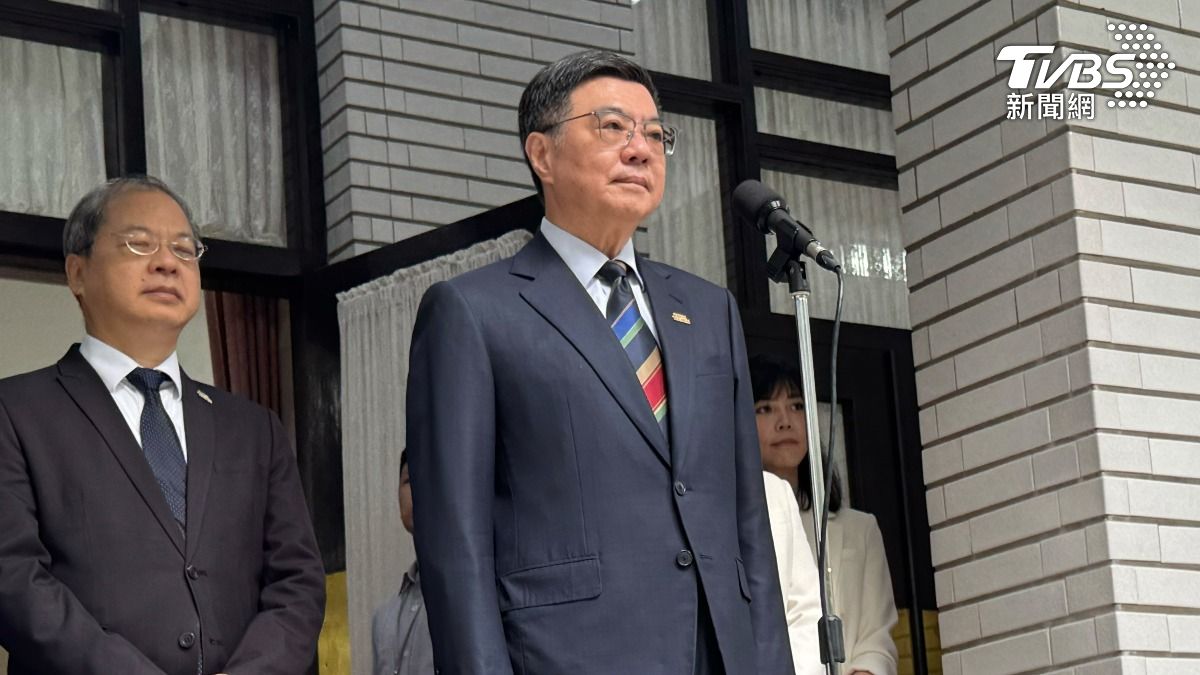
TAIPEI (TVBS News) — Taiwan's financial markets experienced a devastating selloff on Monday as the benchmark index collapsed by more than 2,000 points, earning the grim moniker "Black Monday" among local investors and analysts. The dramatic plunge came amid widespread global market turbulence triggered by the United States' recently announced reciprocal tariff policies. In response to the market chaos, Taiwan's Premier Cho Jung-tai (卓榮泰) addressed the situation during a Tuesday morning briefing (April 8), stating that any potential intervention by Taiwan's National Stabilization Fund (國安基金) would necessitate "thorough and careful professional assessment" before implementation.
Speaking to reporters during a morning session at the Legislative Yuan, Taiwan's parliament, Cho pointed to overnight gains in American markets as a potentially encouraging sign. The official expressed optimism that Taiwan's underlying economic fundamentals would prove resilient despite the market turbulence. The government will implement appropriate measures at the most strategic moment, Cho assured stakeholders, while deliberately avoiding specific commitments regarding market intervention tactics. The premier went on to express gratitude toward the Financial Supervisory Commission (FSC, 金管會) and the Taiwan Stock Exchange for their swift implementation of three targeted regulatory measures on Sunday, which he credited with effectively curbing speculative short selling activities that might have otherwise exacerbated market volatility.
In his remarks, Cho elaborated on the government's coordinated response efforts, revealing that the Executive Yuan (行政院), Taiwan's highest administrative organ, had worked in close collaboration with both the FSC and the Central Bank to perform comprehensive analyses of 936 individual stocks during Monday's trading session. This detailed evaluation, according to Cho, served as the foundation for developing intervention strategies that remain firmly within the boundaries of Taiwan's established financial regulatory framework. The premier further disclosed that following the United States' announcement of its new tariff policy, the Executive Yuan had promptly submitted preliminary response plans to the Presidential Office and initiated extensive interagency communications through official governmental channels to ensure a cohesive national strategy.
Responding to questions regarding diplomatic efforts with Washington, Cho confirmed that Taiwan currently stands among several economies awaiting formal dialogue opportunities with the United States regarding the new tariff regime. The premier maintained a cautious stance, emphasizing that the administration would present a comprehensive explanation of its negotiation strategy and conceptual approach only after completing its internal planning process. His measured response suggested the government is carefully calibrating its diplomatic positioning while assessing the full implications of the recent American trade policy shift.
In a notable revelation about prior diplomatic efforts, Cho disclosed that Taiwanese government representatives had already established communication channels with their American counterparts prior to April 3, suggesting that preliminary discussions had been underway before the formal announcement of the tariff policy. The premier concluded his remarks with an appeal for public patience, requesting that citizens allow the administration sufficient time to formulate a comprehensive and strategic approach that would maximize Taiwan's position in future engagement with the United States. His comments reflected the government's desire to balance transparency with the strategic sensitivities inherent in international trade negotiations during a period of heightened economic uncertainty.