



Taiwan warned of severe thunderstorms through Friday
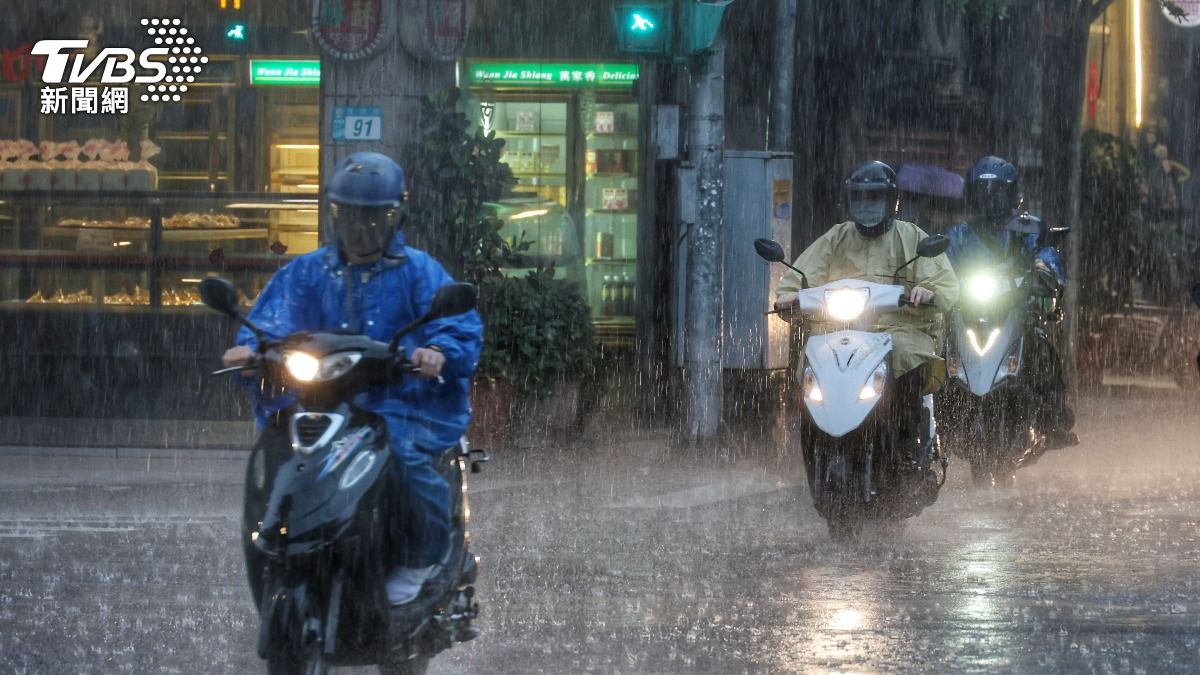
TAIPEI (TVBS News) — Taiwan faces a turbulent weather pattern that could bring significant nighttime thunderstorms across the island, meteorological experts warned on Thursday (June 26). Meteorologist Wu Der-romg (吳德榮) issued an alert about an approaching cold-core low-pressure system expected to increase atmospheric convection through Friday. The Central Weather Administration (CWA, 氣象署), Taiwan's national weather service, explained through its official Facebook channel that these distinctive weather systems typically develop over oceanic regions during summer and autumn months, creating temperature differentials that can trigger severe thunderstorms or even hail.
In his regular meteorological column published by National Central University, Wu highlighted significant uncertainty regarding the system's future path. The meteorologist noted that recent projections from the U.S. Global Ensemble Forecast System (GEFS) models display conflicting trajectory predictions, making continuous monitoring essential. According to Wu's forecast, temperature variations across Taiwan on Thursday will range from 23 to 36 degrees Celsius (73.4-96.8°F) in northern and central regions, while southern areas could reach 24-37 degrees Celsius (75.2-98.6°F), and eastern regions will experience temperatures between 22 and 36 degrees Celsius (71.6-96.8°F).
Looking ahead to the weekend and early next week, Wu predicted a shift to predominantly sunny conditions from June 28 through June 30, though afternoon cloud formation and elevated humidity levels could trigger isolated brief showers or thunderstorms. The weather pattern will further stabilize on July 1 and 2 as atmospheric moisture diminishes, bringing clearer skies to most areas while mountainous regions may still experience occasional precipitation. Taiwan's weather authority provided additional context about the current threat, explaining that cold-core low-pressure systems create cooler temperatures in upper atmospheric layers, which intensifies convection processes and substantially increases the risk of severe afternoon thunderstorm development.
Wu also addressed broader regional weather patterns affecting East Asia in his forecast. A tropical depression currently developing in the South China Sea is expected to track through Hainan Island and the Leizhou Peninsula before making landfall in mainland China, presenting no danger to Taiwan. The meteorologist's extended outlook identified another potential weather system with a 20 percent chance of developing into a tropical storm east of the Philippines by July 2. This probability increases to 30 percent as the system approaches waters east of Taiwan around July 4 and 5, a situation that authorities will continue to monitor closely. ◼