



Forecasters monitor 96W’s westward path toward Asia
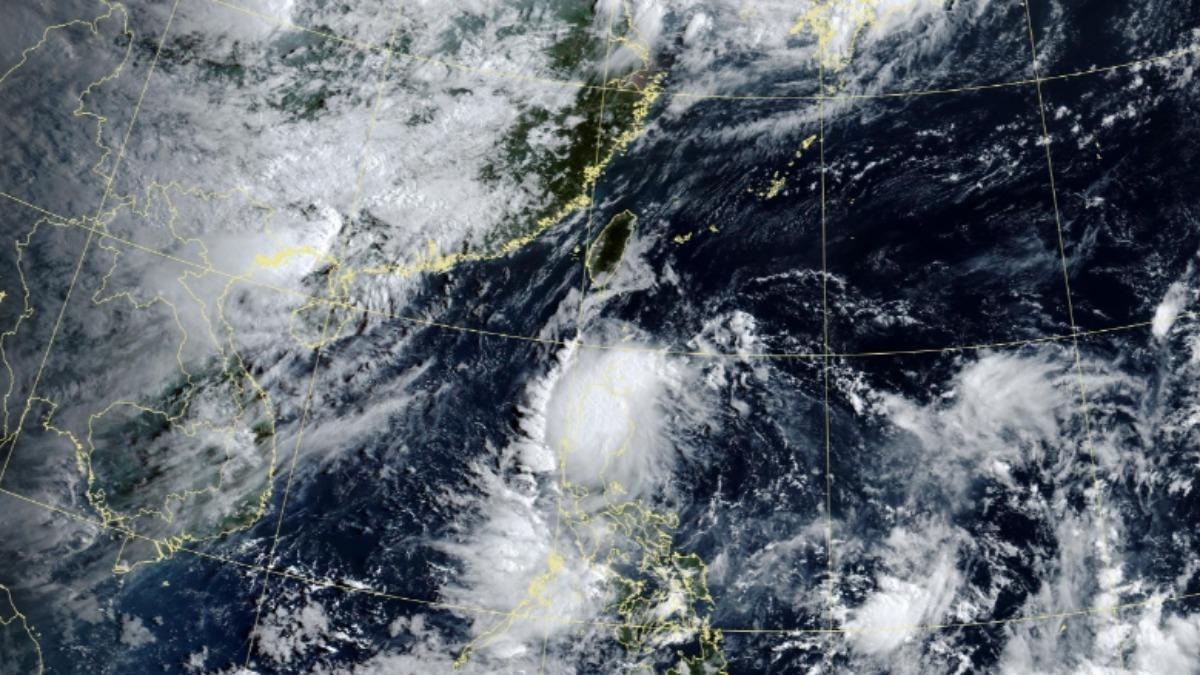
TAIPEI (TVBS News) — Meteorologists are closely tracking tropical disturbance 96W, which formed northeast of the Mariana Islands Wednesday (Aug. 6), as it moves through favorable sea temperatures of 28 to 30 degrees Celsius (82.4 to 86°F). European and American forecast models diverge on the system's trajectory, with European projections indicating an early northward turn and weaker development. The U.S. model predicts a steady westward path with stronger intensification potential, creating significant uncertainty for regional weather forecasters.
Weather expert Wu Der-rong (吳德榮) highlighted the potential impact of 96W on Taiwan's weather patterns. Wu predicts increased atmospheric moisture from Aug. 10 to Aug. 13 as the system skirts past the Philippines into the South China Sea. The meteorologist noted that latest European model simulations indicate clear, scorching weather across Taiwan during this period, strongly advising residents to take precautions against dangerous sun exposure and heatstroke risks.
Wu emphasized that despite brewing tropical activity east of Taiwan, the likelihood of 96W reaching typhoon strength and directly affecting the island remains relatively low. The U.S. model's latest simulation Wednesday (Aug. 6) at 8 p.m. suggests a stronger system near the Bashi Channel by Aug. 13 at 8 p.m. This projection indicates significant meteorological uncertainty and underscores the critical need for continuous monitoring of the developing weather system.
Taiwan will endure scorching conditions from Aug. 7 to Aug. 9 due to Pacific high pressure, with temperatures reaching 38 degrees Celsius (100.4°F). Brief afternoon showers may occur in mountainous areas. Regional temperatures will range from 23 to 38 degrees Celsius (73.4 to 100.4°F) in the north, 21 to 36 degrees Celsius (69.8 to 96.8°F) centrally, 23 to 37 degrees Celsius (73.4 to 98.6°F) in the south, and 22 to 35 degrees Celsius (71.6 to 95°F) in eastern Taiwan. ◼