


Taiwan touts U.S. ties as opposition visits Beijing forum
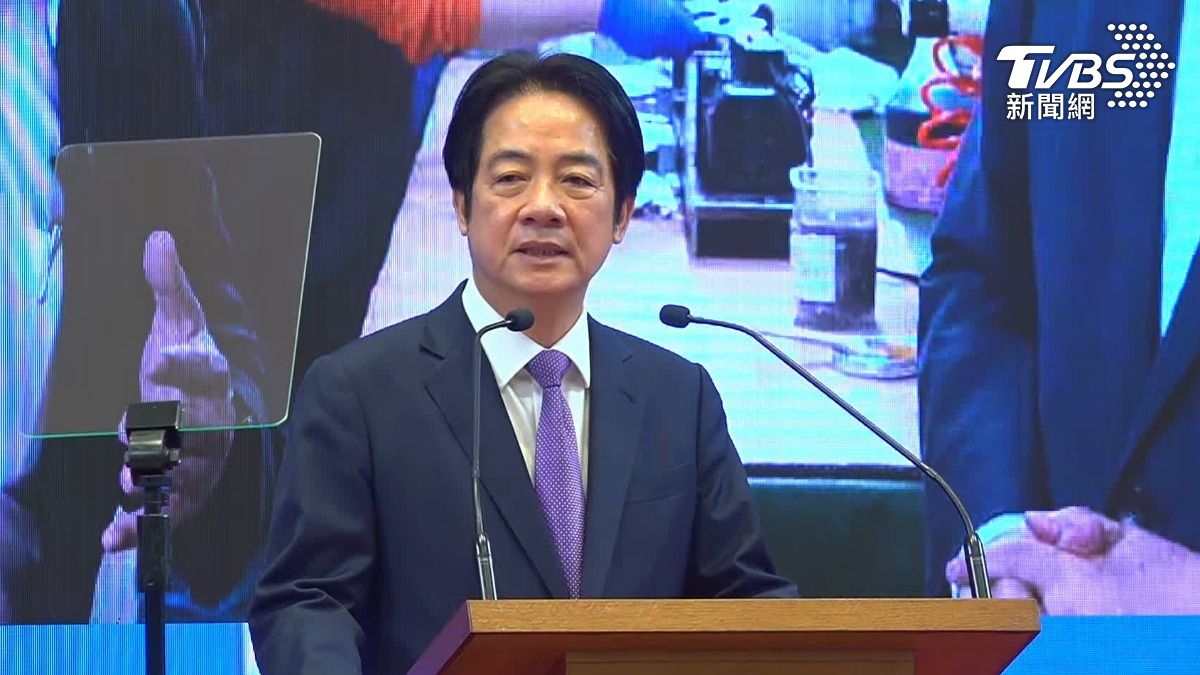
TAIPEI (TVBS News) — President Lai Ching-te (賴清德) unveiled Tuesday (Feb. 3) three strategic directions for Taiwan-U.S. economic cooperation while criticizing opposition legislators for neglecting national defense while engaging with Beijing. The announcement followed last week's sixth Economic Prosperity Partnership Dialogue (EPPD) in Arlington, Virginia.
Lai's press conference at the Presidential Office coincided with a Kuomintang (KMT, 國民黨) delegation's visit to Beijing for a KMT-Chinese Communist Party think tank forum. KMT Vice Chairman Hsiao Hsu-tsen (蕭旭岑) led the delegation. Lai acknowledged that the timing provides citizens with a contrast between his approach of partnering with democratic allies and the opposition's "second westward advance" toward China.
U.S. Under Secretary for Economic Affairs Jacob Helberg and Taiwan's Economic Affairs Minister Kung Ming-hsin (龔明鑫) led the sixth EPPD on Jan. 27. The meeting marked the first in-person session between lead negotiators since November 2020. It was also the first EPPD convened under President Donald Trump's second term.
The American Institute in Taiwan (AIT) and the Taipei Economic and Cultural Representative Office (TECRO) signed a Joint Statement on the Pax Silica Declaration (矽盛世宣言). The statement endorsed mutual prosperity, technological progress, and supply chain resilience. It described Taiwan as "a vital partner" whose "advanced manufacturing sector plays a key role in fueling the AI revolution."
Lai outlined three strategic directions: strengthening economic security, building an innovative economy, and developing a prosperous future. Both sides agreed to establish a working group for close communication on key issues. They will build a "non-red supply chain" (非紅供應鏈), meaning a supply chain that excludes China. This reflects growing efforts to reduce reliance on Chinese manufacturing.
EPPD discussions covered AI supply chains, digital infrastructure, critical minerals, drone system certification, third-country cooperation, and tax-related investment barriers. Lai described the agenda as the most diverse and comprehensive in EPPD history. He said Taiwan-U.S. cooperation is "no longer limited to a single industry, but a full-scale, cross-domain deep connection." Specific agreements on each topic were not disclosed.
Taiwan completed reciprocal tariff negotiations with the United States last month after nine months of talks, Lai said. Negotiations began after Washington announced new tariff policies in April 2025. The agreement's specific terms, which require approval from Taiwan's legislature, have not been disclosed. The tariff deal ensures Taiwan competes on an equal footing with major trading rivals.
Lai addressed cross-strait relations, saying Taiwan will engage with China if Beijing recognizes the Republic of China's existence and respects Taiwanese democracy. Beijing must also treat Taiwan with equality and dignity, he said. This policy of goodwill has been consistent for nearly a decade, from the administration of former President Tsai Ing-wen (蔡英文) to that of Lai. China has not responded to these conditions.
Lai criticized the opposition-controlled Legislative Yuan, Taiwan's parliament, for failing to review the central government's general budget and defense budget. The opposition pursues engagement with Beijing instead, he said. "Taiwan needs strong national defense capabilities to engage in cross-strait exchanges on an equal footing," Lai said. The KMT has not responded to the criticism.
Vice President Hsiao Bi-khim (蕭美琴), Foreign Minister Lin Chia-lung (林佳龍), and National Security Council Secretary-General Joseph Wu (吳釗燮) attended the press conference. The Washington delegation included Deputy Foreign Minister Chen Ming-chi (陳明祺), Deputy Digital Affairs Minister Isabel Hou (侯宜秀), and Taiwan's U.S. representative Alexander Tah-Ray Yui (俞大㵢). The EPPD mechanism was established during Trump's first term in November 2020. ◼