


From shadows to spotlight: Taiwan’s OSAT giants power the AI
For decades, the companies that package and test the world’s semiconductors have been the unsung heroes of the chip industry. While designers like Nvidia grabbed headlines and foundries like TSMC earned Wall Street’s admiration, outsourced semiconductor assembly and test (OSAT) firms quietly handled the essential final steps of turning raw silicon into functional chips. That era of invisibility is ending fast.
Fueled by the artificial intelligence revolution, Taiwan’s OSAT industry is stepping into the spotlight. The island controls 48% of the global OSAT market, employs over 130,000 skilled workers, and is home to five of the world’s top ten OSAT companies. What was once considered a commodity business has become an indispensable link in the AI supply chain.
The numbers underscore just how commanding Taiwan’s position has become. ASE Group, including its subsidiary SPIL, posted over US$20 billion in 2025 revenue, capturing more than 30% of worldwide market share. Powertech Technology, King Yuan Electronics (KYEC), ChipMOS Technologies, Chipbond Technology, and other companies give Taiwan unmatched depth in the packaging and testing. From AI accelerators bound for data centers to advanced smartphone processors and automotive chips, a significant share of the world’s most critical semiconductors passes through these companies’ facilities before reaching customers.
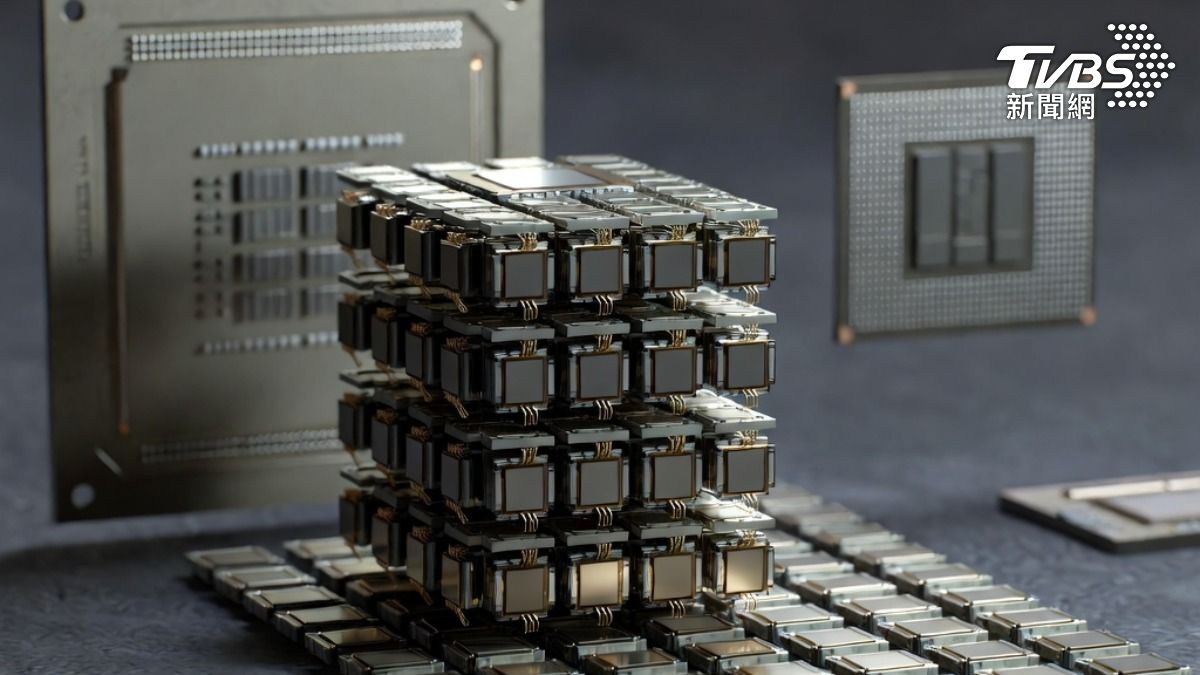
The most important shift in the industry is technological. Traditional packaging involved relatively straightforward assembly: mounting chips on substrates, wire bonding connections, and encapsulating components. Advanced packaging for AI chips demands something far more sophisticated. Engineers must stack multiple dies, integrate high-bandwidth memory directly with processors, and manage complex thermal and electrical challenges that would have seemed insurmountable a decade ago.
As Moore’s Law slows and it becomes harder to shrink transistors, advanced packaging has emerged as the primary frontier for semiconductor performance gains. TSMC now allocates over 10% of its annual capital expenditure to this area, operating five dedicated packaging facilities across Taiwan with more under construction. The company’s CoWoS (Chip on Wafer on Substrate) technology, which stacks multiple chips and high-bandwidth memory on a single substrate, has become essential for AI accelerators from Nvidia and other leading companies. By the end of 2027, TSMC’s monthly CoWoS production capacity is projected by some industry analsysts to reach 2.3 million pieces, more than tripling from an estimated 675,000 in 2025.
TSMC’s push into packaging might seem like a threat to traditional OSAT firms, but the dynamic is more collaborative than competitive. TSMC focuses on packaging its most advanced AI chips in-house, while companies like ASE and Powertech maintain clear advantages in high-volume, cost-effective assembly for smartphones, automotive semiconductors, and consumer electronics. TSMC often partners with these firms for capacity overflow or less critical applications. The result is a more resilient ecosystem capable of serving diverse customer needs.
Taiwan’s OSAT firms have also proven remarkably adaptable. Their agility in scaling production while adopting new methods keeps them indispensable to both established tech giants and emerging startups. This adaptability has transformed Taiwan from a low-cost manufacturing location into a strategic technology partner that customers cannot easily replace.
Taiwan’s advantage extends beyond individual companies to the integration of its entire semiconductor ecosystem. Consider the journey of an AI chip: Nvidia designs the architecture, TSMC fabricates the wafers and integrates with high-bandwidth memory in CoWoS packaging, KYEC or Powertech validates performance, and ODMs like Foxconn, Quanta, and Wiwynn assemble the servers. In Taiwan, all of these steps occur within hours of each other geographically. This proximity enables rapid iteration, just-in-time logistics, and immediate problem resolution. A geographically dispersed supply chain, where wafers ship from one country to packaging in another and testing in a third, adds weeks of delay and coordination complexity that Taiwan’s integrated cluster simply eliminates.
Industry forecasts project the global OSAT market will expand from approximately US$46.2 billion in 2025 to nearly US$80 billion by 2030, representing 11.6% compound annual growth. AI infrastructure buildouts, chiplet architectures that multiply packaging complexity, and the push toward edge AI deployment are all driving this expansion. With nearly half of the global market, Taiwan is positioned to capture a significant share of this growth.
For an industry that spent decades working behind the scenes, the transformation is remarkable. As demand for advanced packaging outpaces even optimistic forecasts, Taiwan’s OSAT sector has claimed its place at the heart of global semiconductor supply chains. Its time in the shadows is over.