


Five key questions about TSMC’s massive American expansion
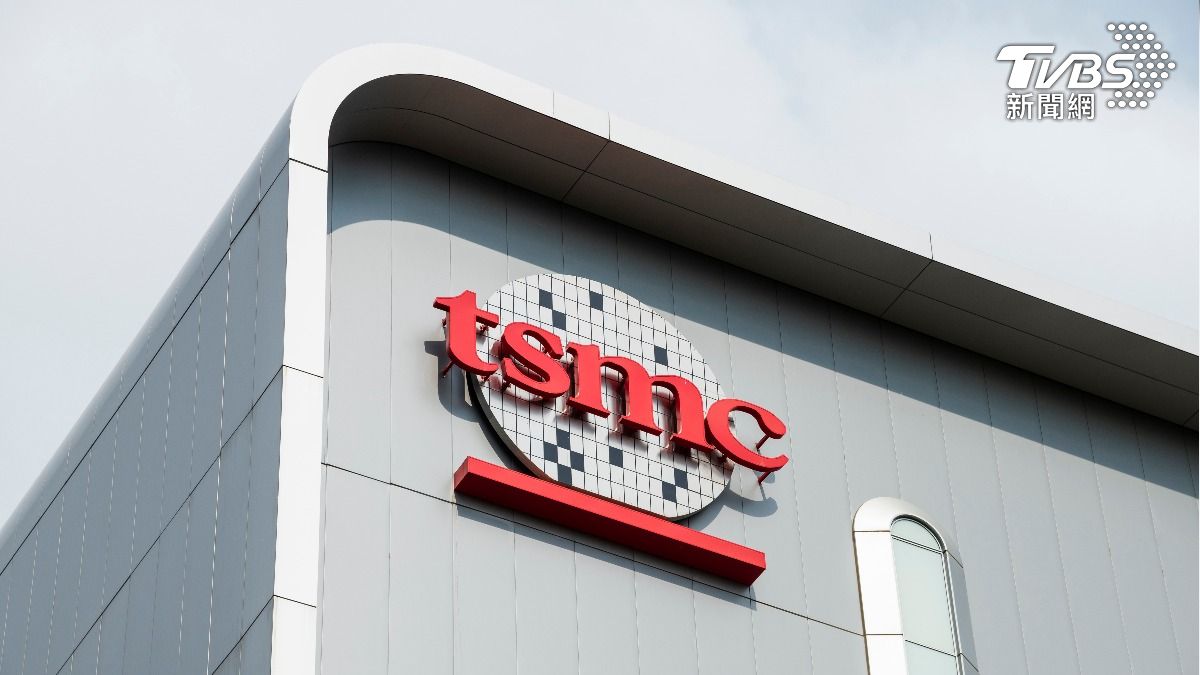
The day after TSMC's first-quarter earnings call, the Taiwan-U.S. tariff agreement was finalized — two major developments that converged on a single focus: TSMC's investment in America. With the chairman announcing plans to build a total of nine factories in the United States, what effects will this have on Taiwan? Here, we address the many concerns.
TAIPEI (Business Today/TVBS News) — Following the announcement of a tariff agreement between Taiwan and the United States, semiconductors have once again become a focal point of Taiwan's investment in America. As is typical, the publication of this agreement has triggered a variety of reactions and discussions. What are the key effects and potential impacts of Taiwan Semiconductor Manufacturing Company's (TSMC, 台積電) investment in the United States that merit attention? Below, Business Today (今周刊) analyzes this development through five major dimensions.
First, Why Does TSMC Need to Establish Operations in the United States?
Under this tariff agreement, Taiwan will invest US$250 billion (approximately NT$7.91 trillion) in the United States, including not only semiconductors but also investments from electronics companies such as Foxconn (鴻海), Quanta Computer (廣達), Wistron (緯創) and Delta Electronics (台達電). However, given the substantial scale of semiconductor investments, it is certain that the majority of this US$250 billion (around NT$7.91 trillion) will come from TSMC.
As of last year, TSMC's total investment in the United States stood at US$165 billion (approximately NT$5.22 trillion), and the company now plans to increase that figure further. The primary reason is the current strong market demand and severe wafer shortages, leaving TSMC with no choice but to continue investing in new wafer fabrication plants, with the United States being the optimal location for such investments.
Taiwan has limited resources, with insufficient electricity and constraints on land and talent, making it inherently difficult to support the enormous investment demands of the semiconductor industry. TSMC's capital expenditure this year is projected to be between US$52 billion (approximately NT$1.64 trillion) and US$56 billion (approximately NT$1.77 trillion), the largest investment among global semiconductor companies. Now ranking as the world's sixth-largest company by market value, TSMC has reached a scale that completely exceeds Taiwan's capacity to support it.
Looking at the top 10 American companies by global market value, all have long established global operations. No company would concentrate all its operational bases in the United States, let alone TSMC, which has historically relied almost exclusively on resource-limited Taiwan.
Consequently, five or six years ago, TSMC began establishing a global presence and diversifying its manufacturing locations, investing in the United States, Japan, Germany and other countries. Among these, the United States is naturally the most crucial location, as TSMC's major customers are predominantly American, with 75% of revenue coming from North American clients. Japan and Europe currently account for only 4% to 5% of revenue. Unless more major customers emerge in Japan, Europe and other regions with more products to manufacture, the pace of investment will not accelerate.
TSMC's investment in the United States is, of course, also related to the Trump administration's persistent encouragement. The policy of returning manufacturing to America, driven by President Donald Trump's strong determination, aims to increase employment and stimulate investment. As a result, TSMC has the opportunity to become America's most important chip supplier, while Taiwan will become a core player and beneficiary in America's return to semiconductor manufacturing.
Thus, under Trump's leadership, many American customers also desire TSMC to invest in the United States, with numerous clients agreeing to TSMC's price increases and being willing to absorb the additional costs. This is particularly true for AI chip producers such as Nvidia (輝達), AMD (超微), Broadcom (博通) and Google (谷歌), whose inherently high gross margins allow them to manage the impact of wafer price increases—a key factor facilitating TSMC's investment in America.
Second, Will TSMC's Technology Be Stolen?
The second question is whether investing in the United States will result in TSMC's technology being appropriated by others. The answer is that this issue doesn't warrant much concern, but it is certainly worth discussing.
TSMC has over 10,000 R&D engineers in Taiwan. After developing each process technology, they first practice it at the parent factory and adjust it to achieve stable high yields before formal mass production begins. Overseas plants then replicate the successful model developed in Taiwan, typically with a two-year delay. Recently, TSMC's Chief Financial Officer, Wendell Huang (黃仁昭), said in an interview that, even with accelerated transfers, the gap would still be at least 1 year.
In other words, TSMC's research and development and process engineering must occur at its Taiwan headquarters, and only after development and refinement are completed at the parent factory will production be moved overseas. This is an unchangeable fact. What is more worth discussing is whether key technologies will be appropriated when the company establishes operations overseas.
In reality, when companies invest overseas, some knowledge will inevitably be acquired by others because talent is mobile, and employees who move to other companies will bring their knowledge and experience with them. In earlier years, when European, American, and Japanese companies invested in Taiwan, Taiwanese people learned and imitated, and later went on to establish their own businesses, which helped create today's flourishing electronics industry.
The difference lies in the fact that the likelihood of technology being appropriated in the United States, or, more precisely, the risk of plagiarism and imitation, is evidently much lower than in China. After all, the United States places greater emphasis on intellectual property rights and possesses a comprehensive judicial system. When technology is stolen or talent is poached, remedies and improvements can be sought.
Furthermore, Asians excel in semiconductor wafer manufacturing, and China and Taiwan share high similarities, with both still treating manufacturing as a national development policy. China attracts foreign investment largely with the goal of eventually replacing foreign companies, as seen with Apple iPhones and Tesla electric vehicles, which China has learned from and largely substituted with domestic alternatives. However, American manufacturing competitiveness has lagged for too long, and Trump's policy to return manufacturing to America doesn't necessarily aim to have American companies replace foreign ones — an important distinction for foreign investors.
Third, are Labor Costs Too High?
The third question concerns TSMC's investment in the United States: Given America's high costs, the reluctance of American talent to work overtime, and lower yields and gross margins compared to Taiwan, will TSMC's profitability be impacted as the proportion of U.S. capacity increases?
This concern is reasonable, and high American costs are indeed a fact. However, TSMC's U.S. factory has already raised its prices, and customers are willing to pay the premium, allowing high costs to be passed on. Additionally, TSMC's U.S. subsidiary isn't currently profitable, primarily because it's still in the early stages of the learning curve. In the future, after a period of learning, the U.S. factory's yield, delivery times, profitability, and other performance metrics should be able to closely track those of the parent company.
In other words, as TSMC progressively completes U.S. employee training, supply chain partner development, and addresses related infrastructure and regulatory requirements — with external conditions gradually falling into place — the performance of the U.S. and Taiwan factories should become very similar.
As for how close they will be and how quickly the learning curve will progress, that is where Chairman C.C. Wei (魏哲家) and U.S. factory CEO Ray Chuang (莊瑞萍) need to focus their efforts. Similar to Samsung's Texas factory, which now performs very closely to Samsung's Korean parent factory, when TSMC and Samsung have significant performance differences in their home countries, their U.S. operations will also differ accordingly.
One of TSMC's greatest challenges is likely to be talent and culture. TSMC's remarkable success in Taiwan is due to the contributions of Taiwanese engineers. Will American talent be willing to work as diligently as Taiwanese employees? The answer is unlikely to be overly optimistic.
But this also indicates that TSMC has significant room for improvement. Beyond intensifying efforts to find American employees who share their values, they must shape an inclusive U.S. factory culture that accommodates diverse perspectives to help achieve the U.S. factory's operational goals.
A former TSMC manager once described an incident at the U.S. factory. American employees would leave promptly at 5 p.m. On one occasion, someone pushed equipment into an elevator before leaving, but at 5 p.m., the employee left while the equipment remained in the elevator, riding up and down. Later, Taiwanese employees who stayed later quickly retrieved the equipment to prevent damage to the precision machinery.
Several years ago, after recruiting its first batch of American employees, TSMC sent them to Taiwan for training before they returned to work at the U.S. factory. More than half of that group has now resigned, with those remaining clearly being more compatible with and adaptable to the company culture. This cultural shock is something Taiwanese companies must endure during international expansion. In Taiwan, TSMC employs dedicated top talent willing to make sacrifices, but attracting such first-rate professionals in the United States is a challenge all multinational companies must face.
Many high-level talent in the American technology industry work and start businesses in San Francisco's Silicon Valley, where offices remain brightly lit late into the night as people work diligently for innovation and vision. After establishing operations in the United States, TSMC must not only compete for excellent talent but also introduce Taiwan's lean work culture.
Attributing TSMC's success to an "overworking culture" is an oversimplified and dismissive characterization. Taiwan's manufacturing spirit, which combines discipline, speed and innovation, is something many foreign companies now want to study and emulate. Therefore, how TSMC conducts its international expansion and replicates this spirit in advanced countries represents a new challenge for Taiwanese companies seeking to gain international prominence.
Recently, a delegation from Dresden (德勒斯登), Germany, visited Taiwan to learn about Taiwan's experience in managing the semiconductor ecosystem. They affirmed Taiwan's highly efficient semiconductor operations, highly flexible scheduling, and rapid response capabilities. They acknowledged that, in terms of work culture, employees from Germany and Taiwan still need to adapt to one another, such as figuring out how to integrate Taiwan's "sense of speed" into Germany's "rigor." However, they were also certain that while Germany possesses international advantages in machinery and traditional automobile manufacturing, Taiwan serves as the global benchmark in overall efficiency and supply chain completeness in semiconductor manufacturing, and Germany must learn from Taiwan.
Fourth, will Taiwan's Supply Chain be Impacted?
The fourth question: Beyond TSMC increasing its investment in the United States, the semiconductor supply chain and Taiwan's "Big Five" electronics companies, including Quanta, Wistron, Inventec (英業達), Compal (仁寶) and Pegatron (和碩), will also follow suit. Is this impact too significant for Taiwan's industries?
Some argue that relocating semiconductor and AI server supply chains to the United States constitutes hollowing out Taiwan. This view is overly concerned. Taiwan is not only participating in American manufacturing development and investment but also propelling its supply chain to compete internationally, which carries tremendous positive significance.
Last August, members of Decent Holdings (德鑫控股), a group comprising 18 TSMC suppliers, visited the United States. Decent Holdings Chairman Chueh Sheng-che (闕聖哲) said that at that time, everyone recognized that TSMC's trend of investing in America was firmly established, and that after TSMC expanded its scale in the United States, suppliers worldwide, including those from Taiwan, would actively follow suit and begin investing in America.
TSMC's annual capital expenditure is very high. Of last year's more than US$40 billion (approximately NT$1.26 trillion) in spending, 90% went to international companies and only 10% to Taiwanese suppliers. In the future, Taiwanese supply chains must not only invest in the United States and work to maintain that 10% share but also pursue more opportunities with other customers, such as orders from Intel (英特爾), Micron (美光), Texas Instruments (德儀) and GlobalFoundries (格芯). Similarly, Taiwanese suppliers expanding to Japan and Germany must also pursue orders from semiconductor manufacturers in Japan, Europe and other regions beyond TSMC, expanding Taiwanese business influence.
Furthermore, Taiwan is not only extending its semiconductor supply chain overseas but also expanding to encompass the entire AI supply chain. As TSMC leads in increasing investment in the United States, Taiwan's "Big Five" electronics companies and other downstream server industries will follow suit, providing AI chips and AI server products for Nvidia and America's "Magnificent Seven," referring to the seven dominant U.S. technology companies, thereby consolidating Taiwan's dominant position in the entire AI supply chain.
In the 1990s, Taiwanese businesses invested in mainland China; now they're investing in the United States. In both cases, they've grown stronger through the process, successively becoming trillion-NT dollar enterprises. Whether helping China become the world's factory or helping the United States restore semiconductor and AI manufacturing, what's important is that Taiwanese enterprises can expand their international presence and that Taiwan's economy can develop rapidly — all of which benefits Taiwan.
Fifth, Will this Change Taiwan's Future Development?
Fifth, another, more long-term question is how Taiwan's electronics industry can develop its own identity and autonomy, and as businesses expand their overseas presence, they must also consider the impact on Taiwan and how to address these challenges.
For Taiwan's electronics industry, which has long been dominated by contract manufacturing and has already achieved numerous accomplishments, future directions to consider include seeking more opportunities beyond the United States and China, and exploring how to cooperate with Europe and Japan to create additional business opportunities. But simultaneously, in the international division of labor, Taiwan must identify other unique competitive advantages beyond its strong contract manufacturing role to address the issue of over-reliance on contract manufacturing.
Additionally, we should consider that since overseas development is unquestionably positive for Taiwan and has enabled TSMC to become a world-class enterprise, in the long term, will the Taiwanese talent taken overseas return? If the Taiwan government can create an excellent environment attracting more corporate headquarters to Taiwan, Taiwanese people who work around the world might be willing to return to their roots and live in Taiwan—this would be truly a positive long-term effect.
However, if Taiwan's living environment deteriorates, education fails to improve, and political standards remain low, Taiwanese talent working overseas may be unwilling to return or may sever ties with Taiwan altogether. This would create an even greater negative impact on Taiwan, requiring early consideration and response from all stakeholders. ◼ (At time of reporting, US$1 equals approximately NT$31.62)
>>> For More Reading:
This article is excerpted from the No. 1518 issue of Business Today (今周刊). Click here for the Chinese-language version of this story: 台積電加碼美國,關鍵五問!晶圓廠與先進封裝將落地,「台灣製造」外移是衝擊或新機?
>>> More Coverage:
01 | 台積電董事會熊本登場、4大重點曝光…股價又創1835元天價現在還能買?外資目標價:還有4成空間