



Zhen Ding: The World’s Largest PCB Maker Bets Big on AI
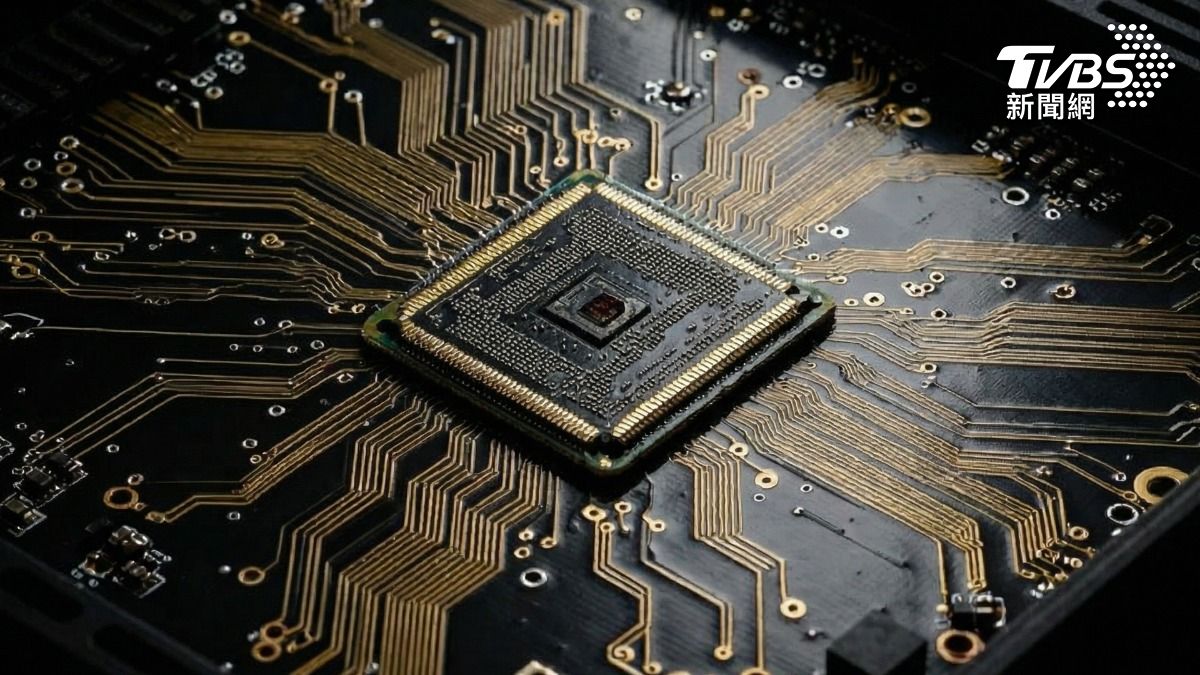
Few companies in Taiwan's technology ecosystem have reinvented themselves as thoroughly as Zhen Ding Technology. Originally established in 2006 as Foxconn Advanced Technology, a subsidiary making flexible circuits for consumer electronics, the company rebranded in 2011 and grew into the world's largest PCB manufacturer by revenue, a title it has held for eight consecutive years. Today, with full-year 2025 revenue of NT$182.5 billion (US$5.8 billion) and over NT$50 billion committed to new factories, Zhen Ding is placing its biggest bet yet: that the AI infrastructure boom will transform its business as profoundly as the smartphone revolution did a generation ago.
The company's roots are deeply entwined with the smartphone revolution. When Apple unveiled the iPhone in 2007, the engineering challenge of packing computing power into a pocket-sized device demanded circuit boards that could bend, fold, and route signals through contested three-dimensional space. Zhen Ding built its reputation by mastering both flexible and rigid PCB technologies, becoming a primary supplier to Apple and other global smartphone brands. That dual capability set it apart from competitors who specialized in one format or the other, and it propelled the company to the top of the global PCB rankings by 2017.
For years, this smartphone heritage defined the company's financial profile. Even today, mobile devices account for roughly 63% of revenue, and the Apple relationship shapes Zhen Ding's quarterly cadence. But Chairman Charles Shen has been steering the company through what amounts to a second metamorphosis: from mobile component supplier to critical enabler of AI computing infrastructure. The strategy, known internally as "One ZDT," aims to offer every interconnect solution a hyperscaler or server manufacturer might need, from flexible circuits and substrate-like PCBs to high-density interconnect boards, high-layer-count server boards, optical module substrates, and advanced IC substrates. The breadth of that portfolio is a competitive advantage that pure-play rivals cannot easily replicate.
The financial trajectory reflects a company at an inflection point. Full-year 2025 consolidated revenue reached NT$182.5 billion (approximately US$5.8 billion), up 6.3% from 2024 and a new all-time high. More revealing than the headline number is the composition of growth. In the fourth quarter of 2025, the server, automotive, and optical segment delivered monthly revenue growth exceeding 70% year-over-year, while the IC substrate segment grew over 30%. Together, these high-end segments exceeded 10% of total revenue for the first time during the Q4 peak season. January 2026 revenue came in at NT$13.6 billion (US$430 million), with management reporting that advanced AI applications in servers, optical communications, and IC substrates grew more than 60% year-over-year, setting new monthly records for those categories despite the traditional first-quarter slowdown.
Zhen Ding is backing this pivot with the largest capital expenditure program in its history. The company plans to invest over NT$50 billion (US$1.58 billion) in 2026, a 60% increase from the previous year. Ten new factories are under construction across Huai'an in China and Thailand, with the Kaohsiung campus in southern Taiwan dedicated to advanced development projects and customer validation for next-generation platforms. The Huai'an and Thailand sites are ramping capacity for AI rigid boards, server boards, and optical modules. Shen has stated that as these facilities come online, the benefits of capacity expansion will steadily translate into growth momentum over the coming years.
The technical demands driving this investment are formidable. Zhen Ding's focus in the AI server sector centers on intelligent high-density interconnect boards and high-layer-count technologies as its primary product lines. A single high-end AI server motherboard now requires more than 130 manufacturing steps and over 100,000 precisely drilled holes. Over the past two decades, IC substrate sizes have grown 20 times, layer counts have more than quadrupled, and contact points have surged 300-fold. Shen has emphasized that PCBs have evolved beyond basic components to become critical platforms supporting high computing power and high-speed data transmission. In optical modules, which are essential for high-speed interconnects within AI data centers, Zhen Ding holds a leading position in the modified semi-additive process, an advanced manufacturing technique required for the finest circuit geometries.
Zhen Ding's long-term technology roadmap extends well beyond current product generations. The company is exploring glass core substrates and CoWoP (Chip-on-Wafer-on-PCB) technologies that could merge the circuit board with the semiconductor package itself, effectively eliminating the boundary between substrate and board. These are not incremental improvements but bets on a future architectural convergence between the PCB and semiconductor industries. The company's participation alongside TSMC, Intel, and ASE Group in the Semiconductor and PCB Heterogeneous Integration Summit at the 2025 TPCA Show underscores its ambition to operate at the intersection of both worlds.
Shen has forecast that 2026 will mark the beginning of several years of rapid growth, with full-year revenue reaching new highs as the ten factories under construction progressively come online. The AI wave, he believes, is creating a once-in-a-lifetime growth opportunity for the PCB industry, one that will demonstrate Taiwan's deep expertise extends well beyond semiconductor fabrication. For a company that has already reinvented itself once to become the backbone of the smartphone revolution, the second act in AI infrastructure may prove even more consequential.