



How Thai Town plans to turn American chefs into wok masters
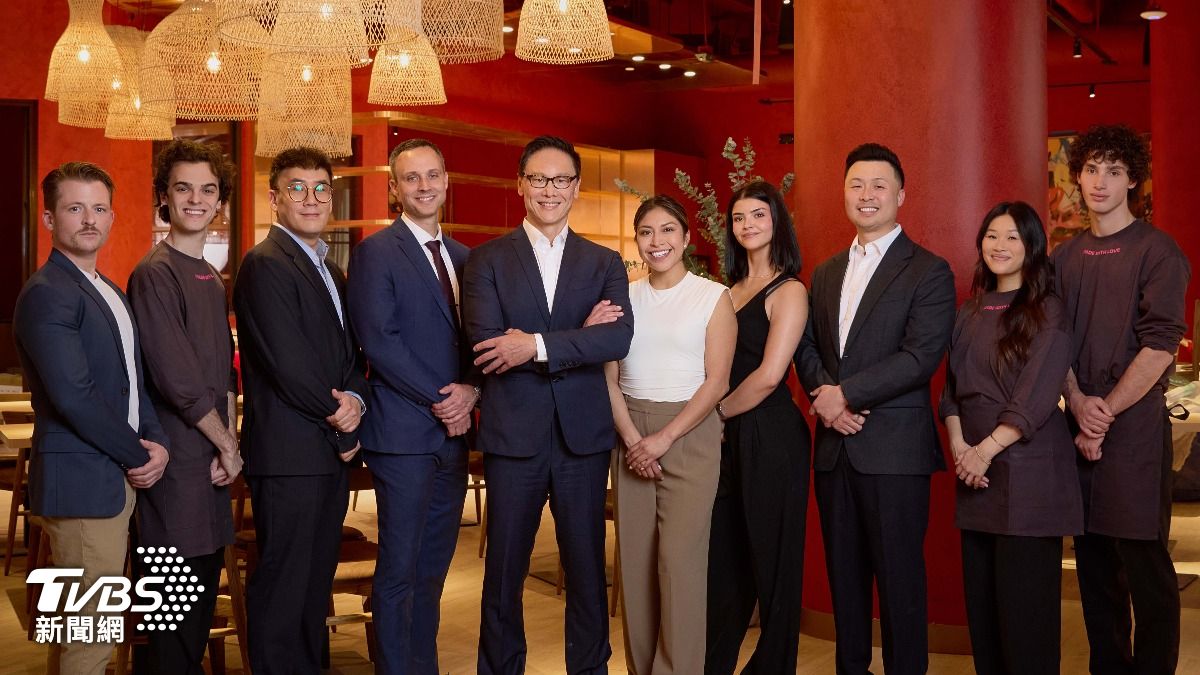
After more than three years of preparation, Thai Town Cuisine's, a leading Taiwanese restaurant group, inaugural American restaurant, "Very Thai by Thai Town," officially opened in Los Angeles at the end of February. This represents a pivotal moment for the chairman who has marshaled both talent and expertise for this bold overseas expansion.
TAIPEI (Business Today/TVBS News) — "America will be a crucial growth driver for the next five years!" declared Thai Town Chairman Charles Hsu (徐承義), his eyes sparkling behind black-rimmed glasses. Speaking confidently to Taiwanese business magazine Business Today (今周刊) on the eve of their first U.S. store opening, he outlined the company's years-long investment strategy for America.
Back in 2022, Thai Town (瓦城), Taiwan's leading Thai cuisine chain, first disclosed its plans to enter the U.S. market. Around the same time, numerous Taiwanese restaurant companies were racing to establish footholds in America, such as KINGZA International (王座國際), which operates Duan Chun Zhen Beef Noodles (段純貞牛肉麵) and Kyoto Katsugyu (京都勝牛), as well as pot sticker chain Bafang Dumpling (八方雲集).
Three years flew by, and while other operators opened one store after another, Thai Town alone remained silent. The reason lay in Hsu's cautious nature — he refused to move hastily, determined to wait until all conditions were perfect before striking. Now, Thai Town's new Thai restaurant "Very Thai by Thai Town" (Very Thai by瓦城), located in Los Angeles's major shopping center Westfield Century City, officially held its soft opening at the end of February.
"Thai Town's entry into the American market was never an impulsive decision, but rather the product of long-term, systematic preparation," Charles Hsu said confidently. This move represents his integration of successful experiences accumulated in Taiwan, combined with extensive observations of the American market, to meticulously craft a distinctive business model.
Determination: The First Store Must Succeed
In 2022, during the pandemic, as Hsu was preparing to withdraw Thai Town from China, he had already set his sights on the American market across the Pacific. "Asian cuisine in America, particularly Thai food, is quite popular there, yet no major Thai restaurant chains have cornered the market," he analyzed.
Having practiced taekwondo for years, Hsu understood better than most the critical importance of establishing a firm stance and planning carefully before taking action. Though he detected promising business opportunities, he resisted the urge to rush in. Instead, he handpicked 10 elite employees in Taiwan to form a "seed team" for American market development, which he would personally lead.
"Everyone was extremely interested in going to America, so we truly selected one in ten thousand. The team included well-rounded talent spanning chefs, marketing, purchasing, and finance, all of whom passed rigorous evaluations for language skills and capabilities." Determined that the first store must succeed, Hsu personally flew with his employees to America in late 2022 to begin expansion preparations.
"I travel to America nearly every quarter, staying for at least two weeks each time. I personally lead the team because if we don't establish proper standards from the start, no matter how rapidly we expand later, the risks will remain extremely high," Hsu explained, describing his insistence on personally overseeing the operation. The vanguard team, led by the chairman himself, had as its primary objective deeply exploring the local market and developing Thai cuisine tailored to local preferences.
While Thai Town already possessed a strong foundation in Thai cuisine, achieving "localization of fresh ingredients" and aligning with local taste preferences presented an entirely different challenge. To address this, Hsu frequently led teams personally into local markets, gaining thorough knowledge of the varieties and characteristics of American produce, seafood, and meat.
"Since America offers many excellent local beef options, we developed a Spicy Stir-fried Wagyu (辣炒和牛) dish. We also used local ingredients to create new fish dishes, such as European sea bass (Branzino, 歐洲鱸魚), commonly featured in upscale American restaurants, which we charcoal-grill with Thai spices and lime for a distinctive flavor profile." When it comes to menu development, Hsu speaks endlessly with enthusiasm.
Golden Palate: Taste Testing to Detect Subtle Differences
"The Thai Town team conducts daily taste tests, sampling each dish 20 to 30 times. The chefs privately confide in me, wondering how the chairman can discern such subtle differences," revealed Huang Ting-ling (黃鼎翎), CEO of Perfect 10 Creative (十分好創意), a marketing firm that has collaborated with Charles Hsu for years. Hsu possesses remarkably sensitive taste buds and maintains exceptionally high standards for flavor. Each dish at "Very Thai by Thai Town" represents the result of countless tastings and refinements by both internal and external staff.
"The taste testing process is still ongoing — we've completed more than 95% so far, and after the soft opening, we'll continue making adjustments based on market feedback," Hsu said. The elite team's second key objective involved transferring Thai Town's well-established "Eastern Wok Kitchen Chain System" (東方爐炒廚房連鎖化系統) from Taiwan to America. This system methodically breaks down the intricate steps of Eastern cuisine, enabling American chefs unfamiliar with Eastern cooking techniques to achieve proficiency within three months.
"We first send our head chefs there, then gradually step back once the local chefs can operate independently," Hsu explained. The elite team members merely lay the groundwork, as Thai Town's future plans involve opening locations throughout America, requiring the development of local talent. Through systematic training programs, they have already trained multiple chefs across America.
Beyond chefs, Thai Town has recruited several operations managers from American restaurant chains. Hsu specially arranged for one front-of-house manager to undergo months of training in Taiwan, then return to America to teach other staff members. "They all possess deep restaurant management experience and familiarity with the American market, which is very helpful for future expansion," Hsu said. After years of development, the local American team has gradually taken shape.
After establishing the foundation for ingredients and talent, choosing expansion locations became the team's final challenge. "American regulations are strict. Without entering through agents or joint venture arrangements, relationships with property developers must be built from scratch, making rapid expansion extremely challenging," noted Wang Jen-liang (王仁良), Chief Strategy Officer at Fortune King Dumpling (八方雲集), highlighting the common difficulties restaurant businesses face when expanding in America.
Hsu took the opposite approach. To ensure the company's complete control over ingredient sourcing, chef training, and quality control, he insisted that all locations operate as wholly-owned direct-managed stores. The specific strategy followed their Taiwan expansion model, establishing partnerships with major American shopping centers like Westfield Century City.
"Actually, most American shopping centers now want Thai and other Asian cuisines. Maybe because Thai Town is a publicly listed company, they tend to approach us first," Hsu acknowledged frankly. American malls seek differentiation through Thai Town, while Thai Town aims to reach diverse customer groups beyond Asian clientele through these venues—a perfect match.
"Chinese people only make up about 5% of the U.S. population. If you only serve Chinese customers, it's just small-time business," noted Chester Chu (朱裕誠), director of the Wyoming-Asia Pacific Trade Office (懷俄明州亞太商務辦事處), pointing out the necessity for Thai Town to develop mainstream clientele.
A glance at the map confirms that "Very Thai by Thai Town" has strategically positioned itself to capture "mainstream clientele." Westfield Century City, situated on Santa Monica Boulevard, borders the affluent Beverly Hills (比佛利山) neighborhood and lies just a 10-minute drive from tourist-heavy coastal areas — placing it in Los Angeles's prime location. Hsu also noted that 90% of the mall's clientele are white customers, and while Asian cuisine options include established brands like Din Tai Fung (鼎泰豐) and Haidilao Hot Pot (海底撈), Thai cuisine is notably missing.
Adding a Bar to Boost Average Spending
Based on the customer profile, Hsu targeted the mall's core young demographic, setting an average check of US$50 (around NT$1,596) at the mid-price point. To align with American dining customs of pairing dinner with alcoholic beverages, the restaurant features a full bar offering Asian-inspired cocktails, selected beers, and wines, which also helps boost the average spending.
With the bar installation, the establishment spans approximately 140 ping (about 4,628 square feet or 430 square meters) and accommodates 131 seats, making it somewhat larger than Thai Town's Taiwan locations, which typically stay within 100 ping (about 3,306 square feet or 307 square meters).
If this location operates smoothly as expected, Thai Town plans to expand to Westfield's dozen-plus Northern California sites. Hsu shared, "Just in the second quarter of this year, we'll open two more stores in America, including BO BO THAI and SHANN SHANN RICE BAR." Meanwhile, the seed team will remain in America to continue developing the local supply chain and talent pool.
"We're building a highway in the American market, hoping to successfully bring all Taiwanese brands to America in the future," Hsu declared confidently. Through rapid brand development — validating concepts in Taiwan first, then replicating them in America — he is confident about progressing toward the "30-500" goal: Thai Town, currently operating nine brands across 154 locations, aims to achieve 30 global brands and 500 stores by 2030.
"We're like riding a flywheel. If this flywheel currently spins 1,000 times per minute, once we enter America, it will take us to the next level," Hsu said, referencing management guru Jim Collins's (吉姆乘柯林斯) "flywheel effect." He is certain that past efforts will become Thai Town's growth momentum in the American market. Thai Town's ambitious American expansion plan — its success or failure hinges entirely on this pivotal battle. ◼ (At time of reporting, US$1 equals approximately NT$31.91)
>>> For More Reading:
This article is excerpted from the No. 1520 issue of Business Today (今周刊). Click here for the Chinese-language version of this story: 率隊摸透當地食材、一套系統把洋人變東方菜大廚 逾三年磨出美國首店 瓦城徐承義還原心路
>>> More Coverage:
01 | OpenClaw「養龍蝦」是什麼?部署教學步驟一表看!功能、優缺點、10個應用方式…和ChatGPT哪不同
02 | 2026崴浤科技企業前瞻趨勢論壇—「邁向卓越:AI 驅動下的企業新紀元」 建立企業的AI中央大腦,透過AI「賦能」與「效率顛覆」帶動轉型的核心引擎