


Computex 2026: Taiwan tech inflection point
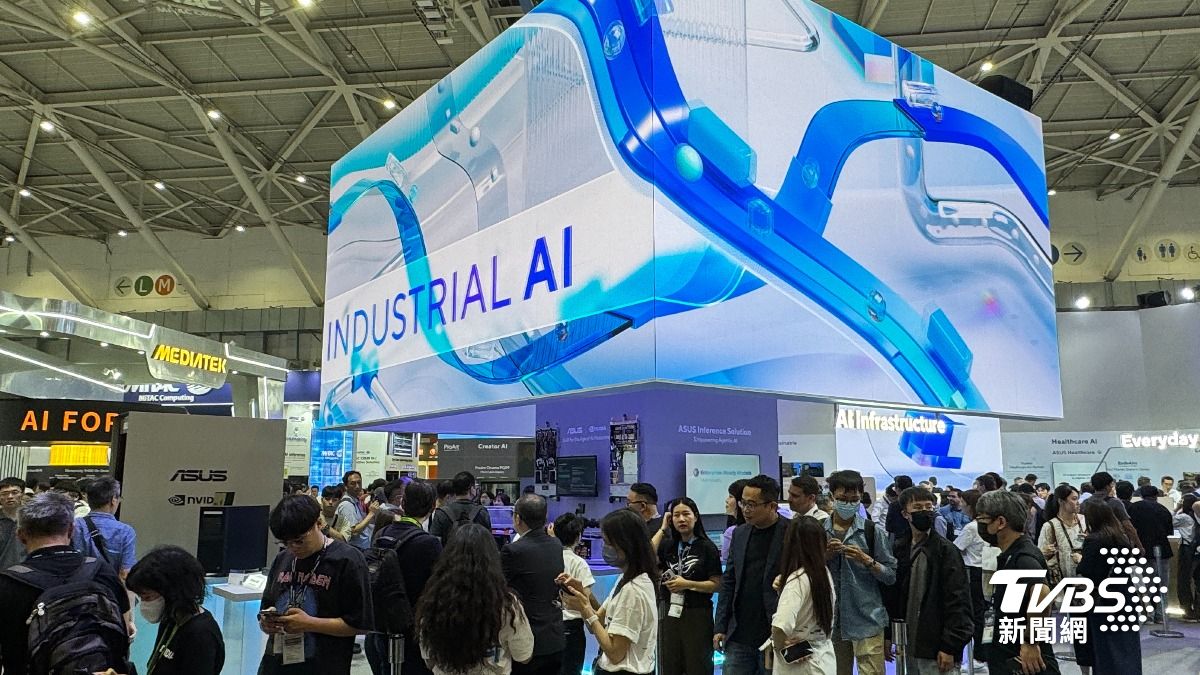
Computex has long served as a barometer for the global technology industry. This year’s edition, running June 2–5 in Taipei under the banner “AI Together,” carries added weight. The first quarter of 2026 delivered a cascade of transformative developments: a landmark US-Taiwan trade agreement, hundreds of billions of dollars in new capital commitments, an intensifying supply crunch at the most advanced chip nodes, and the rise of Physical AI as the industry’s next organizing principle. Together, these shifts are realigning Taiwan’s technology economy. Computex is where these threads will converge in public.
The show has scaled up to roughly 1,500 exhibitors across 6,000 booths, organized around three core tracks: AI & Computing, Robotics & Mobility, and Next-Gen Tech. Its keynote lineup reads like a high-level summit: MediaTek’s Rick Tsai on the future of AI, Intel’s Lip-Bu Tan on the company’s post-restructuring direction, NXP’s Rafael Sotomayor on Physical AI, and, almost certainly, Nvidia’s Jensen Huang, whose March GTC keynote set the terms of debate that Computex will now address.
Here are the five major themes to watch for.
The most anticipated product announcement expected at Computex is Nvidia’s N1 and N1X system-on-chips for laptops, co-developed with MediaTek. This marks Nvidia’s first serious entry into the consumer PC processor market. The flagship N1X is expected to feature a 20-core Arm processor paired with an integrated Blackwell-architecture GPU boasting 6,144 CUDA cores that reportedly delivers performance roughly equivalent Nvidia’s discrete RTX 5070 graphics card.
The partnership builds on a relationship between Rick Tsai and Jensen Huang dating back to 1996, when Nvidia was a small graphics company and Tsai was still at TSMC. In recent interviews, Tsai has described MediaTek’s evolution from a mobile-connectivity specialist into a full “Computing Powerhouse,” spanning data-center collaboration with Nvidia, edge AI, and now mainstream consumer computing. His June 3 keynote is expected to position this as a defining new chapter for the company.
The competitive implications ripple outward. Nvidia is entering a market that ships around 150 million units annually, challenging Intel, AMD, and Qualcomm simultaneously. For Taiwan’s notebook makers, the key question is whether these chips can revive the Windows laptop segment and help them compete more effectively against Apple’s refreshed MacBook lineup, including the new MacBook Neo.
At GTC in March, Jensen Huang declared that every industrial company will eventually become a robotics company. He unveiled the Isaac, Cosmos, and Newton platforms to provide the brains and senses for machines operating in the physical world. NXP’s keynote explicitly focused on Physical AI signals that this term moved beyond one vendor’s marketing to becoming the industry’s shared framework.
Taiwan has a unique stake in this shift. Speaking at Asia University in March, TSMC Chairman C.C. Wei argued that the real value of a robot lies not in mechanical acrobatics but in the semiconductor-driven intelligence that enables reliable, functional service in aging societies. Wei noted that TSMC manufactures 95 percent or more of the world’s advanced AI processors, positioning the company as what he called the “ultimate gatekeeper of the robotic future.”
On the factory floor, Taiwanese firms are already executing. Techman Robot plans to launch a dual-arm model and deploy upgraded humanoids at customer sites in the second half of 2026, emphasizing practical wheeled designs for industrial use. The government has earmarked over NT$30 billion (approximately US$915 million) in its 2026 budget for emerging technologies, including AI robotics.
The Robotics & Mobility track at Computex will reveal whether Physical AI is transitioning from concept to commercial deployment and whetehr Taiwan’s decades of precision manufacturing experience will translate into a competitive advantage in embodied intelligence.
Beneath the headline growth, a more complex reality is emerging with supply constraints beyond wafers and CoWoS advanced packaging. TSMC’s 3nm capacity remains the most constrained advanced node. Cloud AI leaders Nvidia and AMD, ASIC designers Broadcom and Marvell, and long-term partners (Apple, MediaTek) are absorbing the bulk of supply, leaving others scrambling. Some chipmakers are reportedly exploring shifts to Samsung due to their inability to secure enough leading-edge capacity. Elon Musk’s Terafab initiative, an attempt to build captive chip manufacturing facilities, is a direct response to the allocation squeeze.
The crunch extends beyond the fab. A persistent shortage of T-glass fiberglass cloth, critical for ABF and BT substrates, continues to constrain advanced packaging and is projected to last into 2027. Japan’s Ibiden (Nittobo) dominates supply, while Taiwanese players such as Taiwan Glass and Fulltech are accelerating domestic alternatives but face lengthy qualification and ramp-up cycles.
Computex will take place against the backdrop of the Agreement on Reciprocal Trade, signed in early 2026, the most significant bilateral economic pact between the US and Taiwan in decades. Taiwan committed to at least $250 billion in direct US semiconductor and high-tech investments, backed by $250 billion in government credit guarantees. In exchange, the US reduced IEEPA tariffs from 20 percent to 15 percent, eliminated duties on select categoriesincluding generic pharmaceuticals and aircraft components, and Taiwan agreed to lift or slash up to 99 percent of its tariff barriers on US exports.
The deal’s downstream effects are already visible. At the Taiwan International Machine Tool Show in March, the American Institute in Taiwan’s Raymond Greene declared that US-Taiwan economic relations had entered a “golden era,” citing deepening cooperation across advanced manufacturing, AI, robotics, UAVs, defense, and critical minerals. TSMC’s Arizona expansion, now reportedly scaling to 12 fabs, is the centerpiece, but the agreement’s reach extends into server assembly, machine tools, drone manufacturing, and mining equipment.
For Taiwan’s tech industry, the trade deal creates both opportunity and obligation. The $250 billion investment commitment means capital flowing outward to the US at the same time companies are spending record sums domestically. TSMC alone has earmarked $52–56 billion in 2026 capex. Whether this dual-track spending is sustainable, and how it reshapes supply chains, talent flows, and competitive dynamics between Taiwan-based and US-based production, will be a defining question at Computex and long after it.
Perhaps the clearest trend Computex will highlight is the widening divide between Taiwan’s AI-driven champions and the rest of the ecosystem. While companies such as TSMC, Delta, Foxconn, KYEC, and Zhen Ding Technology have posted record revenues during the first quarter and are expanding at breakneck speed, traditional PC shipments are forecast to decline in 2026.
Memory shortages and rising component costs are squeezing mid- and low-tier products hardest. Chipmakers openly acknowledge that volume growth now hinges on high-end models. Energy-price volatility adds further uncertainty.
This bifurcation is structural. Taiwan’s tech economy was built on a dense network of small and midsize suppliers serving the full electronics spectrum. If AI demand continues to absorb advanced capacity, talent, and capital while traditional segments shrink, the structure of that network changes. Computex 2026 will show, more clearly than any earnings report, which companies are on which side of the divide.
Taiwan's tech sector will enter the show from a position of extraordinary strength, commanding the majority of advanced global foundry capacity and anchoring the AI chip and server supply chain. Yet strength and fragility coexist. Geographic concentration, heavy reliance on a handful of AI customers, and persistent talent shortages are not hypothetical risks. They are active constraints that are becoming harder to ignore.
Computex 2026 will arrive at a genuine inflection point. The convergence of explosive AI momentum, deepening supply-chain strains, and the emergence of Physical AI as an industrial category will test whether Taiwan can sustain its leadership while the gap between its AI-driven winners and the rest of its ecosystem continues to widen. The show won't resolve these tensions. But it will make them impossible to look away from.