



Taiwan freezes gas prices, leaves state oil firm CPC gutted
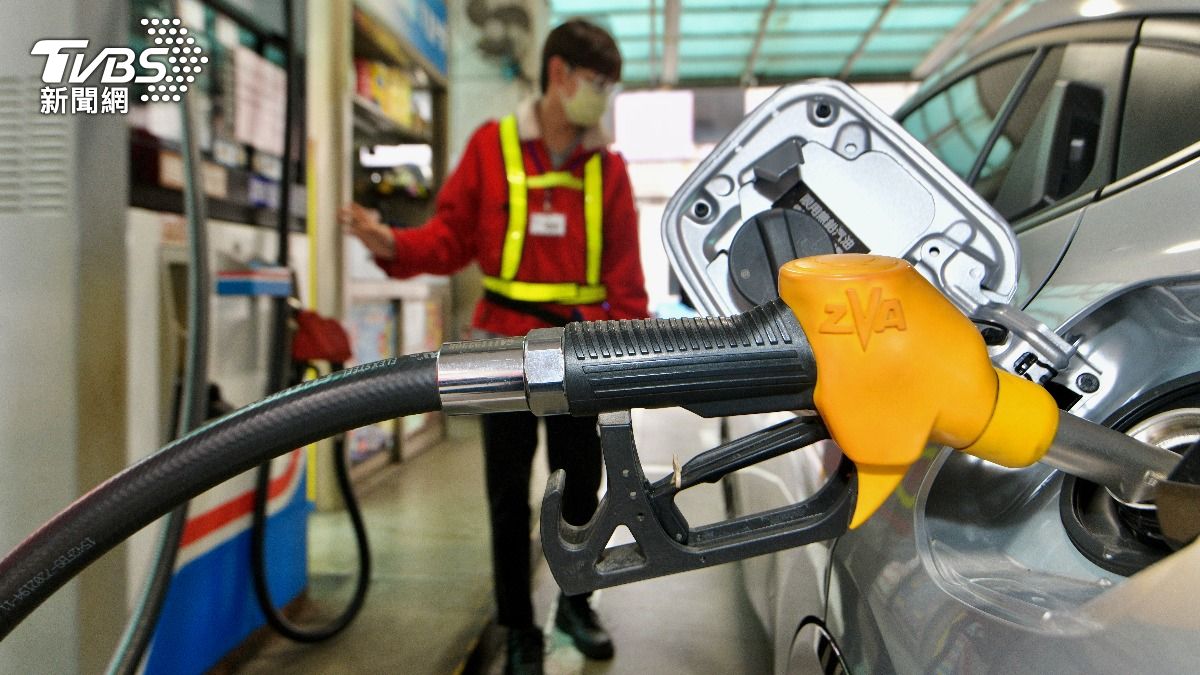
TAIPEI (TVBS News) — Gas prices will remain frozen for another week starting Monday (April 6) in Taiwan, where fuel is already the cheapest in Asia. Behind that stability lies a company bleeding out. CPC Corporation (台灣中油) has absorbed more than NT$90.6 billion (around US$2.83 billion) since the U.S.-Iran war began Feb. 28 — a figure that now exceeds its entire net worth of NT$85.4 billion (around US$2.67 billion). The price at the pump holds steady — and so does consumption. The price on the balance sheet does not.
CPC Chairman Fang Jeng-zen (方振仁) acknowledged the crisis on Saturday, describing the financial burden as "severe." He said the company hopes to receive support through special financing, budget appropriations and capital increases. However, no concrete plan to address CPC's accumulated losses has been announced.
The company also announced that day that gasoline and diesel prices will remain frozen for the week of April 6-12. Benchmark 95-octane unleaded gasoline will stay at NT$33.9 (around US$1.06) per liter. CPC is absorbing NT$6.8 (around US$0.21) per liter for gasoline and NT$8.8 (around US$0.28) per liter for diesel to maintain the lowest prices among Asian neighboring countries.
The price freeze extends a policy that has kept Taiwan's fuel prices far below regional peers. Taiwan's 95-octane gasoline at NT$33.9 per liter compares with NT$49.5 (around US$1.55) for 95-octane in South Korea, NT$85.9 (around US$2.68) for 95-octane in Singapore and NT$132.1 (around US$4.13) for 98-octane in Hong Kong. The gap reflects the scale of CPC's absorption burden.
The financial strain has intensified as international oil prices remain elevated. Since the war began, Dubai crude oil prices — the primary benchmark for Asian imports — have increased by 69.37% and Brent crude prices by 77.81%, according to CPC. The Brent crude spot price for physical cargoes reached US$141.36 on Thursday (April 2), the highest level since the 2008 financial crisis, according to S&P Global data cited by CNBC.
Recovery Could Take Months, or Years
Fang warned that even after the war ends, oil prices may take three to six months to return to pre-war levels. However, some damage could take far longer to repair. Qatar's Ras Laffan LNG facility, which supplied 20% of the world's liquefied natural gas, could take three to five years to fully restore, according to Reuters. The outlook suggests CPC's financial burden could continue growing well beyond initial estimates.
The government has taken steps to reduce the ongoing cost burden. Starting April 2, the government reduced the commodity tax on liquefied petroleum gas by 50%. However, CPC said that even after the tax reduction, LPG prices should have increased by NT$10.5 (around US$0.33) per kilogram in April. The company absorbed that difference as well.
The crisis has also exposed weaknesses in Taiwan's oil pricing formula. The formula, known as "7D3B," calculates domestic prices using a weighted average of 70% Dubai crude and 30% Brent crude prices. It has been in use since 2007 with only minor adjustments. CPC president Chang Min (張敏) said April 1 that the formula no longer reflects the company's actual crude oil import sources, which now come primarily from the United States rather than the Middle East
Chang said CPC will commission third-party think tanks — including the Chung-Hua Institution for Economic Research (中華經濟研究院), the Taiwan Institute of Economic Research (台灣經濟研究院) and the Taiwan Research Institute (台灣綜合研究院) — to review the formula. The review will also examine shipping costs and the current 80% cap on international price fluctuations, he said. The process is expected to take at least six months.
Taiwan's approach differs from other Asian governments responding to the oil shock — which have paired large subsidies with caps designed to curb demand. Japan is tapping 800 billion yen (around US$5.02 billion) in reserve funds to finance direct subsidies. South Korea proposed a 26.2 trillion won (around US$17.3 billion) supplementary budget. Indonesia budgeted 381.3 trillion rupiah (around US$22.4 billion) for energy subsidies, according to Reuters.
Those governments are using direct budget allocations, while Taiwan relies primarily on CPC to absorb costs. This approach shields government budgets in the short term but concentrates risk on the state-owned company. Liao Huei-chu (廖惠珠), a professor at Tamkang University's Department of Economics, warned in the Taipei Times that with "severely weakened balance sheets," it is unclear how CPC can obtain sufficient financing.
The energy crisis has also reignited debate over Taiwan's energy policy. Minister of Economic Affairs Kung Ming-hsin (龔明鑫) said Saturday that the ministry has submitted a nuclear power plant restart plan to the Nuclear Safety Commission (核安會) for review. He said the outcome of that review could change Taiwan's energy structure.
Kung also disclosed that Taiwan's international relationships have provided some relief. He said an energy-producing country's minister contacted Taiwan two weeks ago to offer support for natural gas needs. He did not identify the country. Taiwan is working to diversify natural gas sources, increasing imports from the United States from 10% currently to 25% by 2029, Kung said.
The gap between what CPC has spent and what it can sustain has already closed — and reversed. Chairman Fang hopes for government intervention but has offered no timeline. The formula review will take six months. The war shows no sign of ending. Other governments have capped subsidies to curb demand. Taiwan has not. The price at the pump remains stable — and so does consumption. ◼ (At time of reporting, US$1 equals approximately NT$32)