



Taiwan opposition takes risky bet on Beijing before polls
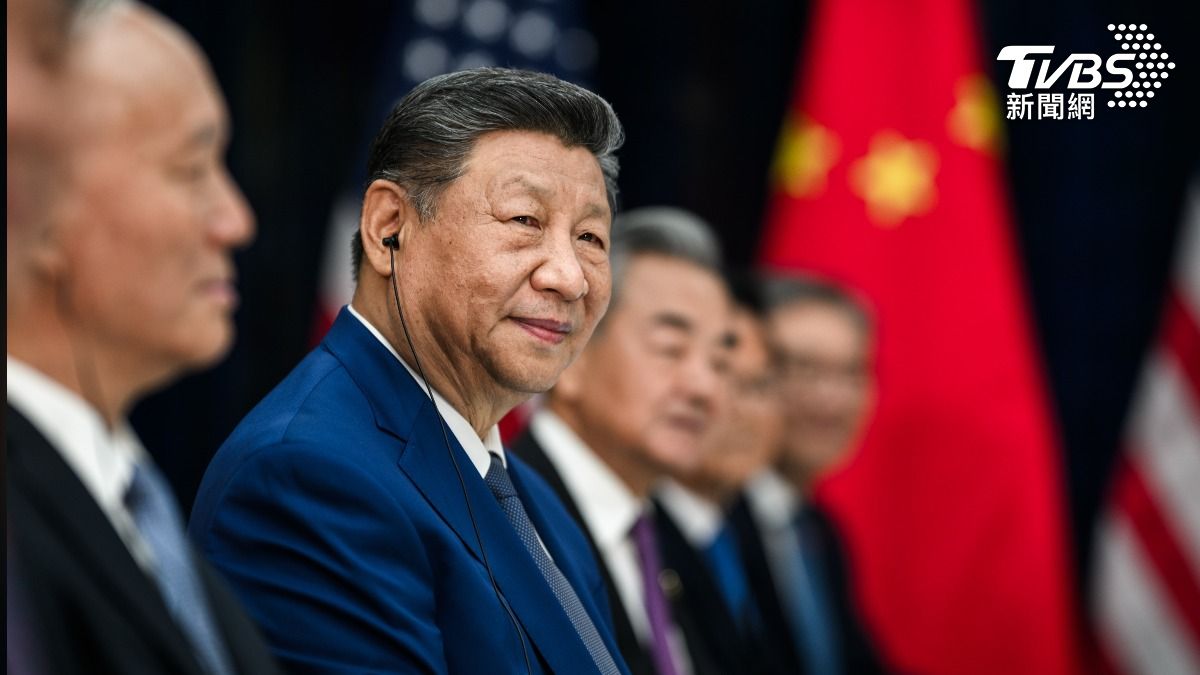
TAIPEI (TVBS News) — Leaders of Taiwan's opposition and China's Communist Party will meet face-to-face later this week for the first time in a decade. Kuomintang Chairwoman Cheng Li-wun (鄭麗文) departs Tuesday (April 7) for Beijing, testing whether the old playbook of cross-strait engagement still works — even as the United States has overtaken China as Taiwan's largest export market for the first time in 26 years.
The Mainland Affairs Council (陸委會), Taiwan's cabinet-level agency handling cross-strait affairs, accused Cheng of attempting to obstruct the special defense budget bill "in exchange for Beijing's approval for her visit." Cheng denied any connection, stating the KMT legislative caucus operates independently. The timing is notable: negotiations were postponed at KMT request to April 15 or 16, after Cheng's return.
Chen Kuan-ting (陳冠廷), a Democratic Progressive Party (民進黨) legislator who convenes the Foreign Affairs and National Defense Committee in Taiwan's parliament, said the committee had originally scheduled negotiations on the "Special Act for Strengthening Defense Resilience and Asymmetric Warfare Capabilities Procurement" for Wednesday, during Cheng's trip. The KMT caucus "suddenly sent a letter requesting postponement," Chen said.
The visit unfolds as Taiwan's economic ties and people-to-people contacts with China continue to shrink. The United States accounted for 30.9 percent of Taiwan's total exports in 2025 at US$198.27 billion (around NT$6.34 trillion), according to Ministry of Finance data. China and Hong Kong fell to second place at 26.6 percent with US$170.48 billion (around NT$5.46 trillion).
Beatrice Tsai (蔡美娜), director-general of the Ministry of Finance's Department of Statistics, attributed the shift to supply chain restructuring. "With the restructuring of global supply chains amid tensions between Washington and Beijing, many Taiwanese exporters were trying to rely less on the China market," Tsai told the Central News Agency. Cross-strait trade fell to 16.5 percent of Taiwan's total foreign trade in January 2026, down from 24.2 percent in the same period of 2019, according to MAC data.
Travel across the Taiwan Strait has also declined sharply. Mainland Chinese visitors to Taiwan totaled 45,333 in January 2026, down 24.6 percent from the same month a year earlier, according to MAC data. In January through November 2019, before the COVID-19 pandemic disrupted travel, Taiwan received 2.58 million mainland visitors — a pace that would dwarf current levels.
Cheng framed her trip as a peace mission amid global instability. She said that foreign visitors and scholars she has met since becoming party chair expressed concerns that a Taiwan Strait conflict "would be worse than the Russia-Ukraine war." "Especially during this period when the Middle East situation is turbulent, it is a good thing for peace signals to appear in the Taiwan Strait," Cheng told local media.
The DPP's China Affairs Department warned Thursday that the meeting serves the Chinese Communist Party's united front objectives. The department said the CCP aims to consolidate "patriots governing Taiwan" and to "obstruct arms procurement and weaken Taiwan-US cooperation." The department characterized the summit as "unilaterally dominated by the CCP," calling it the "Xi-Cheng meeting" (習鄭會) rather than the "Cheng-Xi meeting" (鄭習會) favored by KMT officials.
Public opinion surveys suggest a limited appetite for Beijing's proposals. An annual MAC survey conducted in December 2025 found 82.6 percent of respondents rejected the CCP's "one country, two systems" proposition. The same survey found 85.1 percent favored maintaining the cross-strait status quo, and 54 percent supported the government's plan to invest NT$1.25 trillion (around US$39.1 billion) in defense over eight years.
Historical precedent offers mixed signals for the KMT's electoral calculations. A similar MAC survey following the November 2015 meeting between then-President Ma Ying-jeou (馬英九) and Xi found 64.6 percent believed the summit helped consolidate cross-strait peace. Yet the KMT lost the 2016 presidential election decisively. KMT Vice Chairman Sean Lien (連勝文) emphasized in a Facebook post that "winning elections is the KMT's most important goal right now."
Cheng said she is confident Beijing will demonstrate "significant goodwill and sincerity." What remains unclear is whether that goodwill will translate into votes. The last KMT leader to meet Xi — then-President Ma in 2015 — saw his party lose the presidency decisively the following year. Cheng's delegation departs Tuesday carrying the weight of that history. ◼ (At time of reporting, US$1 equals approximately NT$32)