



Foxconn Powers into Q2 on AI Momentum but Headwinds Loom
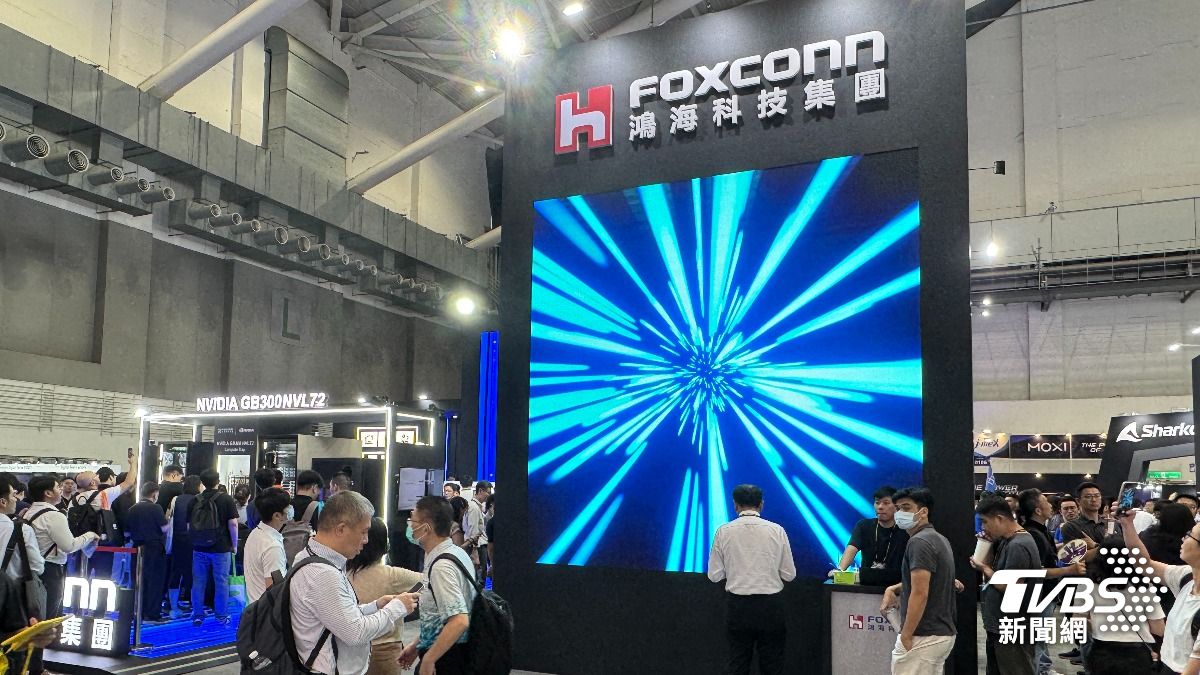
Foxconn enters the second quarter of 2026 riding its strongest growth in years, powered by explosive demand for AI servers. Yet the company still faces meaningful challenges in its traditional consumer electronics business, which continues to represent a substantial portion of its revenue. Its Q1 results make it clear that AI infrastructure has become the company’s primary growth engine. Whether that engine can fully offset softening demand elsewhere will shape the quarters ahead.
Foxconn delivered a standout Q1 2026, posting revenue of NT$2.12 trillion (US$66.4 billion), a robust 29.7% increase year-on-year. March alone set a new monthly record at NT$803.7 billion (US$25.1 billion), surging 45.6% thanks to sustained AI infrastructure demand and typical post-Lunar New Year restocking.
The performance placed Foxconn at the heart of a broader boom among Taiwan’s AI server assemblers. Collectively, the sector generated over US$133 billion in the quarter as Nvidia’s GB300 shipments to hyperscalers accelerated sharply.
Foxconn’s leadership in AI servers is now firmly established. Chairman Young Liu has publicly stated that the company holds more than 40% market share and intends to defend that position through 2026. This dominance is underpinned by deep, early-stage collaboration with Nvidia. At GTC 2026, Foxconn showcased its capabilities with the Vera Rubin NVL72 AI server rack, along with advanced liquid cooling subsystems, power delivery solutions, and modular data center architectures. Its involvement goes far beyond final assembly to include critical components such as cold plates, manifolds, and midplanes, giving it a structural edge over competitors with narrower offerings.
To support this growth and reduce risk, Foxconn is aggressively expanding its footprint closer to its largest customers. The company has committed approximately US$900 million to a new mega-plant in Jalisco’s Tonala district, which is set to become one of the world’s largest AI server assembly facilities. Production of Nvidia GB200 NVL72 servers for OpenAI’s Stargate project is reportedly underway at existing Mexican sites, with an additional US$136 million capital injection via its Singapore subsidiary signaling further scaling.
This move brings Foxconn physically closer to major U.S. hyperscalers, mitigates cross-Pacific logistics risks, and offers a buffer against potential tariff volatility. With peer Wistron also expanding AI server capacity in Mexico, Taiwan’s server supply chain is rapidly regionalizing, and Mexico is fast becoming a critical hub for AI hardware serving the U.S. market.
Despite the AI tailwinds, Foxconn’s consumer electronics segment, still a major revenue contributor, paints a more cautious picture. The global smartphone market is forecast to contract sharply in 2026, with Counterpoint Research projecting shipments could plunge 12.4% to below 1.1 billion units, potentially marking the steepest annual decline on record.
Compounding the pressure, surging memory prices, fueled by insatiable AI demand for DRAM and HBM, are driving up device costs and squeezing margins across the handset supply chain. Foxconn’s smart consumer electronics segment, heavily anchored by iPhone assembly, saw early 2026 gains from new product launches. However, analysts at Citigroup have cut their 2026 global mobile shipment forecast by 17%, warning that elevated memory costs will hit mid-range devices particularly hard and put additional pressure on margins at Foxconn’s FIH Mobile subsidiary. Group-wide gross margins already slipped to 5.88% in Q1, down from 6.15% a year earlier.
Foxconn has guided for both sequential and year-on-year revenue growth in Q2, a notably optimistic outlook given that the second quarter is traditionally slower for ICT companies. A key catalyst will be the ramp of ASIC servers into mass production from Q2 onward, providing fresh momentum beyond Nvidia-based platforms. The company expects its broader ASIC server business to begin contributing meaningful revenue from Q4, further diversifying its AI customer base.
Yet the core tension remains: AI server growth is delivering record quarters, but it has not yet grown large enough to fully insulate the company from a potential downturn in consumer electronics. How successfully Foxconn balances these divergent forces while simultaneously scaling its new Mexican supply chain will define its performance in Q2 and beyond.