



TSMC Posts Record Q1 2026 Revenue as AI Chip Demand Rises
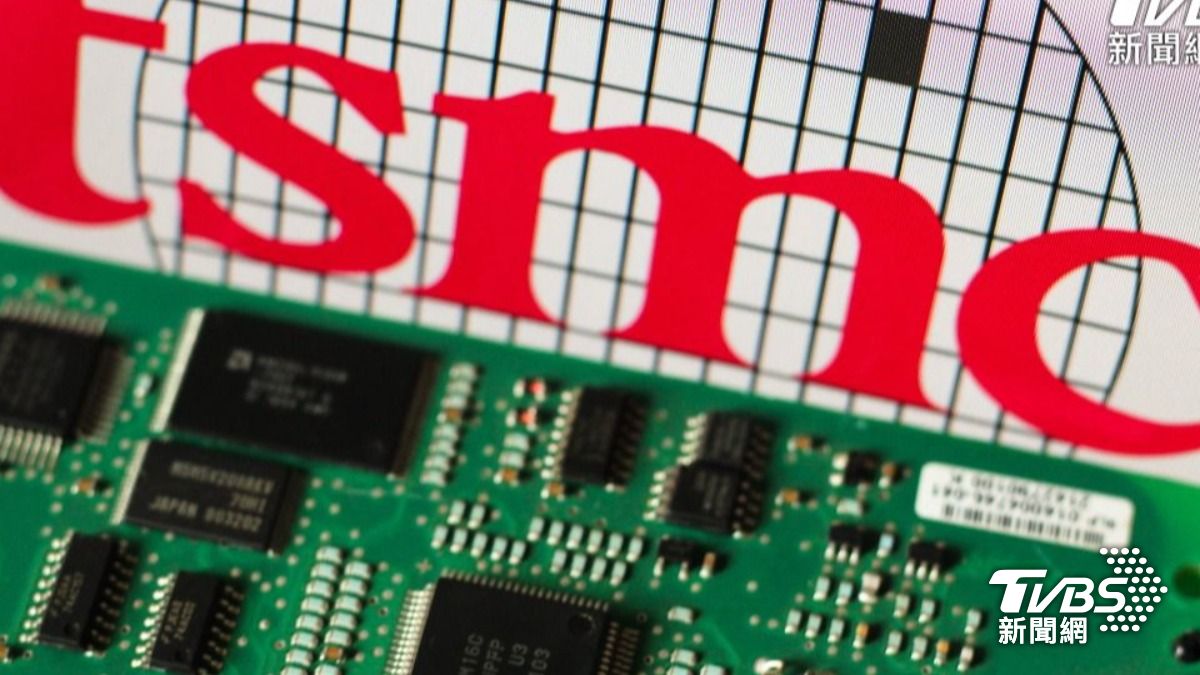
TSMC has opened 2026 with a record-shattering first quarter. Revenue for January through March reached NT$1.134 trillion (US$35.9 billion), a 35.1 percent increase over the same period in 2025 and comfortably above the top end of the company's own guidance of NT$1.13 trillion (US$35.8 billion). The figure eclipses the previous quarterly high of NT$1.05 trillion (US$33.2 billion) set in the fourth quarter of 2025 and extends a run of uninterrupted growth driven almost entirely by AI chip demand.
TSMC does not formally announce quarterly results in its monthly disclosures, so the Q1 total is derived from the January, February, and March revenue releases. March alone delivered NT$415.19 billion (US$13.14 billion), an all-time monthly high. That represented a 45.2 percent jump from March 2025 and a 30.7 percent gain on February. The prior monthly record, NT$401.26 billion (US$12.7 billion), was set only two months earlier in January 2026, underlining just how steep the current ramp has become.
The immediate catalyst is continued strength in advanced-node production for AI accelerators. TSMC's 3nm process remains the most constrained advanced node in the industry, with Nvidia, AMD, Broadcom, Marvell, Apple, and MediaTek all competing for allocation. Shipments of Nvidia's GB300 platform to hyperscale cloud customers have pulled forward wafer demand, and that pull-through is visible at Taiwan's server ODMs, where Wistron, Quanta, Wiwynn, and Inventec all posted blockbuster quarters of their own.
The March surge also reflects a structural change in what AI silicon is being built for. As generative AI moves from training to inference, hyperscalers are placing longer, more predictable orders for inference-optimized configurations, giving TSMC clearer multi-quarter visibility than during earlier phases of the AI cycle.
TSMC has earmarked between US$52 billion and US$56 billion for 2026 capital expenditure, a record figure that reflects the dual demands of domestic expansion in Taiwan and the accelerating US buildout. Following the signing of the US-Taiwan Trade Agreement, the Arizona project is reportedly scaling to twelve fabs, with the P2 facility now expected to introduce 3nm production as early as the second half of 2027 and the P3 and P4 timelines pulled forward. Kumamoto's first Japanese fab is already in mass production, with a second fab planned for December 2027.
Silicon photonics is another near-term lever. TSMC is filing patents in the field at roughly double Intel's rate and plans to begin mass-producing co-packaged optics in 2026, positioning itself at the center of the industry's shift from copper to optical interconnects inside AI systems.
A 35 percent year-on-year gain at TSMC's scale is difficult to overstate. The company now manufactures the overwhelming majority of the world's advanced AI processors, and Q1 2026 confirms that demand for those processors is not only holding up but accelerating into the second year of the hyperscaler buildout. Chairman C.C. Wei has described TSMC as the "ultimate gatekeeper of the robotic future," and the Q1 numbers suggest the gate is wide open: customers are paying whatever it takes to secure leading-edge capacity, and the allocation squeeze on 3nm is unlikely to ease before the 2nm Baoshan Phase 2 fab ramps in Hsinchu.
Headwinds remain. Water and power infrastructure constraints in Taiwan's science parks, the political complexity of the Arizona expansion, and pressure from challengers including Samsung, Intel, and Elon Musk's Terafab initiative will all shape the rest of the year. For now, though, the first-quarter print is an unambiguous signal that the AI chip cycle is still gathering speed and TSMC is the clearest beneficiary of every turn of the crank.