


AI’s Hidden Bottleneck: The PCB and Materials Supply Crunch
While AI hardware headlines focus on GPU chips and server assemblers, deeper in the stack a quieter crisis is unfolding. Circuit board and materials manufacturers are facing their tightest supply conditions in years, and the constraints are rippling through the entire AI hardware ecosystem. For Q2 2026, the picture is one of surging demand, record investment, and persistent shortages that will take years to resolve.
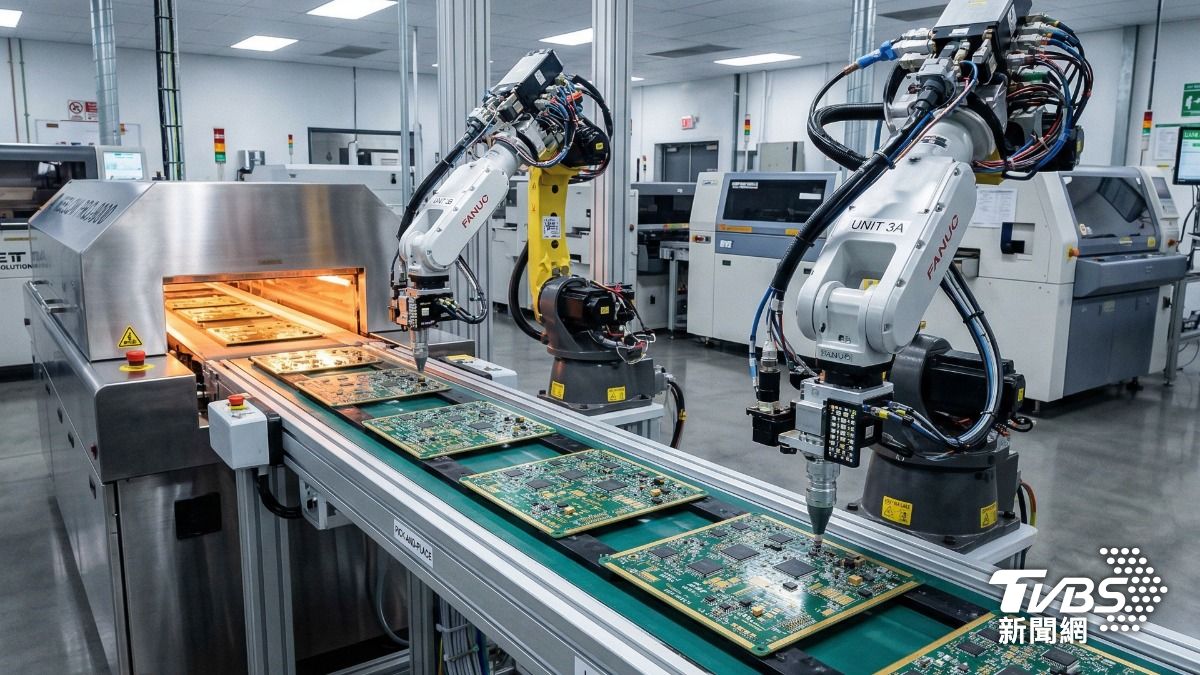
A single AI server requires 50–60 times more printed circuit board content than a traditional server. Layer counts have climbed to 26–40 or more, board thickness exceeds 8mm, and a single substrate may require over 100,000 drilled holes across 130-plus manufacturing steps. CoWoS substrate areas have grown more than tenfold.
This has created persistent shortages in two critical substrate types: ABF (Ajinomoto Build-up Film) substrates, used in GPU and ASIC packaging, and BT (Bismaleimide-Triazine) substrates, used in memory and networking chips. Both depend on T-glass fiberglass cloth, a specialty material where supply is dangerously tight. Unimicron chairman Tzyy-Jang Tseng forecasts that by 2029, AI-application PCBs will surpass smartphone PCBs in global market value for the first time.
Taiwan's three largest PCB makers have responded with record capital spending plans totaling well over NT$160 billion (US$5 billion) for 2026 in an unprecedented investment cycle for the industry.
Zhen Ding Technology, Taiwan's largest flexible PCB maker, has budgeted over NT$50 billion (US$1.58 billion) in 2026 capex, a 60% increase year-over-year. The company is building ten new factories across Taiwan, China, and Thailand, targeting high-end AI server, optical communications, and ASIC applications. IC substrate revenue is forecast to grow 40–50% in 2026. For Zhen Ding's high-end customers, securing capacity now takes precedence over negotiating price in a sign of just how tight supply has become.
Unimicron Technology, the leading ABF substrate maker, reported January 2026 revenue of NT$10.2 billion (US$321 million), up 34.5% year-over-year, with capacity utilization above 90%. The company raised its 2026 capex from NT$25 billion (US$790 million) to over NT$34 billion (US$1.07 billion), with roughly 70% earmarked for ABF substrate expansion to support CoWoS and EMIB packaging. AI-related revenue is expected to exceed 60% of total sales by 2026. Management has warned that price increases will accelerate in Q2, with quarterly gains of 5% in the first half rising to 7% in the second half.
Compeq Manufacturing has committed over NT$100 billion (US$3.16 billion) in capex across 2025–2026, prioritizing high-end capacity for ASIC server orders and completing a new Thailand plant for low-earth-orbit satellite contracts.
Beyond the top three, several companies are carving out important positions in the AI PCB ecosystem.
Kinsus Interconnect Technology, a specialist in ABF and BT substrates, has approved a three-year capex program of NT$23.5 billion (US$732 million), with NT$7–8 billion (US$220–250 million) allocated for 2026. The company is expanding ABF capacity at its K6 facility in Yangmei and projects double-digit revenue growth, with AI revenue rising from 5–10% to 10–15% by year-end. Like Unimicron, Kinsus expects pricing to tighten in the second half.
Powertech Technology acquired a former AUO display fab for NT$6.9 billion (US$221 million) to repurpose for ABF substrate production, illustrating how creatively the industry is sourcing capacity. Dynamic, a Hong Kong-based PCB maker, is pivoting toward AI, with GPU and ASIC revenue targeted to reach 20% by 2026.
The tightest bottleneck may not be in board fabrication at all, but in the raw materials that go into them.
T-glass fiberglass cloth, a specialty material essential for both ABF and BT substrates, is in acute shortage. Japan's Nittobo dominates roughly 70% of supply for ABF applications, and its expansion pace is constraining the entire downstream chain. The company is investing ¥150 billion to triple capacity, but meaningful relief is not expected before mid-to-late 2026 at the earliest, with full impact likely in 2027. Taiwan's Nanya Technology, Taiwan Glass Industry, and Fulltech Fiber Glass are expanding into T-glass production, but face scale and yield limitations. China's Grace Fabric is another potential source of relief, though also on a 2027 timeline.
Copper-clad laminates (CCL) face their own tightening. Elite Material (EMC) is the first supplier qualified for M9-grade CCLs meeting the strictest AI requirements. EMC's January–February 2026 revenue reached NT$21.06 billion (US$662 million), up 50% year-over-year. Lead times have stretched to 24 weeks, forcing customers to secure supply months in advance. Material grades are migrating from M7 (legacy) through M8 (mainstream) to M9, ramping in H2 2026.
Price increases are cascading through the chain. Resonac, Mitsubishi Gas Chemical, and Kingboard have all issued price increase notices. Co-Tech Development, a copper foil specialist, is tripling capacity to roughly 8,000 tons by 2027, with gross margins expected above 40%.
The outlook for Q2 2026 is unambiguous: demand is accelerating while supply remains constrained. Substrate prices are rising 5–7% per quarter, CCL lead times have doubled, and T-glass remains in structural deficit. The IC substrate industry is entering what analysts describe as a three-year super expansion cycle running from 2026 through 2028.
Nvidia’s platform roadmap is a key driver. Each chip generation demands dramatically more substrate area. The Vera processor substrate is roughly 50% larger than the previous Grace platform, the Blackwell GPU more than doubled the substrate area of Hopper, and the upcoming Rubin GPU is expected to add another 75% on top of Blackwell. Every new platform ratchets up demand for ABF substrates, T-glass, and high-grade CCL.
PCB and materials suppliers have moved from a supporting role to a gating factor in the AI buildout. Record capex is flowing in, but capacity takes time to build, materials take time to qualify, and T-glass remains supply-constrained well into 2027. Pricing power has shifted decisively to suppliers. Taiwan's PCB and materials sector is no longer a cost center buried in the bill of materials. It is becoming one of the defining battlegrounds of the AI infrastructure era.