



How AVC Became the AI Industry’s Essential Cooling Partner
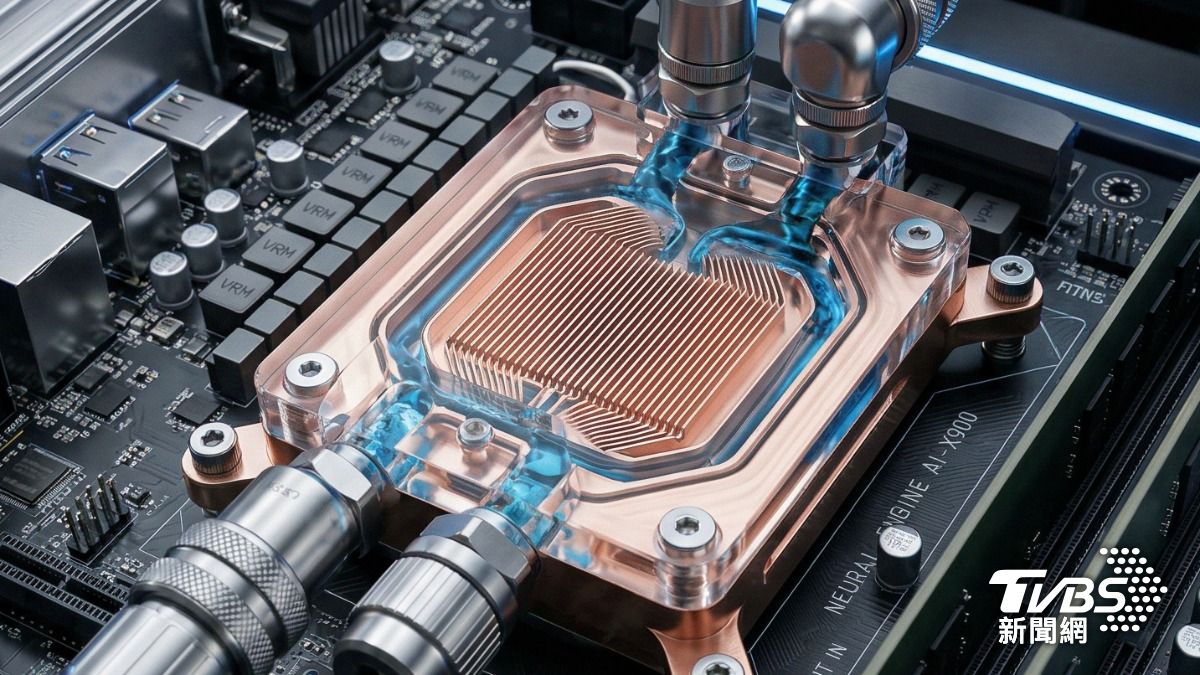
Every AI chip needs a way to dissipate the intense heat it generates. That is where Asia Vital Components (AVC) comes in. The Kaohsiung-based thermal specialist has become one of the most important companies in the global AI supply chain, and its Q1 2026 results show just how fast this business is growing.
AVC reported first-quarter 2026 revenue of NT$49.04 billion (US$1.54 billion), up 110% year-over-year. March brought in NT$18.02 billion (US$566 million), up 91.7% from a year earlier, while January surged 150% to NT$6.8 billion (US$214 million).
The results cap a remarkable 2025, when full-year revenue reached approximately US$4.5 billion, nearly doubling from 2024, with after-tax net income of NT$19.19 billion (US$603 million). Cooling solutions accounted for 57% of 2025 sales, with GPU servers representing roughly 70% of server revenue.
Chairman Ching-hang Shen has called 2026 the "liquid cooling era" and the numbers back him up. Liquid cooling revenue already accounts for about 30% of total sales and is expected to rise substantially through the year, driving sequential improvements in both revenue and gross margins.
AVC's dominant position rests on one critical product: the copper microchannel cold plate. These precision-engineered components sit directly on top of GPU dies, drawing heat away through circulating liquid coolant. AVC holds an estimated 40–50% share of the cold plate market for Nvidia’s GB200 and GB300 server platforms, a commanding lead in what has become one of the AI industry's most essential components.
AVC is already developing cold plates for Nvidia’s next-generation Vera Rubin platform, where GPU thermal design power reaches 1,800–2,300 watts per chip. At GTC 2026, Nvidia named AVC as one of four preferred cold plate suppliers for Vera Rubin. Beyond cold plates, AVC's portfolio spans manifolds, coolant distribution units, vapor chambers, and chassis, covering the full cooling stack.
Chairman Shen has been candid that current production capacity still cannot meet client demand. To close the gap, AVC has laid out an aggressive expansion plan for 2026, with capital expenditure of NT$15 billion (US$472 million), rising to NT$17 billion (US$534 million) in 2027.
The targets are ambitious. Cold plate production is set to increase fivefold, from 200,000 units at the end of 2025 to one million units by the end of 2026. Manifold capacity will jump from 1,000 to 7,000 units per month, and chassis output will grow 50% to 600,000 units monthly.
Geographically, AVC has doubled its Vietnam investment to US$400 million for a multi-phase manufacturing complex in Ha Nam province and is exploring U.S.-based production to manage tariff exposure. Its Kaohsiung home base remains central, benefiting from proximity to Foxconn and other AI server assemblers for rapid prototyping.
Management has signaled quarterly revenue growth throughout 2026, implying new records each quarter. The structural drivers are clear: Nvidia’s Vera Rubin platform mandates liquid cooling, penetration in AI servers is forecast to jump from 18% in 2025 to 57% in 2026, and hyperscaler capital spending remains aggressive.
AVC is also diversifying its customer base. ASIC servers featuring custom chips designed by cloud giants as alternatives to Nvidia GPUs already contribute 20–30% of server revenue, and that share is expected to grow. Chairman Shen has indicated that ASIC-related revenues could potentially surpass GPU servers by 2027.
For a company that started out making fans, AVC's transformation into the leading cold plate supplier for the AI era is a striking example of how technology shifts can reshape an entire industry and the companies willing to invest early in the right capabilities can capture outsized rewards.