


How Taiwan’s Science Parks Built a Global Tech Powerhouse
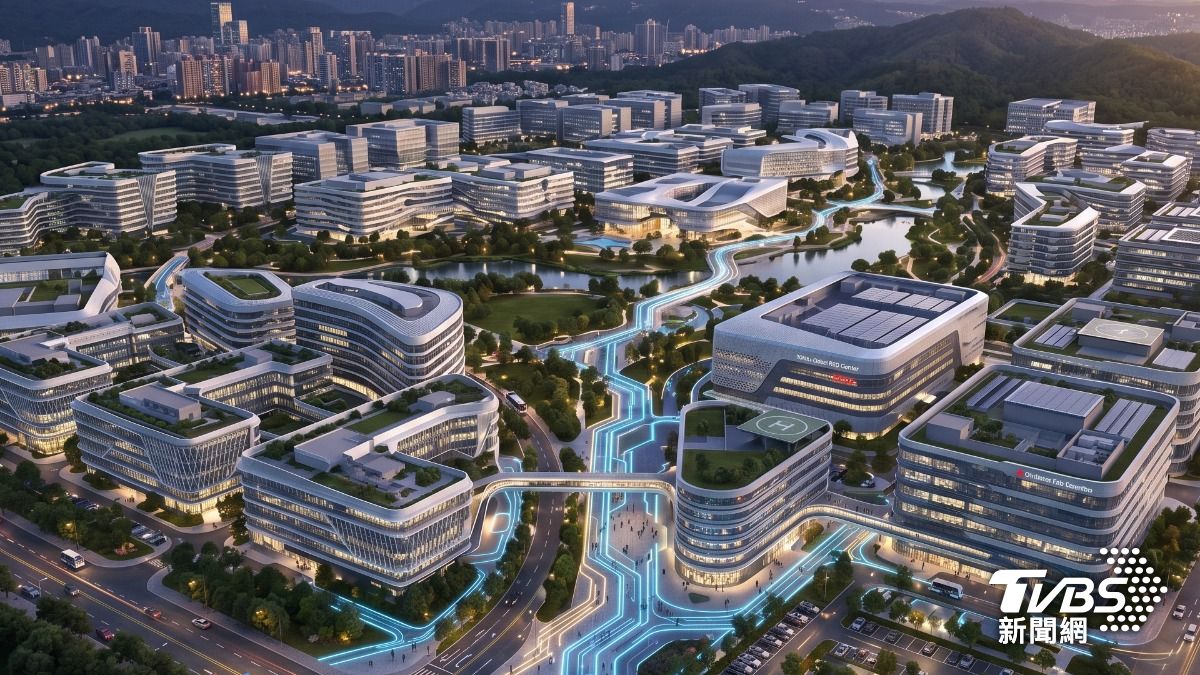
Few industrial policies in modern history have delivered outsized returns like Taiwan’s science parks. What began as a bold experiment in clustering talent and technology amid the rice fields of Hsinchu has, over four decades, forged the physical and institutional backbone of the global semiconductor industry. In the process, it transformed Taiwan from a low-end textile and assembly economy into one of the world’s most strategically vital manufacturing hubs.
The story begins with Hsinchu Science Park, inaugurated on December 15, 1980. The park was the brainchild of a handful of visionary officials, including technology czar K.T. Li, National Tsing Hua University president Shu Shien-Siu, and IBM veteran Irving T. Ho. Their model drew directly from California's Silicon Valley. The formula was straightforward yet ambitious: locate companies next to top universities, provide tax incentives and streamlined administration, and let proximity spark innovation and talent flows.
Early success validated the model. A pivotal moment came with the recruitment of Morris Chang, who soon founded TSMC and reshaped the global chip industry. Hsinchu’s rapid rise created a replicable template. In the mid-1990s, the government extended the concept southward with the Southern Taiwan Science Park, anchored in Tainan and later expanded into Kaohsiung. A few years later, the Central Taiwan Science Park took shape near Taichung, partly to ease the growing north-south imbalance as investment concentrated around Taipei and Hsinchu. Together, the three parks formed a dynamic technology corridor along Taiwan’s western plain.
These parks were never solely about semiconductors. In their first decades, they drew display manufacturers, optoelectronics pioneers, precision-machinery experts, and biotech startups. Their real edge was shared infrastructure of a caliber few developing economies could then match: reliable power and water, efficient logistics, fast-tracked permits, and security.
The density of firms in a compact area became a self-reinforcing advantage. Engineers could move fluidly between foundries, suppliers, and university labs. Problems that took weeks elsewhere were solved in hours. This clustering effect boosted individual firms while rebalancing Taiwan's economy, lifting productivity, and moving the island decisively up the value chain. Regional cities like Tainan, Kaohsiung, and Taichung were reinvigorated. Universities in central and southern Taiwan gained new relevance. A whole generation of engineers built careers without needing to leave their hometowns. The parks quietly became, as one senior official recently observed, "the main arteries of the national economy."
Today, the three parks together host close to a thousand companies, employ hundreds of thousands of workers, and are in the middle of their biggest expansion wave yet. The global AI boom has supercharged demand for advanced semiconductors, with TSMC's leading-edge nodes concentrated in Tainan and Kaohsiung, the world's first 1.4nm Giga-Fab rising in Taichung, and new sites at Shalun, Ciaotou, Baoshan, and Longtan all under development. Global materials and equipment leaders such as Merck, ASML, Gudeng, and Ebara are investing alongside them, further deepening a supply chain that would take other regions decades to replicate.
The United States, Japan, and Europe are now pouring billions into replicating Taiwan's science park model. But the full ecosystem spanning advanced logic, specialty materials, precision equipment, academic partnerships, and a government willing to plan in decades exists nowhere else with this density and integration. Taiwan's science parks are, in that sense, both a legacy of past foresight and a durable competitive advantage. As the global appetite for AI silicon continues to surge, their understated architecture stands as one of the most consequential industrial achievements of the modern era.