



Taiwan’s Robotics Industry Steps Into the Physical AI Era
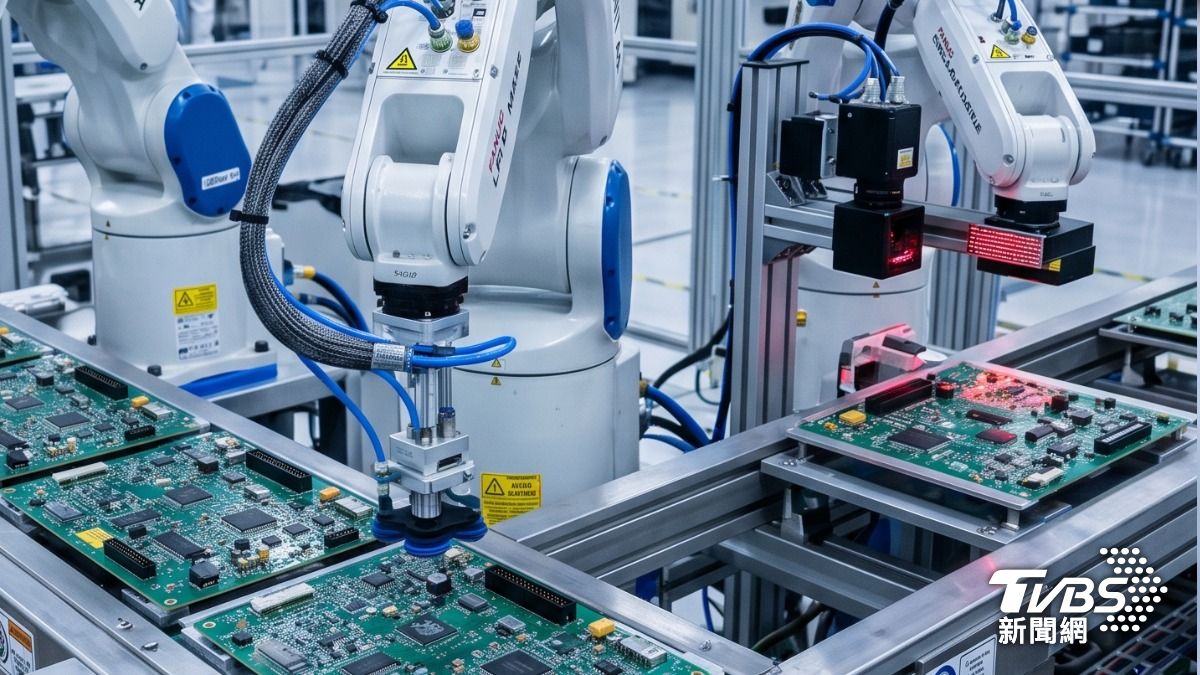
For decades, Taiwan has built the world's computers. Now, the island is quietly positioning itself to build the world's robots. As Physical AI shifts from keynote rhetoric to commercial reality, Taiwan's unique blend of semiconductor leadership, precision machinery expertise, and ODM-scale manufacturing is converging into a powerful ecosystem—one capable of producing both the "brains" and the "bodies" of intelligent machines.
Three structural shifts are making advanced robotics practical. Hardware costs have plummeted, with robot component prices dropping roughly 40% between 2023 and 2024 as electric vehicle supply chain efficiencies spilled over into sensors, actuators, and batteries. Edge computing has matured enough to meet real-world demands, enabling robots to perceive and react in under 500 milliseconds without relying on cloud round-trips. Meanwhile, a new generation of Vision-Language-Action (VLA) models can now generalize across tasks with minimal fine-tuning. Analysts liken today's humanoid and service robots to the "GPT-2.x stage" of generative AI, four or five years behind the breakout moment, but closing the gap rapidly.
Taiwan's leaders are pursuing a pragmatic path towards this opportunity. Rather than chasing flashy general-purpose humanoids, the industry is focusing on specialized, task-oriented robots for logistics, welding, agricultural harvesting, electronics assembly, and other applications where the technology is market-ready today. Practical hurdles remain. Battery life topas out at two to four hours per charge, well short of an eight-to-twelve-hour industrial shift, and safety concerns around highly adaptable humanoids remain unresolved. For now, the commercial window sits firmly in narrower use cases, and Taiwan's manufacturers are concentrating their efforts there.
At the heart of the island's emerging supply chain are several standout players. Hiwin Technologies, Taiwan's premier maker of ball screws and servo motors, is making its Computex debut in 2026 with a new planetary roller screw designed for high-load robotics applications. Chairman Eric Y. T. Chuo has highlighted that these screws can handle significantly higher loads than traditional ball screws, albeit at more than ten times the cost, making them ideal for next-generation industrial robotic joints. Reducer specialist Turvo is also debuting at the show after expanding into robotic components, marking a notable convergence between Taiwan's traditional machinery sector and its high-tech ecosystem.
Techman Robot, a Quanta subsidiary, plans to launch a dual-arm collaborative model and begin deploying upgraded humanoids at customer sites in the second half of 2026. The company is emphasizing practical wheeled designs optimized for factory floors over less stable bipedal forms. Foxconn is drawing on its 360 Mobility platform and EV manufacturing expertise to advance humanoid and autonomous systems. Delta Electronics supplies critical servo motors, motion controllers, and power/thermal management solutions, while Solomon, a longtime Nvidia partner, provides the AI vision and software backbone for industrial deployments.
These strengths echo the very advantages that made Taiwan indispensable in semiconductors and AI servers. TSMC produces more than 95% of the world's leading-edge AI processors. Chairman C.C. Wei has stressed that a robot's real value lies not in mechanical stunts but in the semiconductor-driven intelligence that delivers reliable, functional performance. He has positioned TSMC as the "ultimate gatekeeper of the robotic future," distinguishing viral demonstration videos from the advanced pressure, tactile, and optical sensors required for practical service robots.
Taiwan's long-honed expertise in heat pipes, vapor chambers, and precision machining that has already enabled firms like Auras and AVC to thrive in the AI server cooling market translates directly into the tight tolerances and reliability needed for humanoid joints and actuators.
The island's dense network of ODM giants, including Foxconn, Quanta, Wistron, and Inventec, adds the integration muscle to ramp production swiftly once designs are finalized.
Government and industry momentum is accelerating the shift. Taiwan's 2026 budget allocates over NT$30 billion (approximately US$915 million) to emerging technologies, including AI robotics.
Computex 2026 has elevated Robotics and Mobility to one of its three core tracks, expanding into TWTC Hall 1 with dedicated zones showcasing Intel, Texas Instruments, Solomon, and E Ink. NXP CEO Rafael Sotomayor is dedicating his keynote entirely to Physical AI, while Nvidia's Jensen Huang used his March GTC address to unveil the Isaac, Cosmos, and Newton platforms providing the perception, simulation, and physics foundations that embodied AI demands. When chipmakers, a flagship trade show, and national policy all converge on the same vision, the concept has clearly moved beyond marketing hype.
As the second half of 2026 approaches, the key question is whether Taiwan's precision manufacturing heritage will deliver a lasting edge in Physical AI or whether challenges around talent shortages and production capacity will temper the pace. What is no longer in question is Taiwan's substantial potential to play a pivotal role in the robotics market, just as it has in AI infrastructure.
The chips that think, the motors that move, and the systems that integrate them are increasingly being engineered on the same island. The next great hardware wave is taking shape and Taiwan is exceptionally well positioned to ride it.