


Taiwan tech sector squeezed by AI market split: Report
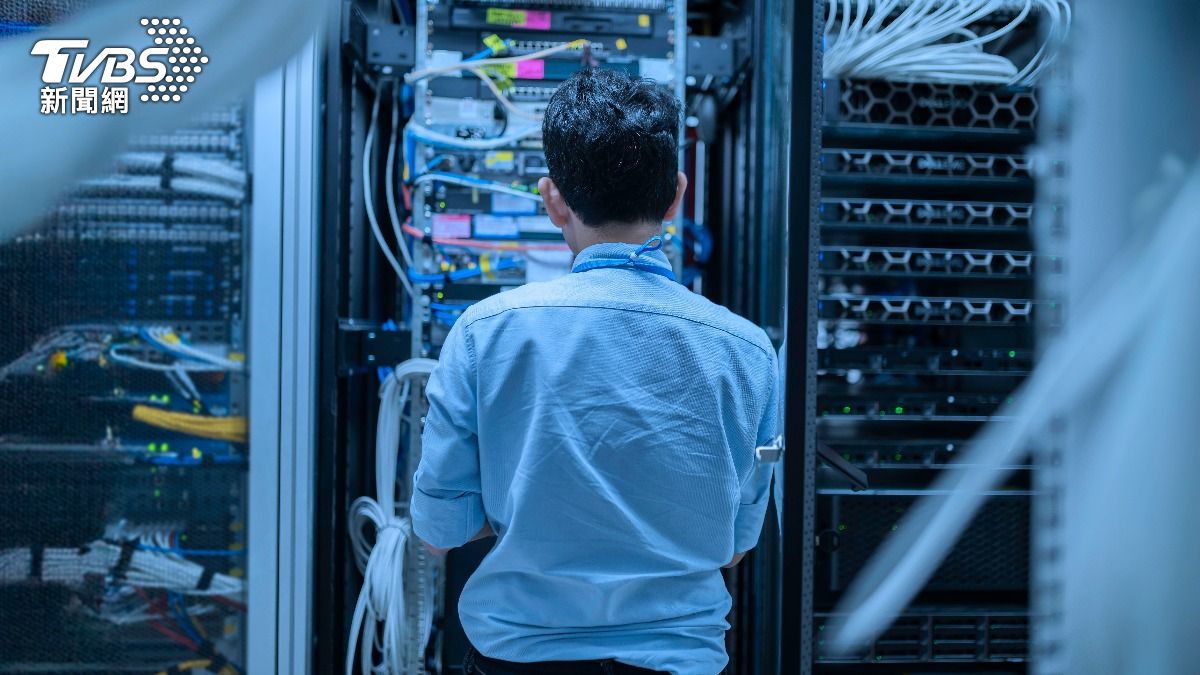
TAIPEI (TVBS News) — Taiwan's server manufacturing orders from China are declining as Beijing accelerates AI self-sufficiency efforts, according to a new industry analysis from Taipei. The shift comes as U.S. hyperscalers continue avoiding Chinese suppliers, leaving Taiwan caught between two diverging technology ecosystems.
The analysis stated that Taiwan-U.S. supply chains remain stable, limiting China's ability to export its AI products globally. American cloud service providers avoid Chinese supply chain products in their U.S. data centers and prefer non-Chinese suppliers worldwide, Market Intelligence & Consulting Institute's (MIC, 產業情報研究所) reported. The dynamic positions Taiwan's technology sector between two diverging markets.
China observed what the report called "inconsistent" chip and tariff policies after President Donald Trump took office in January 2025. U.S. export controls on advanced AI chips prompted Beijing to accelerate domestic development of semiconductor manufacturing and AI capabilities. Taiwan server manufacturers have traditionally served as contract manufacturers for American brands while also supplying AI server products globally through white-label and proprietary brands — and maintaining relationships with Chinese brands that the MIC report says are now shrinking.
But China's push for self-sufficiency faces persistent technology constraints. Chinese self-developed AI chips can only be used for specific application scenarios and cannot compete with Nvidia and AMD products in computing power, the analysis found. Huawei's Ascend (昇騰) series has become the mainstream choice for Chinese AI data centers, with the Ascend 910C serving as the primary training chip.
Semiconductor manufacturing presents another bottleneck. China's AI chips rely primarily on Semiconductor Manufacturing International Corporation's (SMIC, 中芯國際) 7nm process. SMIC's 5nm process has entered mass production, but capacity and yield rates remain uncertain.
Memory technology poses additional challenges. China remains heavily dependent on international suppliers for DRAM and SSD products, the report noted. Micron products face import restrictions citing security concerns, but China still requires products from Samsung Electronics and SK Hynix to meet domestic demand. Hard disk drives remain entirely dependent on international suppliers such as Toshiba and Western Digital.
Despite these constraints, Chinese suppliers are making progress in some areas. ChangXin Memory Technologies (CXMT, 長鑫存儲), China's only DRAM manufacturer capable of mass production, launched 16nm DDR5 products in late 2025. Yangtze Memory Technologies (YMTC, 長江存儲) plans to mass-produce DRAM and enter the high-bandwidth memory market by the end of 2026.
Some Chinese technology firms are pursuing partnerships outside their traditional markets. Shenzhen FRD Science (飛榮達), a liquid cooling solution provider, has begun preliminary cooperation with Meta and Microsoft Azure, the report stated. The company has also secured contracts with Chinese technology firms including Huawei (華為) and H3C (新華三).
Chinese data center operators are also expanding internationally. Global Data Solutions Limited (萬國數據) has established facilities in Shanghai, Kunshan and Shenzhen domestically, and expanded overseas to Malaysia and Indonesia, according to the report. Chindata Group (秦淮數據) has built data centers in Malaysia, India and Thailand, focusing on high-density, low-PUE facilities with direct green power supply.
The analysis suggests Taiwan's technology sector faces a bifurcating market — shrinking orders from China, stable demand from the United States. But the MIC report did not quantify the scale of declining Taiwan-China orders or identify which manufacturers are most affected. The scope of FRD's cooperation with Western hyperscalers was also not specified. Taiwan ODM manufacturers did not immediately respond to requests for comment on the MIC's internal report, the gourp is a division of Taiwan's Institute for Information Industry (財團法人資訊工業策進會). ◼