



Jentech: From Heat Spreaders to AI Cooling Heavyweight
After nearly four decades of operating quietly in the background, Jentech Precision Industrial has become one of the most important names in Taiwan's AI cooling supply chain. Headquartered in the Guishan industrial district of Taoyuan and listed on the Taiwan Stock Exchange under ticker 3653, the company was founded in 1987 and offers a textbook example of how a precision-component specialist can adapt to the demands of the AI era.
From manufacturing bases in Taiwan, China, Germany, Malaysia, and the United States, Jentech spent its first three decades supplying heat spreaders, lead frames, electromagnetic interference (EMI) shielding, and stiffeners for chip giants such as Nvidia, Intel, and AMD. The global AI infrastructure build-out has now brought that expertise into the spotlight.
The numbers tell the story. First-quarter 2026 revenue reached NT$5.305 billion (roughly US$167 million), an 11.6% gain on the same period a year earlier. Jentech now sits alongside Asia Vital Components (AVC), Auras, Sunon, and Kaori Heat Treatment in a five-company group whose monthly revenue figures keep setting records as Taiwan's cooling sector rides the AI server wave.
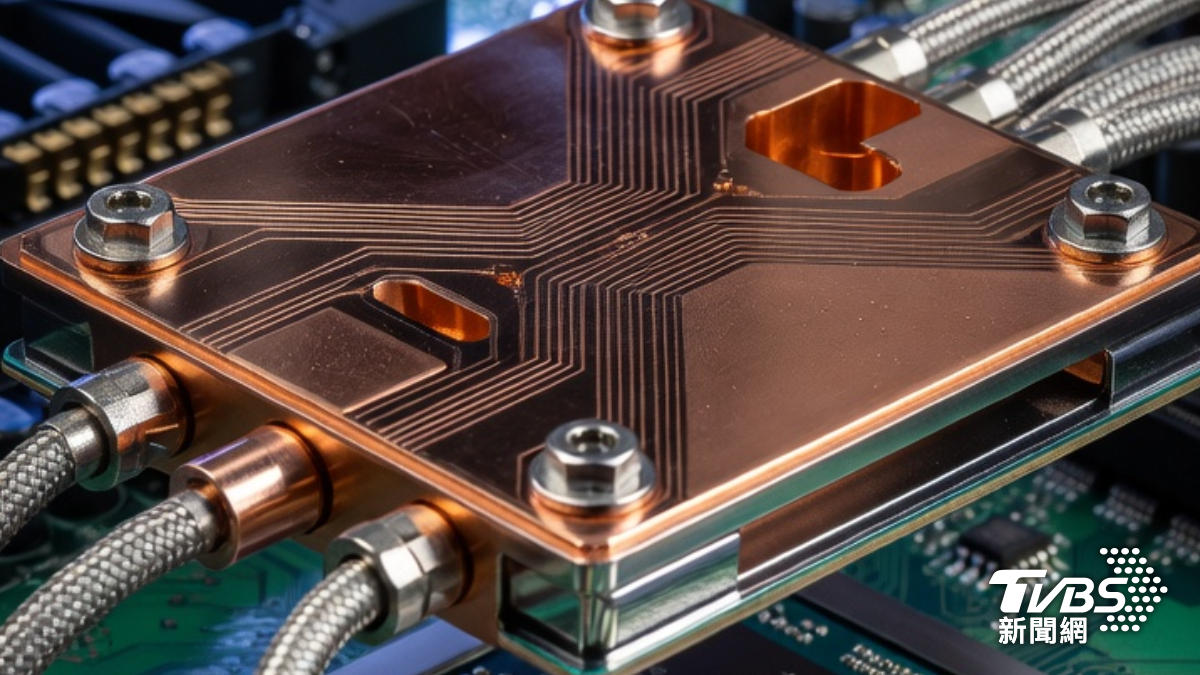
For years, Jentech specialized in vapor chambers and graphite heat spreaders, the metal lids placed directly on silicon dies. As GPU power consumption pushed past the limits of air cooling in 2025, the company moved into liquid cooling. At Nvidia's GTC conference, Jentech was named one of four approved cold plate suppliers for the Vera Rubin platform, alongside AVC, Cooler Master, and Delta Electronics. Vera Rubin is set to enter mass production in the second half of 2026 and will use liquid cooling as standard. Nvidia's decision to centralize cold plate procurement favors suppliers like Jentech with the scale and reliability needed for high-volume deliveries.
Further upside comes from the Microchannel Lid (MCL), a new component Jentech is co-developing with Nvidia and other chipmakers. Rather than relying on a separate cold plate above the chip, the MCL embeds liquid coolant pathways directly into the chip lid itself, dissipating heat right at the silicon interface. With Rubin chips expected to draw up to 2,300 watts per package, Jentech believes the growing thermal demands of AI hardware could make microchannel lids a standard requirement rather than an option.
Beyond Nvidia, Jentech works closely with AMD and is also targeting the ASIC server market, where liquid cold plates are expected to begin contributing revenue in the second half of 2026.
Together, these moves position Jentech across all three layers of the liquid-cooling stack. Its established heat-spreader business supports current performance, cold plate qualification secures near-term growth, and microchannel lids offer long-term upside. The once-quiet Taoyuan precision shop suddenly has a very compelling story to tell.