


TAITRA Leads 81 Companies to Arizona to Deepen AI Footprint
James C.F. Huang, Chairman of the Taiwan External Trade Development Council (TAITRA), led a Taiwan business delegation to the inaugural "Arizona Artificial Intelligence and Semiconductor Global Forum" on April 30 hosted by The Arizona Commerce Authority. The delegation drew more than 100 executives from 81 companies across semiconductors, AI solutions, electronics and ICT, and critical components, making it the largest international delegation at the forum and underscoring Taiwan's pivotal role in the global tech supply chain.
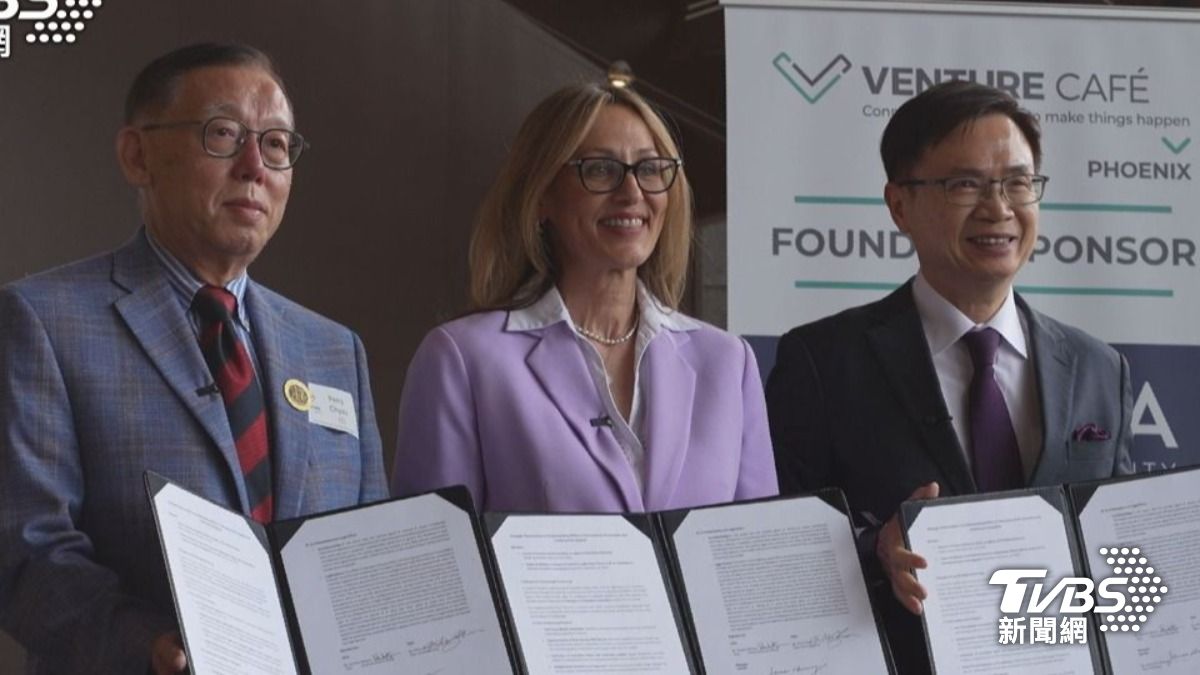
At the opening-night dinner, the Arizona Commerce Authority and the Taiwan AI Alliance formally signed the "Strategic Memorandum of Understanding on a Cross-Border AI Innovation and Investment Ecosystem." The two sides will cooperate along four main lines: cross-border co-investment; tapping the resources of Arizona's universities to accelerate the commercialization of R&D outcomes; jointly cultivating international innovation talent; and using Arizona as a pilot base for validating Taiwan AI technologies and expanding into the U.S. market. The agreement aims to forge a deeper alignment between the AI industries of Taiwan and the United States.
Huang also announced that TAITRA will formally establish a "Taiwan Trade and Investment Service Center" in Phoenix to provide one-stop investment support for Taiwanese companies and to strengthen the resilience of the U.S.–Taiwan supply chain. He expressed the hope that the partnership will go beyond building factories and that the two sides will jointly construct a robust industrial ecosystem that helps define a new industrial landscape.
In an exclusive interview with TVBS, Huang said that Taiwan's footprint in Arizona is about more than semiconductor manufacturing. As the AI era takes shape, Taiwan needs to demonstrate not only its manufacturing capabilities but also its strength in AI applications. He noted that the MOU signed by the Taiwan AI Alliance and the Arizona Commerce Authority will help reinforce Taiwan's presence within the Phoenix tech ecosystem, allowing the wider world to see that, beyond the semiconductor manufacturing wave driven by TSMC, Taiwan also brings hardware-software integration and AI application capability to the table.
Huang said the state government, the Commerce Authority and the Greater Phoenix Economic Council (GPEC) are all offering Taiwan businesses comprehensive on-the-ground support. GPEC and TAITRA signed an MOU three years ago, and to help Taiwanese firms put down roots more quickly, the local side is even offering up to three months of rent-free office space to incoming Taiwan startups and companies.
Beyond AI and semiconductors, smart healthcare and aerospace are key future growth areas. Huang stressed that Arizona is itself one of the United States' aerospace hubs, and Taiwan's Aerospace Industrial Development Corporation (AIDC) has already established a presence there. Phoenix is also one of the most important precision medicine hubs in the country. As part of the visit, the delegation toured the world-renowned Mayo Clinic, an institution with 84,000 medical professionals that specializes in the most difficult and cutting-edge medical research and development. At a local smart healthcare center, the delegation also witnessed more than ten outstanding Taiwan startups showcasing precision medicine technologies built using the latest AI.
In his speech, Huang likened Taiwan and Arizona to a "perfect circuit," with Taiwan supplying advanced logic chips and Arizona providing the energy and the room to scale. He emphasized that TAITRA has long served as a bridge, but that in the AI era, simple connection is no longer enough. TAITRA is evolving from a connector into the "architect of an intelligent ecosystem," using AI and big data to help companies read market trends and identify partners with greater precision.
With TSMC's large-scale investment in Phoenix, Huang said the impact will extend beyond the tech ecosystem and create broader commercial spillover. This delegation included not only technology companies but also firms from the services, consulting and food and beverage sectors – a sign that many businesses see the trip as an opportunity to explore new opportunities in Arizona. Going forward, TAITRA will continue to help Taiwan companies build their U.S. market footprint and deepen Taiwan–U.S. cooperation across AI, semiconductors and a broader range of industries.