


A First-Hand Look at the Rise of Arizona’s Tech Cluster
As the AI and semiconductor industries reshape global supply chains, Taiwan companies stand at a pivotal moment in which industry value is spilling outward and brands are stepping onto the international stage. At the invitation of the Arizona Trade and Investment Office in Taiwan, TVBS travelled to Phoenix to attend the AI and Semiconductor Global Forum. Through on-the-ground reporting and observation, TVBS examined the local tech ecosystem taking shape around semiconductor manufacturing and AI applications, and brought a wider Chinese-speaking audience an in-depth view of the opportunities and challenges Taiwan companies face when investing, setting up operations and building their brands in the United States.
During the forum, the Arizona Commerce Authority (ACA) and the Taiwan AI Alliance signed a strategic memorandum of understanding, signalling that U.S.–Taiwan cooperation will expand from semiconductor manufacturing into AI applications and the broader high-tech industrial ecosystem.
Sandra Watson, President of the Arizona Commerce Authority, told the forum that artificial intelligence is pushing the boundaries of digital innovation, and that keeping pace with this trend requires the integration of the entire technology value chain – exactly the kind of complete ecosystem Arizona offers. She noted that since 2020, Arizona has announced more than 707 semiconductor projects with combined investment of over US$214 billion, spanning leading-edge manufacturing, advanced packaging, R&D, materials suppliers, equipment and talent development. That makes Arizona one of the most complete semiconductor ecosystems in the United States.
Watson also stressed that Arizona is not only building the future of semiconductors but also powering the infrastructure behind AI, from advanced chip manufacturing to data centers and clean energy, all of which are essential foundations of the AI era. She added that Arizona's many years of cooperation with Taiwan have profoundly transformed the local economy, and that the partnership now has the opportunity to advance beyond semiconductors into AI infrastructure and related technology cooperation.
TAITRA Chairman James C.F. Huang said that TAITRA has historically played the role of bridge-builder, but in the AI era, simple connection is no longer enough. TAITRA must evolve into the "architect of an intelligent ecosystem," using AI and big data to help companies read market trends and pinpoint the right partners - making global trade smarter and more inclusive.
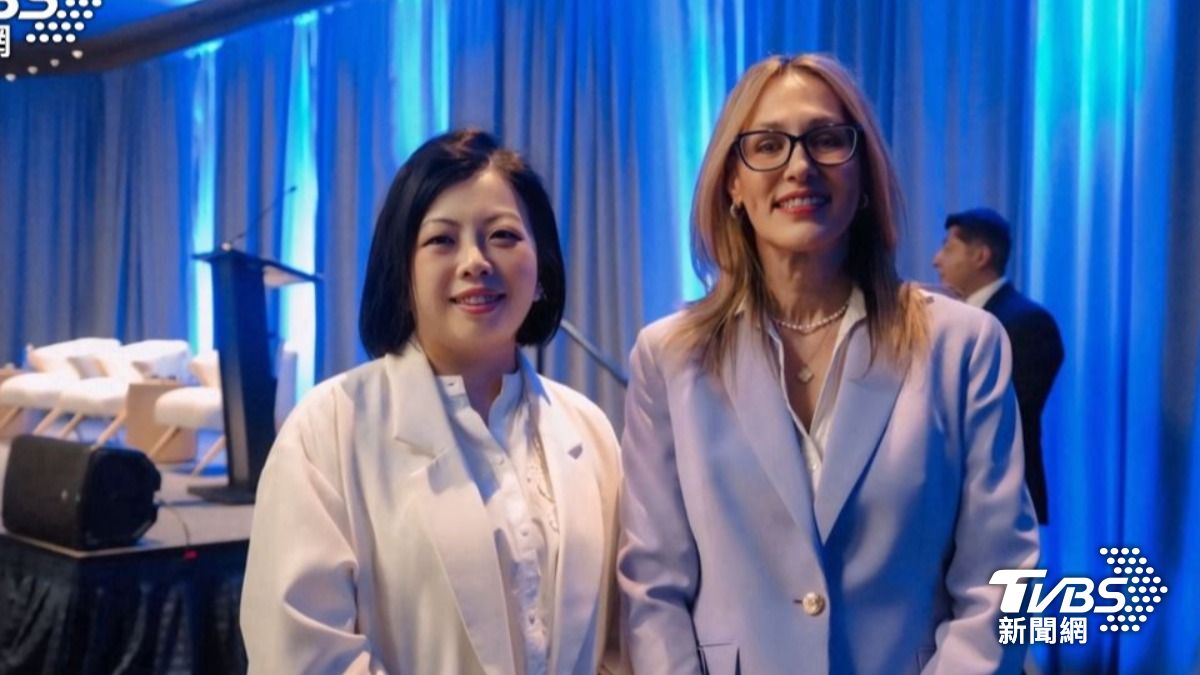
At the invitation of the Arizona Trade and Investment Office in Taiwan, TVBS also travelled to Arizona to attend the forum and conduct first-hand reporting. TVBS General Manager Sheena Liu said that TVBS has long followed the technology industry and Taiwan's broader development trajectory. At a moment when Taiwan industry value is extending outward, TVBS aims to bring viewers front-line observation and to help companies communicate. As part of the trip, TVBS held discussions with the social enterprise Blueseeds and with economic and workforce development officials from Maricopa County, Arizona, exploring opportunities to establish a media innovation centre locally to amplify investment stories, and to introduce sustainable agriculture and health products with the aim of opening potential commercial, public-health and talent-development collaborations.
TVBS also visited Arizona State University, which has multiple collaborations with TSMC and other companies, meeting Professor Pei-yu "Sharon" Chen, Chair of the Department of Information Systems, to gain a deeper understanding of her perspective on AI and of the close industry-academia ecosystem the university has built.
Liu noted that Arizona is no longer simply an "opportunity." An entire industrial cluster is taking shape. The state and city governments have shown clear and efficient support for Taiwan industry, and water resources, talent supply, tax incentives and university-industry collaboration all give Taiwan companies greater confidence to invest there. Beyond semiconductors, biotech, AI and digital application industries are also beginning to cluster locally, indicating that Arizona's development is no longer just a single manufacturing base, but a more complete tech industry platform.
Steve Hsu, Director of the Arizona Trade and Investment Office in Taiwan, brought together the cross-border resources of TVBS GM Sheena Liu and Arizona Commerce Authority President Sandra Watson, helping clarify which resources and platforms can best support Taiwan companies. He also facilitated discussions between TVBS and Fernando Garcia, Executive Vice President for International Trade and Investment at the Arizona Commerce Authority, on potential collaboration.
Liu concluded by noting that TVBS is more than a news organisation; it aims to be a platform for brand communication and international industry marketing. For many Taiwan companies arriving in the United States, the investment itself is not the biggest problem; the real challenge is how to raise corporate visibility, recruit talent and communicate with the local market and customers. Through the power of media, TVBS hopes to help Taiwan companies tell their brand stories well, so that overseas markets can see the strength and value Taiwan businesses bring to the table.