


The Quiet Reinvention of Taiwan’s Golden Valley
The Robotics Zone at Computex 2026 will sit in the Taipei World Trade Center, but the supply chain it depends on lies roughly an hour and a half south by high-speed rail, in a sixty-kilometer stretch of factories along the eastern flank of Mount Dadu (大肚山) near Taichung. This is Golden Valley (黃金縱谷), Taiwan's precision-machinery heartland. It is in the middle of the most important industrial pivot of its history, executed quietly by firms most Computex visitors will never see, and it is the reason the robotics narrative on display in TWTC Hall 1 is more than a marketing exercise.
The numbers describing the cluster are striking even before the pivot is factored in. The Taichung city government counts roughly 1,500 precision-machinery firms along the Golden Valley, with tens of thousands of downstream suppliers and over 300,000 people employed across the full supply chain. Annual output runs to roughly NT$900 billion, around US$28 billion at current rates, which the city government claims makes the Golden Valley the world's highest-density precision-machinery cluster by output per unit area. The cluster is anchored by two adjacent industrial parks: the Precision Machinery Innovation Park (精密機械科技創新園區), with around two hundred firms and a third phase under development, and the Central Taiwan Science Park (中部科學園區), which generates approximately US$32 billion of revenue across its five sites, with the Taichung campus the largest. TSMC's first 1.4nm fab, AUO's display operations, and Giant Bicycles' global headquarters are all here.
The pivot is what makes this cluster a robotics story rather than a machine-tool one. For three decades, Golden Valley has supplied the world with computer-numerical-control machine tools, ball screws, linear guides, and the gears and bearings that go into industrial automation. Most of the firms carried names few outside the industry recognized, including Taichung Precision Machinery, Tongtai, Awea, and Goodway. Quietly profitable, deeply specialized, and uninterested in the consumer-facing trends that drove the rest of Taiwan's tech economy. Until recently, analysts who had decided Taiwan's future lay in semiconductors and nowhere else considered them a sunset industry.
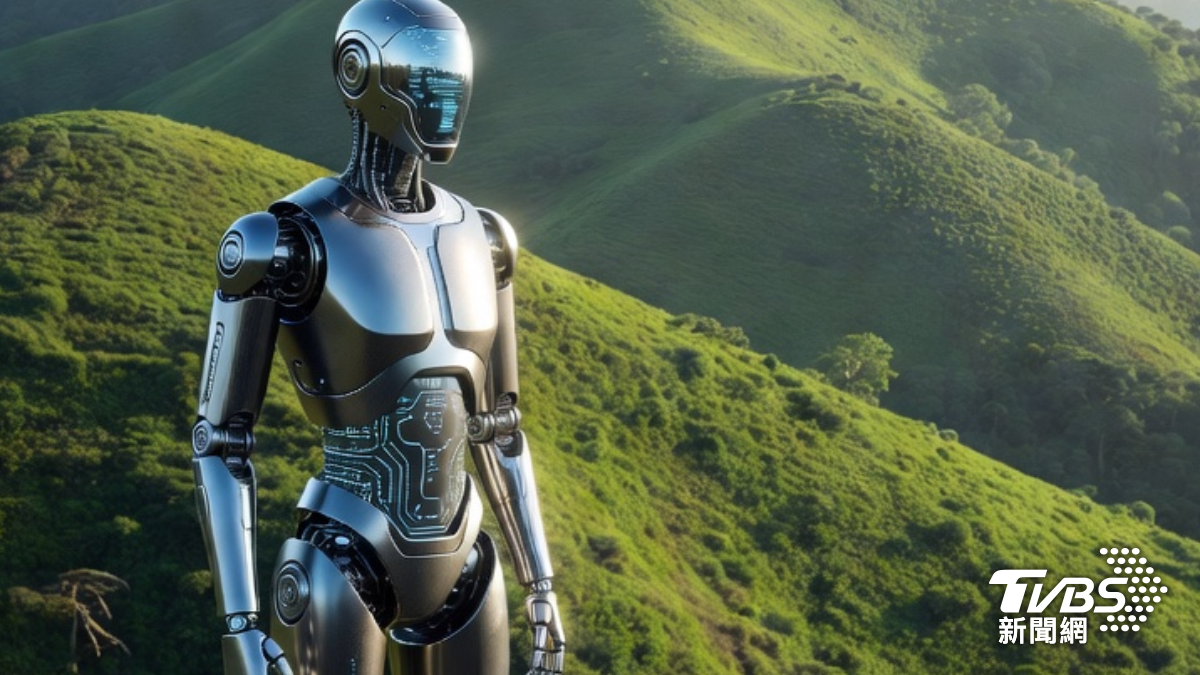
That consensus has now flipped, and the reason is humanoid robots. A humanoid has between twenty and forty precision actuators, each containing components functionally indistinguishable from the parts these firms have made for machine tools for decades.
Hiwin (上銀), headquartered in Taichung, has been the most explicit about the shift. Chairman Eddie Chuo has guided that the company's robotics business will exceed ten percent of group revenue in 2026. Its planetary roller screws, launching this year, are designed specifically for the heavy-load humanoid joint applications. Mengying (盟英) has entered humanoid supply chains with harmonic reducers. Taichung Precision Machinery (台中精機) is leveraging its gear-manufacturing expertise to enter the robot-reducer market. None of these are household names. All of them sit on technical positions no competitor can replicate in a short time frame.
The reinvention is also being supported directly by the city government. Mayor Lu Hsiu-yen (盧秀燕) has spent the past eighteen months building what she calls the AI Robot Industry Chain initiative, which combines tax incentives, deployment-and-validation venues, talent programs, a decade-long partnership with Nvidia, and the Smart Taichung Forum (智慧臺中論壇) scheduled for 26 August this year as a showcase event. The Taiwan government has reinforced the direction at the national level. In April 2026 the National Center for AI Robotics was launched with a budget of NT$20 billion (around US$635 million) committed through 2029.
Golden Valley has spent decades mastering the types of mechanical components a humanoid robot needs. As the world moves from humanoid prototypes to production at scale, this unassuming sixty-kilometre stretch of factories is quietly positioning itself as one of the indispensable links in the supply chain.